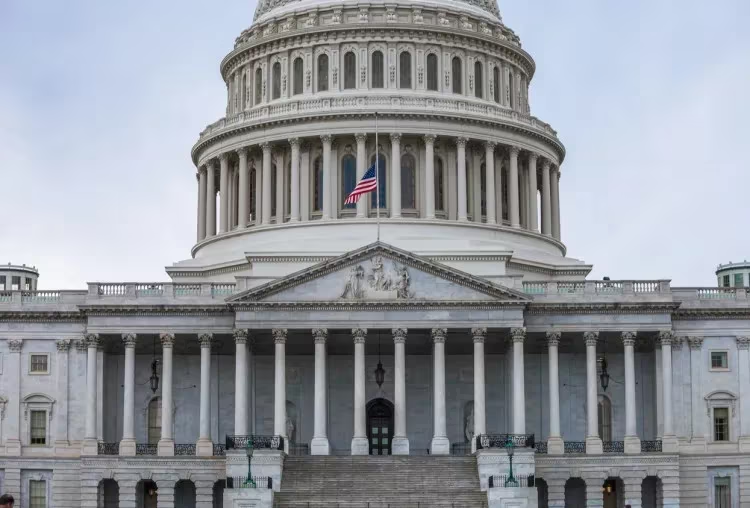
The vote ended 50 to 47. Only two Republicans, Senators Susan Collins and Lisa Murkowski, supported the resolution introduced by Democrat Tim Kaine. Republican Senator Rand Paul voted “present,” while Democrat John Fetterman opposed the measure.
Initially, the resolution had 50 votes against 48—that is, it had a chance of passing. But two Republicans, Rand Paul and Bill Cassidy, changed their position, and the final balance shifted in favor of the measure’s opponents. According to Trump, party leaders pressured the senators.
Several days earlier, four Republicans had supported another resolution to limit Trump’s war powers, allowing it to pass the Senate by a narrow margin. Unlike that resolution, the current measure, if approved by both chambers of Congress, would have required the president’s signature. Even if it had passed, however, Trump could have vetoed it.
According to CBS News, Republican Senator John Barrasso of Wyoming, the Senate Republican whip, played a key role in persuading several wavering party colleagues to change their position.
After the vote, Trump thanked his allies in the Senate, writing on Truth Social that the result “sends a clear signal to Iran.”
“The Senate just changed its vote on Iran from 50—48 against to 50—47 in favor. Rand Paul and Bill Cassidy changed their position. Thank you to Leader John Thune, Lindsey Graham, Bernie Moreno and everyone else. This vote sends Iran a clear signal!” Trump wrote.
Earlier, he called the two Republicans who opposed him “losers.”
Trump Angered by Senate Move to Limit His Power Over Iran
Senate Backs Resolution Limiting Trump’s Authority to Wage War on Iran
Trump to Attend Private Lunch With Republican Senators Amid Party Divisions
U.S. Senator Says Trump Must Obtain Congressional Approval for a New War With Iran