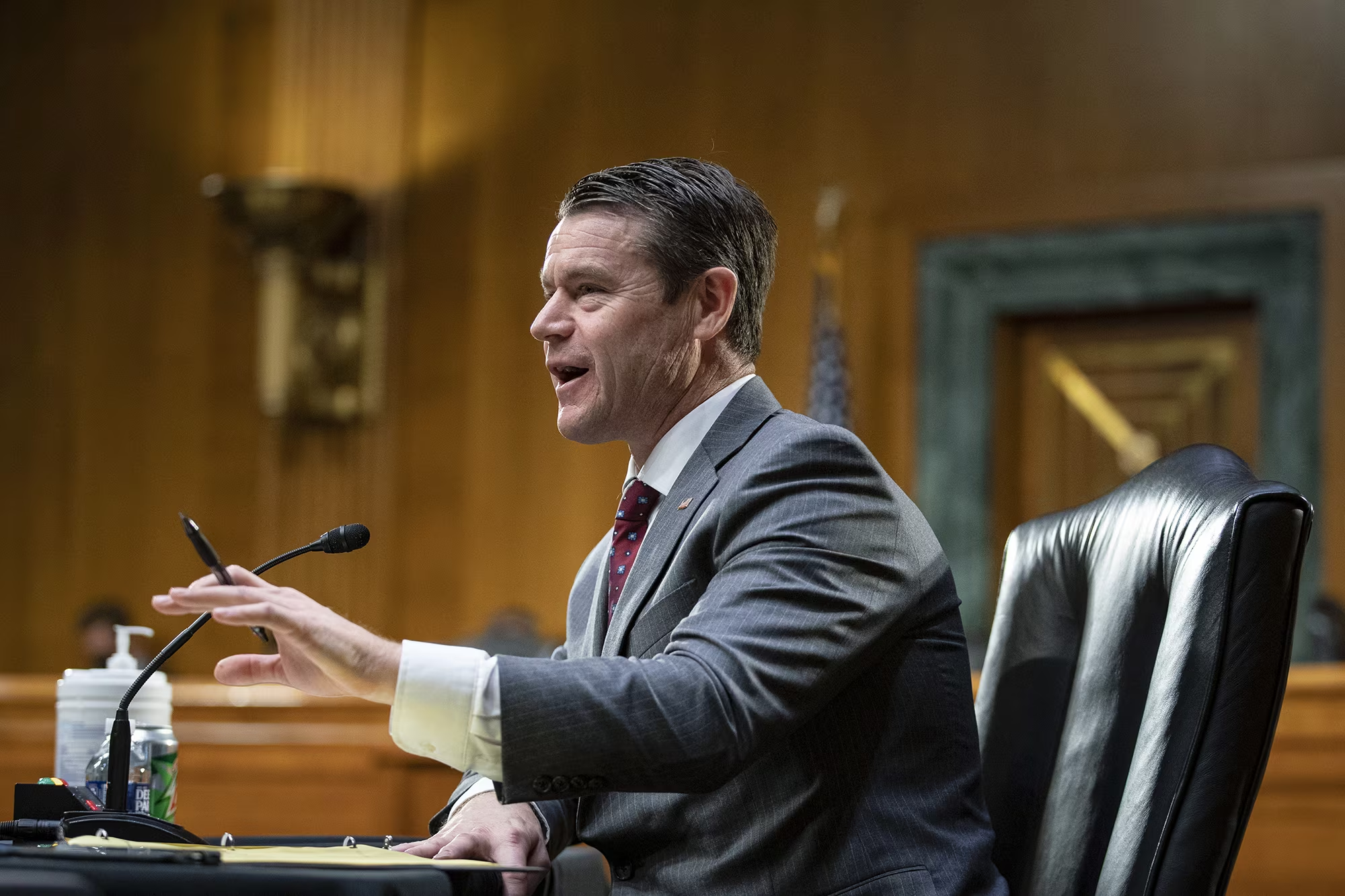
Republican senator Todd Young said Donald Trump’s administration would have to obtain congressional approval before resuming military action against Iran—despite White House claims that the 60-day clock under the War Powers Act stopped running once the truce took effect.
“The purpose of the War Powers Act was to affirm Congress’s constitutional responsibility to declare war,” Young said in a statement to The Hill. “We must ensure that the people, through their elected representatives, have a say in whether our military should be sent into combat. That should not be controversial.”
Trump notified Congress of the military operation in a letter dated March 2. By Friday, the conflict had reached the 60-day mark—the limit after which the president must end the war if he has not received lawmakers’ authorisation.
A senior administration official, however, said the campaign had effectively “terminated” after the temporary truce with Tehran was announced on April 7, meaning the clock under the War Powers Resolution had been reset. Defense secretary Pete Hegseth had earlier advanced the same argument during a briefing before the Senate Armed Services Committee.
Young said the administration’s position implies that “there should be no further hostilities”. According to him, if clashes resume, the White House will have to work with Congress on an authorisation for the use of military force.
On Friday, Trump formalised that line in an official letter to Congress. He said there had been no “exchange of fire” since the truce began, but that the threat from Tehran “remains significant”. In that connection, the president wrote, the War Department continues to adjust the deployment of forces in the area of responsibility in certain countries—“as necessary and appropriate”—to counter threats from Iran and its affiliated forces, and to protect the United States, its allies, and its partners.
Republican support for the war began to show cracks on Thursday, when senator Susan Collins joined Democrats and senator Rand Paul in voting to limit Trump’s authority to continue military action without congressional approval. The war-powers vote itself, however, failed for the sixth time. Young joined most Republicans in opposing it.
The 1973 War Powers Resolution requires the president to notify Congress within 48 hours of military action taken in response to an immediate threat, and bars the armed forces from remaining in hostilities for longer than 60 days without a congressional vote. The president may also request a 30-day extension to ensure the safe withdrawal of troops.
Asked whether he now intended to seek authorisation from lawmakers after the expiration of the 60-day period, Trump dismissed the possibility. “Nobody has ever sought it before, there have been many, many cases, and nobody has ever gotten it, it is considered completely unconstitutional,” he told reporters at the White House before departing for Florida.