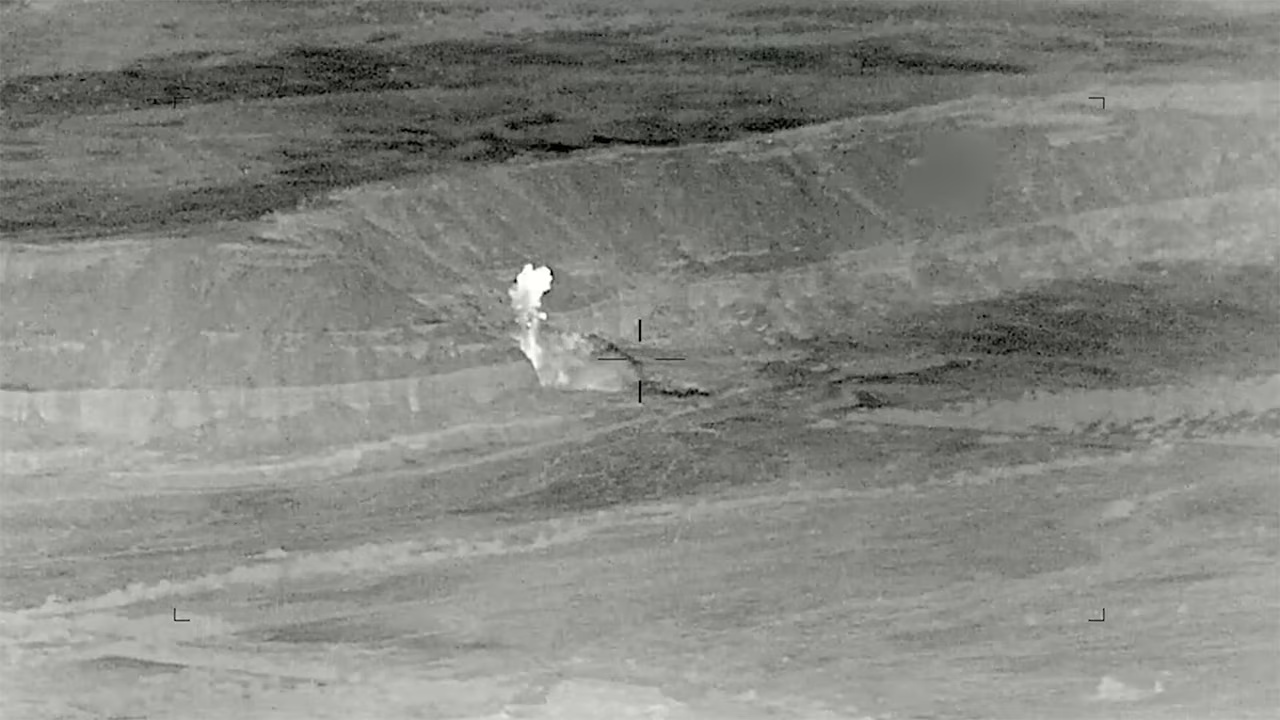
The U.S. military carried out strikes on several targets inside Iran in response to “continuing Iranian aggression,” U.S. Central Command said.
According to CENTCOM, the targets included military surveillance facilities, communications systems, air-defense positions, drone depots and equipment for laying naval mines.
U.S. command said that after the previous exchange of strikes, Iran “was given the opportunity to comply with the terms of the ceasefire agreement.” However, according to the United States, Iranian forces used an attack drone and hit a Panama-flagged tanker passing near the Strait of Hormuz.
Donald Trump said Iran had again violated the ceasefire agreement.
“It is very likely that they will never learn! There may come a moment when we can no longer remain reasonable and will be forced to militarily finish the job we very successfully started,” Trump wrote.
The Islamic Revolutionary Guard Corps, in turn, said Iranian forces had struck eight U.S. military facilities with ballistic missiles and drones “in response to American aggression”—at Ali Al Salem Air Base in Kuwait and at the U.S. Navy Fifth Fleet base in Salman Port in Bahrain.
The IRGC claims that the United States, under the pretext of actions by Iranian forces against a “violating vessel,” attacked five Iranian coastal posts.
The Corps also said that Iran controls the passage of ships through the Strait of Hormuz and that “even tougher measures” will now be applied to violating vessels.
On June 18, the United States and Iran signed a memorandum of understanding. It provides for a 60-day halt to hostilities on all fronts, the start of negotiations on a full end to the war and the opening of the Strait of Hormuz.
Since then, there have already been several incidents involving drone strikes on vessels, after which U.S. forces attacked targets in Iran.
U.S. Strikes Iran for First Time Since Ceasefire
Iran Strikes U.S.-Linked Sites in Response to American Attacks
U.S.-Iran Agreement Enters Into Force
Iran Leaves U.S. Talks in Switzerland After Trump Threatens to “Blow Up” the Country