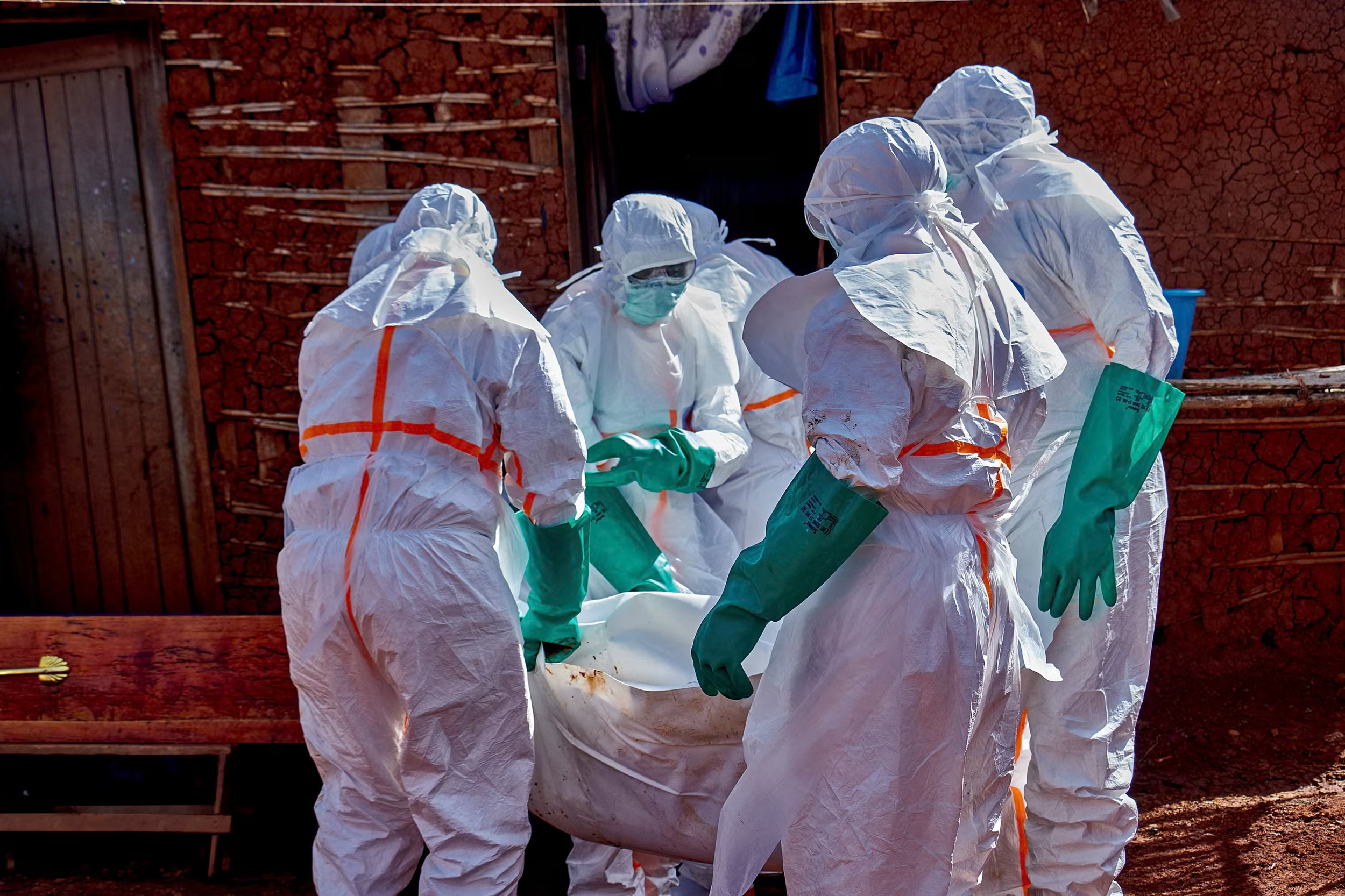
The U.S. Centers for Disease Control and Prevention (CDC) will direct $107 million from an emergency fund to fight an Ebola outbreak in the Democratic Republic of Congo and Uganda, officials said Thursday, June 18.
The outbreak in the DRC is continuing against the backdrop of the World Cup, which is being co-hosted by Canada, Mexico and the United States and is drawing visitors from around the world. CDC officials said the current outbreak—the third-largest on record—requires “strong immediate support,” though the global risk remains low.
“According to modeling, we are already approaching 1,000 confirmed cases in 31 health zones of the DRC,” Dr. Satish K. Pillai, head of the CDC’s Ebola outbreak response, said at a briefing. According to him, 31 cases have been recorded in Kampala, Uganda’s capital.
Pillai said the CDC had deployed 23 field staff to support epidemiological investigations and 125 staff in the DRC and Uganda. In addition, CDC officials hold calls twice a week with U.S. cities hosting World Cup matches. According to officials, local services have so far mostly dealt with illnesses typical of major events on the scale of the Super Bowl, including heat-related conditions.
The outbreak of the disease caused by the Bundibugyo virus began about a month ago along the DRC’s western border and Uganda’s eastern border. It is a rare zoonotic form of Ebola belonging to the hemorrhagic fevers. During recent outbreaks in Congo and Uganda, the disease killed 30–50% of those infected.
African health authorities warn that, at the current pace of spread, the outbreak could become the largest in history, and that containing it could take a year. The largest Ebola outbreak previously infected more than 28,000 people and killed 11,000 in 2014–2016 in West Africa and eastern DRC.
According to CDC data as of June 15, 837 cases have been confirmed in the DRC and 19 in Uganda. In the two countries, 198 people have died.
Although the risk inside the DRC and Uganda is assessed as high, the global risk remains low. The virus spreads from person to person through direct contact with blood, bodily fluids and contaminated surfaces. This distinguishes it from airborne infections such as Covid-19 and measles, which are considered far more contagious.
Despite the low global risk, the United States has become one of 22 countries to impose entry restrictions on people arriving from these states. Such measures have been criticized as hindering efforts to fight the outbreak. Efforts to contain the disease are also complicated by public distrust, shortages of personal protective equipment and a lack of transport for moving the bodies of the dead.
The CDC’s emergency funding will supplement about $910 million already pledged to fight the Ebola outbreak. According to African health leaders, donors have so far transferred less than 10% of that amount.
“The CDC’s activities are focused on controlling the outbreak in the Democratic Republic of Congo, controlling the outbreak in Uganda and ensuring preparedness inside the United States to respond in the unlikely event that infected people appear,” Pillai said.
Congo Has an Outbreak of a Rare Ebola Strain—There Is No Vaccine or Specific Treatment for It
The Ebola Outbreak in Congo Is Spreading Faster Than Authorities Can Trace Contacts—The WHO Has Declared a Public Health Emergency of International Concern
Uganda Closed Its Border With Congo Over the Ebola Outbreak
Science Has Learned to Make Vaccines in Record Time, but the World Has Forgotten How to Act Together