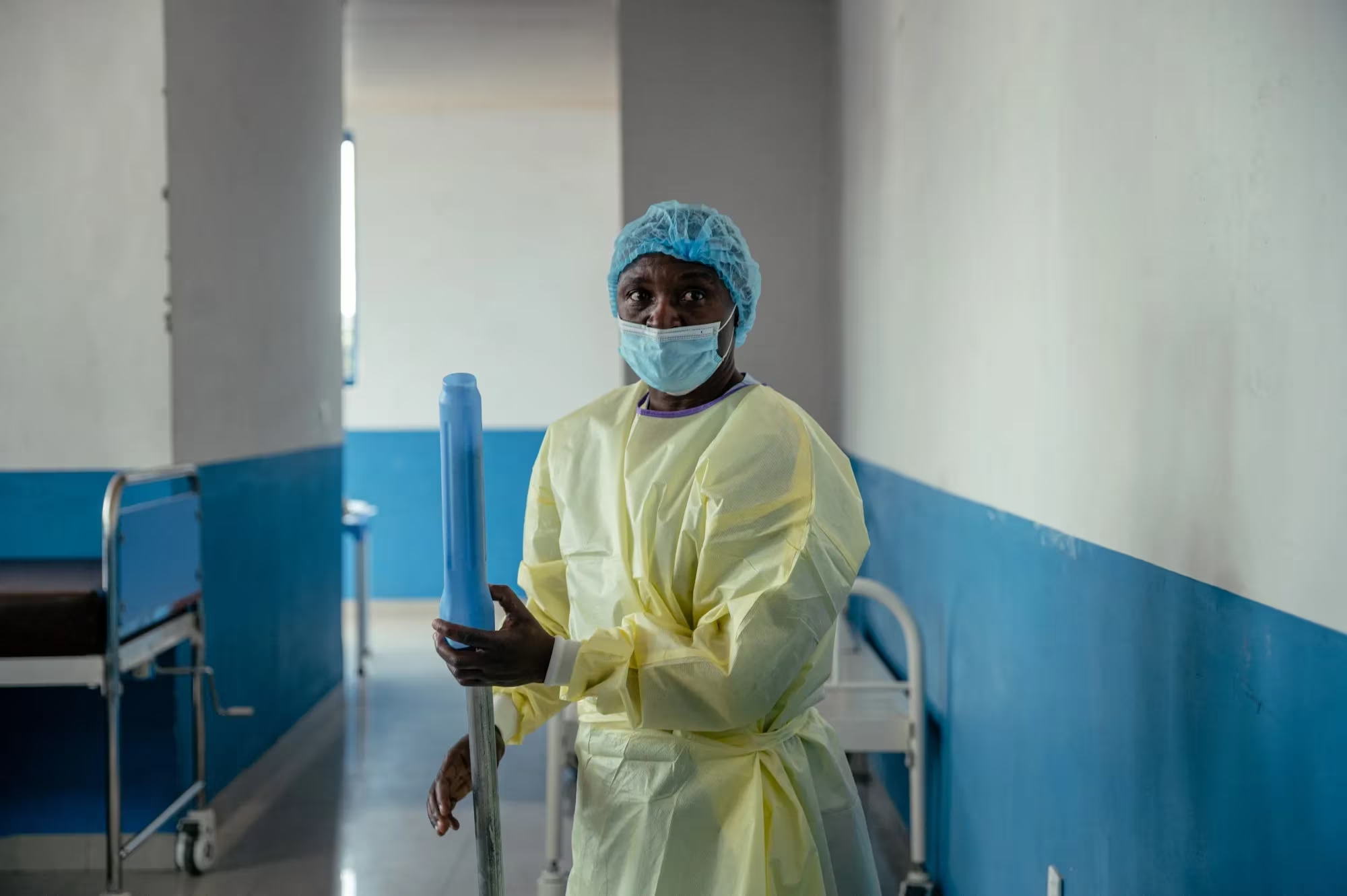
The Ebola outbreak in eastern Democratic Republic of Congo is spreading faster than authorities can trace the contacts of infected patients, deepening fears among international organizations that control over the epidemic may be slipping away.
According to data released by Congo’s health ministry on May 21, the country has confirmed 83 infections, while another 746 cases are considered suspected. Health workers identified 1,603 people who had contact with infected patients, but managed to monitor only 342 of them in a single day—roughly 21%.
On May 17, the World Health Organization declared the outbreak a public health emergency of international concern. Despite intensified emergency measures by governments and international organizations, the scale of the epidemic continues to grow.
The virus has already spread across three provinces, including South Kivu. This week, a case was confirmed near the city of Bukavu close to the Rwandan border. Earlier, two cases were detected in neighboring Uganda.
The WHO warns that the situation is being complicated by armed conflict, constant population movements, and widespread distrust of authorities and medical workers among local residents.
“The epidemic is unfolding in one of the most challenging operational environments imaginable,” the WHO emergency committee said.
Tensions surrounding containment measures have already triggered clashes. In the area around the city of Bunia, relatives of a deceased patient confronted medical staff after authorities refused to release the body for burial because of infection risks. During the unrest, tents at an Ebola treatment center run by the humanitarian organization Alima were set on fire. Six patients fled the facility, including three with confirmed infections.
The current outbreak is being driven by the rare Bundibugyo strain, for which there are no approved vaccines or antibody-based treatments. Specialists believe the virus may have circulated in Ituri province for several months before authorities were able to identify the disease.
Medical teams are now trying to trace thousands of potential contacts in remote gold-mining areas and major cities, including Bunia and Goma, whose populations are approximately 700,000 and 860,000 respectively.
The WHO has already delivered more than 11 tons of emergency supplies to Bunia, including protective equipment, medical kits, and materials for safe burials.
The latest health ministry data indicate that the epicenter of the outbreak is no longer confined to the Mongbwalu area, which had initially been considered the main hotspot. An increasing number of confirmed cases are now being recorded in the neighboring health zones of Rwampara and Bunia.
Another major hotspot is emerging in Nyankunde, home to a large hospital serving around 200,000 people. Authorities have already confirmed 11 infections there, while 340 contacts remain under observation.
The WHO warns that efforts to contain the epidemic are being hindered by weak laboratory diagnostic capacity. The GeneXpert system used in previous outbreaks cannot detect the Bundibugyo strain, while specialized PCR tests remain in short supply.
The regional environment is creating additional risks. Eastern Congo remains one of the world’s most unstable regions, where armed groups control large territories, infrastructure is severely damaged, and millions of people constantly move between mining settlements, cities, and neighboring countries.
The Rwanda-backed M23 group has already announced the creation of its own Ebola response structure in areas under its control and urged residents to cooperate with medical workers.
The WHO assesses the risk of further spread within Congo as “very high,” and “high” for neighboring countries. Uganda has tightened border controls and suspended passenger traffic with Congo. Rwanda has also strengthened health screening measures and said that most foreign nationals who recently visited Congo would be denied entry, while returning residents would be required to undergo quarantine.
In Europe, the risk to the general population is still considered “very low,” though the EU has already begun coordinating laboratory preparedness and issuing recommendations for travelers. The United States has gone further, temporarily restricting entry for some green-card holders who recently visited outbreak zones.
WHO representative in Congo Anne Ancia acknowledged that international response teams are still struggling to keep pace with the crisis.
“We are falling behind. The epidemic is still not under control,” she said.