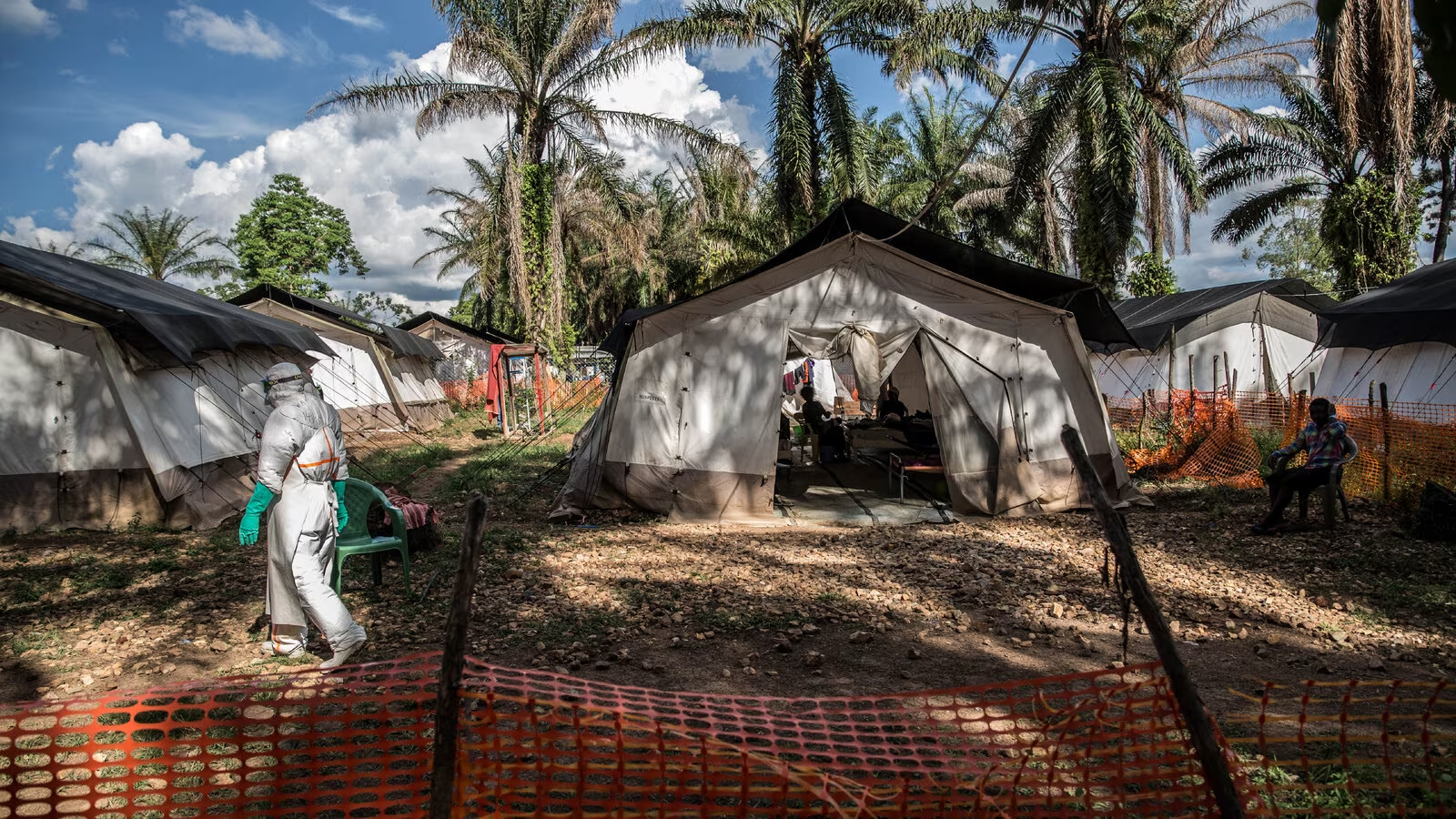
A rare strain of the Ebola virus for which there is no approved vaccine or specific treatment has been detected in northeastern Democratic Republic of Congo. According to the WHO, the infection may have been spreading unnoticed for several weeks in a region affected by armed conflict.
Laboratory testing by the National Institute of Biomedical Research in Kinshasa confirmed the Bundibugyo strain. This variant of the virus has previously caused only two known outbreaks—in Uganda in 2007 and eastern Congo in 2012.
According to the Africa Centres for Disease Control and Prevention, around 246 suspected cases and 65 deaths have been recorded in Ituri province near the Ugandan border. Most cases are concentrated in the Mongbwalu and Rwampara areas, while new suspected infections have appeared in the provincial capital, Bunia. Four deaths have been laboratory-confirmed.
Ebola remains one of the world’s deadliest infectious diseases. Depending on the strain and the quality of medical care, fatality rates range from roughly a quarter of patients to nearly 90 percent.
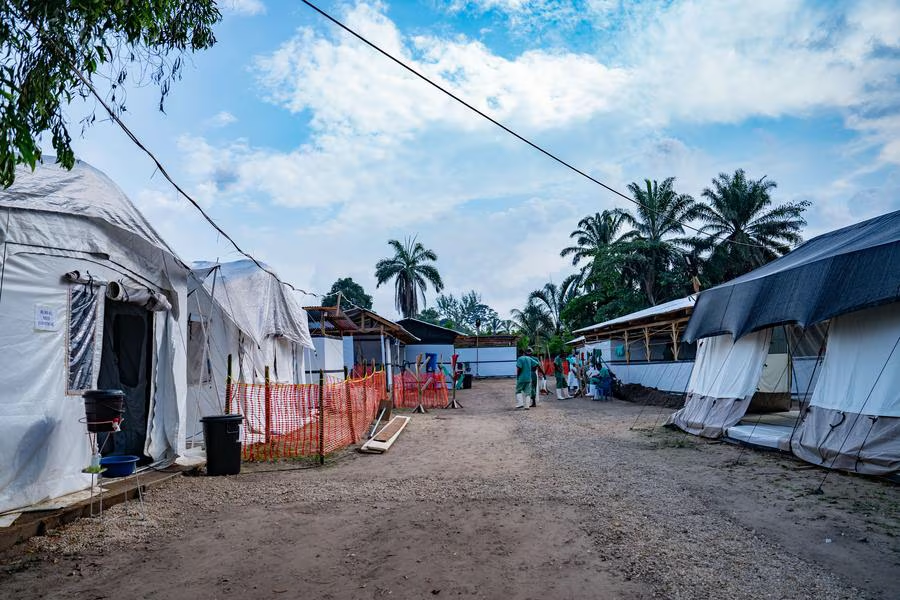
The best-studied variant is the Zaire strain, first identified in 1976 near the Ebola River in what is now the DRC. It was responsible for the large West African epidemic a decade ago and received most international funding, leading to the development of vaccines and treatment methods.
“Ebola Zaire attracted most of the attention—and for very good reasons,” said Susan McLellan, director of the Biocontainment Unit at the University of Texas Medical Branch.
Development of treatments targeting Bundibugyo remains far less advanced. According to McLellan, doctors are likely to consider using Gilead Sciences’ antiviral drug remdesivir, as laboratory studies suggested Bundibugyo may be more sensitive to it than Ebola Zaire.
Conflict, Gold Mines, and One Hospital
Uganda has also confirmed a Bundibugyo infection involving a Congolese citizen who crossed the border seeking treatment and later died in a hospital in Kampala.
The WHO is sending additional epidemiologists, laboratory specialists, and infection-control experts to Ituri, along with roughly five tons of emergency medical supplies—including testing equipment, protective gear, and treatment materials.
The outbreak is unfolding more than 1,700 kilometers from Kinshasa. Response efforts are being complicated by armed conflict, weak infrastructure, poor roads, migration linked to gold mining, and constant cross-border movement of people.
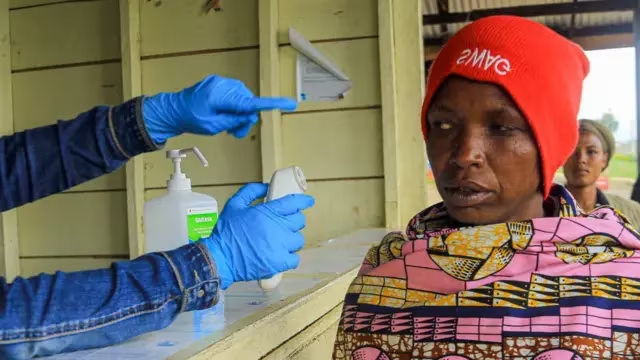
The Mongbwalu area is one of the country’s largest gold-mining regions, where tens of thousands of people regularly move between mines and trading hubs. The activity of armed groups and the lack of healthcare infrastructure are hampering medicine deliveries, outbreak monitoring, and contact tracing.
“Getting to Mongbwalu is not easy. There is effectively no road,” said Jimmy Munguriek, director of the Congolese branch of Resource Matters. According to him, the region has only one major hospital, while dense mining settlements and constant movement of workers could accelerate the spread of the virus if the outbreak is not quickly contained.
The Virus May Have Spread Unnoticed for Weeks
“These areas are full of people coming from everywhere to work in artisanal gold mines,” Munguriek continued. He added that the presence of armed groups and deep mistrust of health authorities among local residents could seriously complicate efforts to contain the infection.
“There is a major risk that the situation could become significantly worse,” he warned.
The scale of the outbreak suggests the virus may have been spreading undetected for several weeks before its official identification. The WHO said the first alerts emerged on May 5, prompting a team of specialists to be dispatched to the region. Initial tests for the more common Ebola Zaire strain came back negative. Additional testing on May 14 confirmed Bundibugyo.
“This did not all happen over the last week,” McLellan said, commenting on the number of suspected infections. “This has been going on for some time.”
According to the WHO, patients experienced high fever, weakness, vomiting, and in some cases bleeding. Some patients deteriorated rapidly and died.
Low Export Risk and the Shadow of U.S. Aid Cuts
Ebola spreads through direct contact with bodily fluids from infected individuals or contaminated objects. The risk of transmission increases sharply in areas lacking stable access to clean water and sanitation.
McLellan, who worked in West Africa during the 2013–2016 epidemic, explained that only a very small amount of infected material is needed for transmission. “It takes a very small amount of material,” she said, noting that with limited handwashing facilities, bodily fluids can remain on skin and surfaces.
At the same time, experts stress that Ebola does not spread easily through casual contact, and the risk of the current outbreak expanding beyond the region remains low.
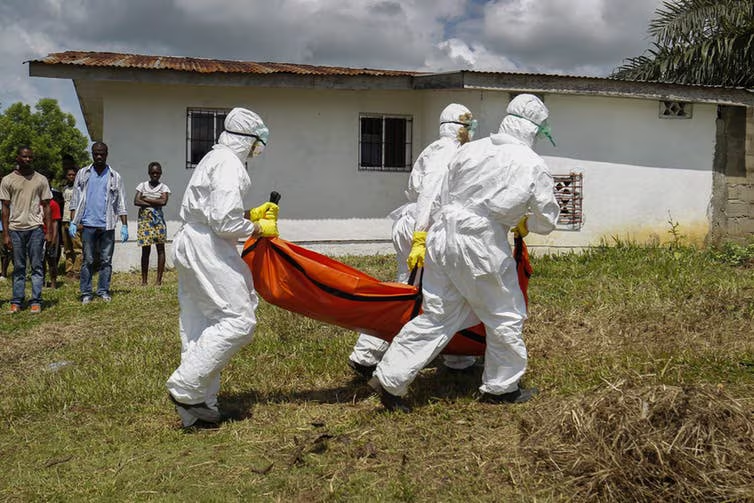
Researchers at Imperial College London noted in an analysis published Friday that there have never been documented cases of sustained Ebola transmission outside Africa. During the West African epidemic, exported cases were rare and mostly involved healthcare workers.
The DRC has extensive experience responding to Ebola outbreaks, having faced more than ten epidemics over the past 50 years. The country’s most recent outbreak, which ended in December, was contained within weeks.
The current situation is unfolding amid warnings that cuts to U.S. foreign aid and public health programs could weaken disease-surveillance systems and rapid-response capabilities in fragile regions. A study published in Science found that sharp reductions in USAID funding were accompanied by rising conflict levels in African regions most dependent on international aid.
Acting U.S. Centers for Disease Control and Prevention director Jay Bhattacharya said the CDC is “closely monitoring” the outbreak and providing technical support through its offices in Congo and Uganda. “We are absolutely engaged in this effort,” Bhattacharya said. “If the world is safer, if we can deal with threats like an Ebola outbreak, the United States will be safer too.”