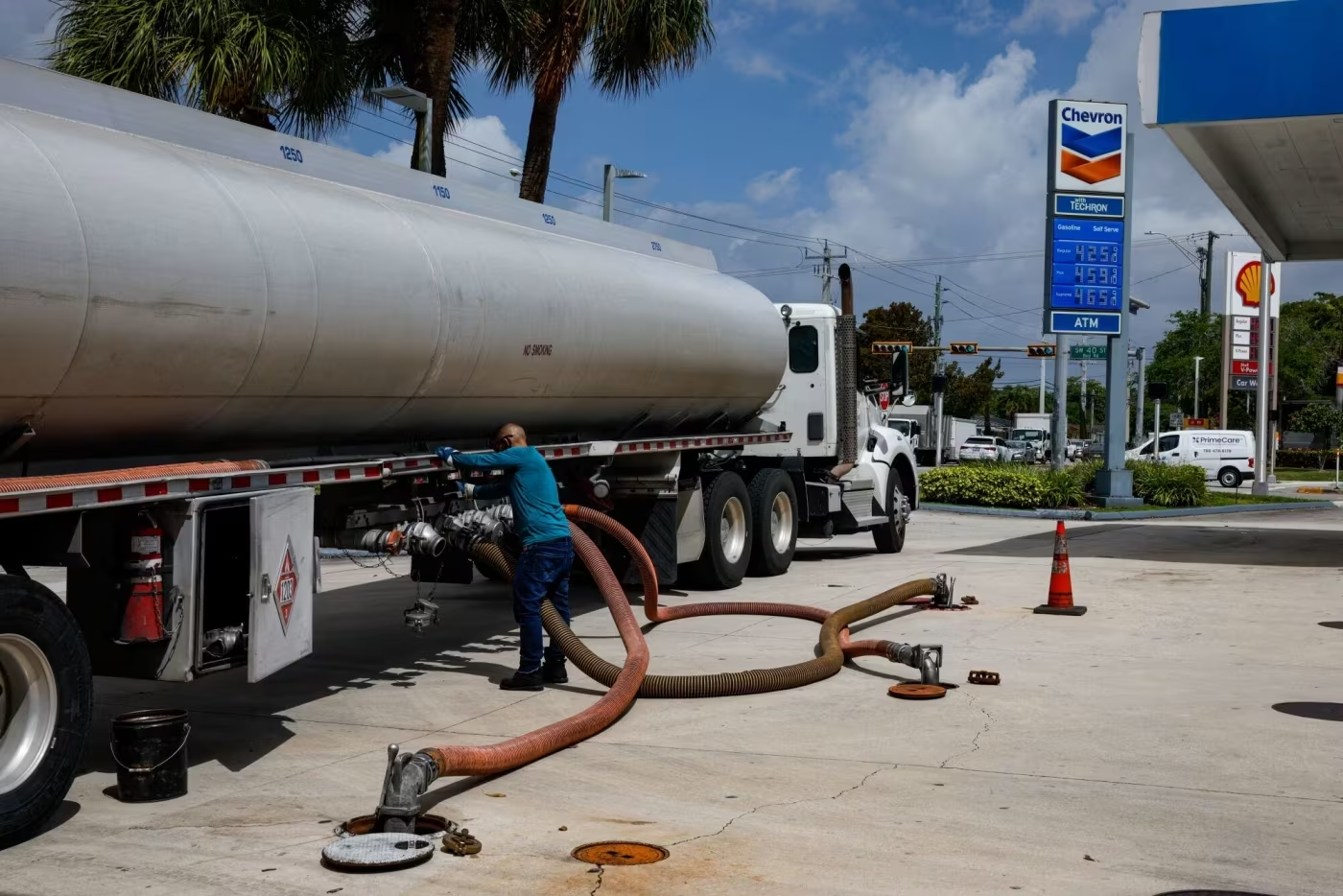
Gasoline prices in the United States fell below $4 a gallon for the first time since March, giving consumers some relief after a historic disruption to global supplies that kept fuel costs high for months.
According to the American Automobile Association, the national average price of regular unleaded gasoline on Thursday was $3.90 a gallon. The decline came after the United States and Iran signed an interim agreement to end the war and open the Strait of Hormuz.
Prices at filling stations have retreated from a May peak above $4.50 a gallon. The drop was helped by lower global oil prices. Oil fell below $80 a barrel amid record exports from the United States, a sharper-than-expected slowdown in demand in China and the gradual restoration of supplies through the strait.
Still, the average price of $3.90 a gallon remains significantly above the prewar level. Experts estimate that a return to previous levels is not expected before next year.
For many Americans who depend on cars in daily life, the increase in fuel costs was effectively unavoidable. It added to inflation and pressure on household budgets: money spent on gasoline reduced room for discretionary purchases and affected the broader economy.
Politically, the decline in prices at filling stations has been a success for the White House and President Donald Trump, who repeatedly said that fuel would become cheaper after the war ended. With the midterm elections approaching, Democrats are actively using the cost of gasoline in their campaign against Trump’s Republican Party.
The White House has also used a broad set of measures to contain price growth, including a temporary easing of Jones Act requirements and use of the Strategic Petroleum Reserve.
Traders are now watching how quickly inventories are replenished to assess whether further price declines are possible. U.S. gasoline stocks are at their lowest level for this time of year in more than a decade.
U.S.-Iran Agreement Enters Into Force
Brent Falls Nearly 4% After U.S.-Iran Deal on Strait of Hormuz
Oil Market Avoids Summer Crisis After Closure of the Strait of Hormuz as Brent Holds Below $100
U.S. Overtakes Russia and Saudi Arabia in Oil Exports