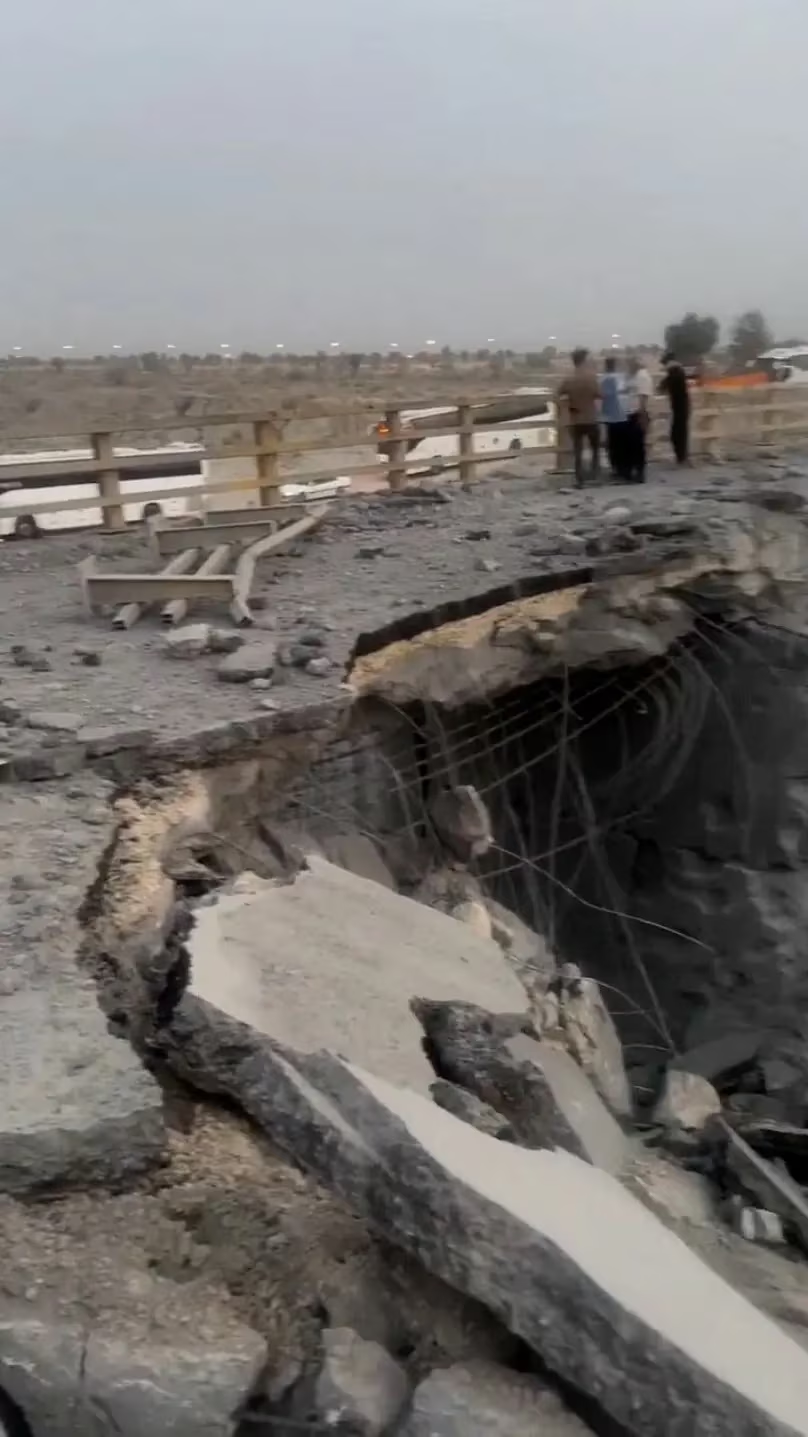
Iran and the United States broadened the scope of their hostilities overnight on Friday: the US military struck bridges, railways and a maritime-surveillance tower, according to video footage and Iranian state media. Tehran retaliated against neighboring countries that host American bases—with Kuwait reporting strikes on a power station and a desalination plant.
The war has steadily escalated since President Trump declared the ceasefire with Iran “over” more than a week ago. American and Iranian forces have exchanged strikes daily ever since, while Trump has threatened to destroy civilian infrastructure to force Tehran into a deal—one that would definitively end the war and require Iran to renounce nuclear weapons. Iranian officials had warned that they would respond by striking civilian infrastructure in neighboring countries.
Legal experts note that facilities indispensable to the survival of civilians—water-treatment plants, for example—are generally not considered legitimate military targets, and attacks on them may constitute war crimes. Bridges and railways are another matter: if they are used to transport troops or weapons, strikes against them may serve a legitimate military purpose.
US Central Command said the latest wave of attacks had struck “dozens of Iranian military targets”—coastal-surveillance posts, air-defense facilities, military logistics and maritime infrastructure. CENTCOM did not directly address Iran’s claims that bridges and railways had been hit, but confirmed the destruction of a port-surveillance tower in southern Iran that the United States said the Islamic Revolutionary Guard Corps had used to track commercial vessels in the Strait of Hormuz and direct attacks against them.
Iranian state media confirmed the strike on the tower and added that bridges, railways and highways connecting the southern coast with the rest of the country had also been hit. Iranian state television said a railway station near the naval base in Bandar Abbas was struck as well—the latest attack on a port city repeatedly targeted by the United States.
A teacher in Bandar Abbas named Marzieh said airstrikes in recent days had mainly targeted the airport, air-force facilities and the dockyard and naval district; fishing boats had also been destroyed. “The ground was shaking. It is truly terrifying,” she said, agreeing to give only her first name for fear of reprisals by the authorities. US attacks across the country overnight on Friday killed eight people and wounded 20 others, according to the state-run IRNA news agency.
Iran’s military said it had retaliated with strikes on Bahrain, Kuwait, Oman, Syria and Qatar. A power station and desalination plant were hit in Kuwait, causing fires and damaging several generators; overnight drone attacks on military facilities wounded several servicemen, whom the defense minister visited in the hospital. In Iraq, an Iranian drone struck a camp housing Kurdish fighters: nine recruits were killed and three wounded, according to the Komala party. Bases belonging to Iranian Kurdish groups near the Iraq-Iran border have been under attack since the war began in late February.
The fighting has brought shipping through the Strait of Hormuz—a vital artery for global oil and gas trade—to a near standstill. Only eight vessels passed through the strait on Thursday, compared with more than 130 a day before the war. Oil prices remain elevated as the conflict drags on and there are few public signs of diplomacy.
A tanker in the strait was struck by a projectile on Friday, the United Kingdom Maritime Trade Operations service reported: the vessel sustained minor damage, while its crew was unharmed. Tasnim, a news agency close to the IRGC, said the target was a Thai-flagged vessel that had ignored warnings and attempted to pass through the strait without Iranian authorization. Tehran, which claims control over the waterway, has systematically attacked vessels passing through it.
The United States says its strikes this week are intended to deprive Iran of the ability to attack commercial shipping. On Tuesday, the US military also reinstated its naval blockade of Iranian ports—in an effort to strangle Iran’s economy and force Tehran into a deal.
U.S. and Iran Exchanged Overnight Missile Strikes
Trump Announced the End of the U.S.-Iran Ceasefire
Iran Named Targets in the Persian Gulf It Will Strike in Response to U.S. Attacks on Its Power Plants
The U.S. Struck a Desalination Plant on an Iranian Island—30 Villages Were Left Without Drinking Water