Google has begun a sweeping overhaul of its search engine—the product that remains the company’s primary source of revenue and effectively finances its entire ecosystem. The shift is being driven by the rapid rise of AI chatbots and changing patterns in how users search for information online.
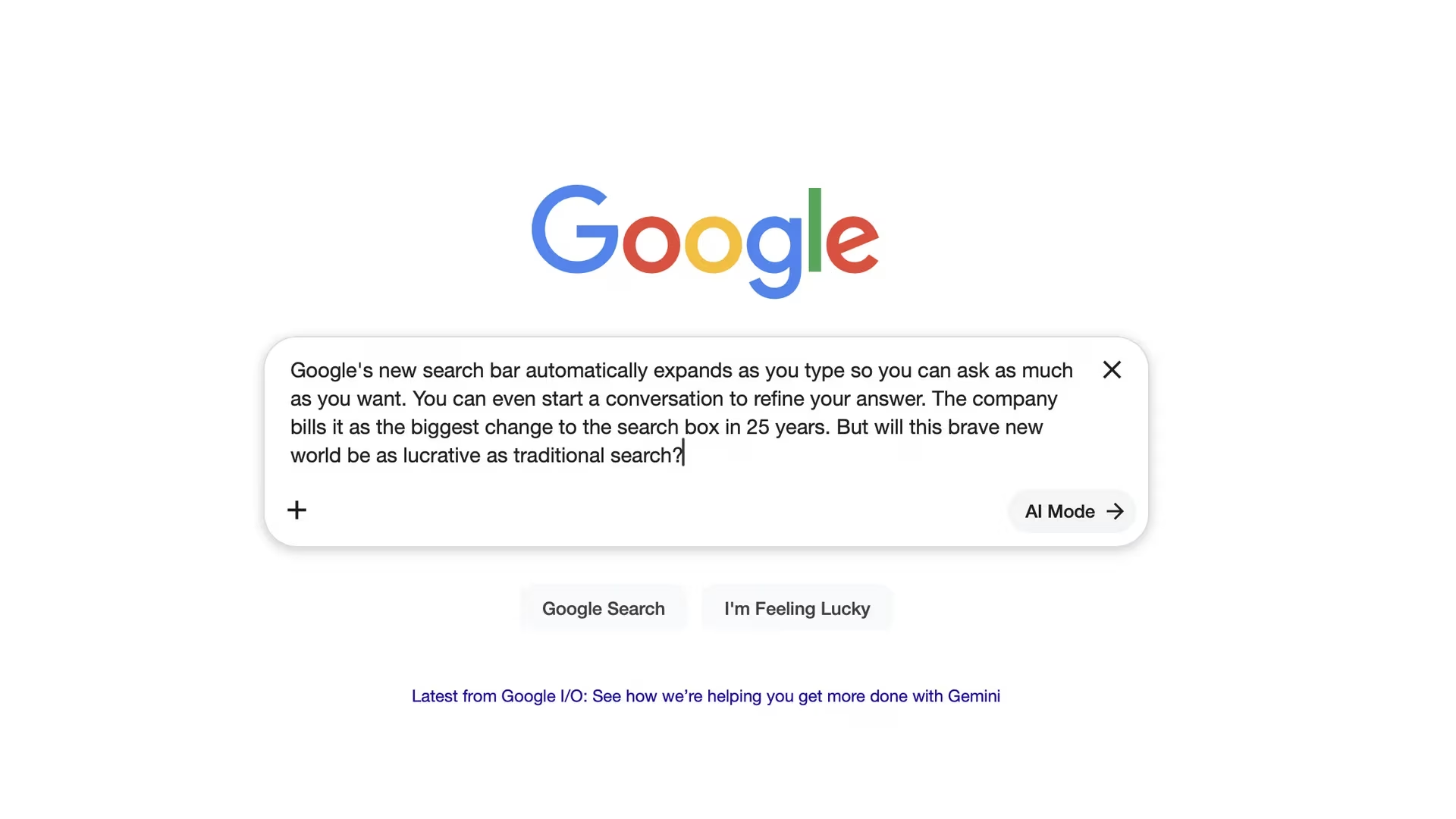
The company is betting that conversational queries will gradually replace traditional keyword-based search. At a Google developer conference, the company announced what it described as the biggest change to the search bar in the history of the service: the search window will now expand to accommodate longer prompts and conversational interactions with users.
Google has been moving in this direction for several years. The company previously introduced AI Overviews—AI-generated summaries displayed at the top of search results—as well as a separate AI Mode with a more chat-like interface. The latest changes significantly expand that strategy and reflect Google’s effort to prevent users from migrating to standalone AI services such as ChatGPT or Claude.
One of the key areas of focus is AI agents. Instead of performing one-time searches, the system will be able to carry out ongoing tasks on behalf of users. For example, it could monitor concert announcements for a specific band and automatically notify users about new performances nearby. Similar agents will be used to track prices, shopping activity, news, and other recurring queries.
“Agents in search are the next stage,” said Google DeepMind chief Demis Hassabis. According to him, Google’s advantage lies in its ability to immediately deploy new technologies across products used by billions of people.
At the same time, the company is expanding the use of AI far beyond search. Google’s strategy assumes that artificial intelligence will cease to exist as a standalone chatbot and instead become integrated into nearly every digital service and device.
One example is Ask YouTube, a feature that allows users to ask questions in natural language and receive both a text answer and a video containing the relevant information.
Google also updated its Gemini app, designed for broader use of AI agents. Alongside the new Gemini 3.5 Flash model, the company introduced a personal assistant called Spark. Google plans to integrate it into the Chrome browser and other services in the future.
At the same time, Google is once again entering the wearable technology market more than a decade after the failure of Google Glass. The company hopes to compete with Meta, which found success with its Ray-Ban smart glasses.
Google said an audio-enabled version of its new glasses, developed jointly with Samsung, Warby Parker, and Gentle Monster, will go on sale this fall. The company also unveiled Project Aura for the first time—a device being developed together with Xreal. It occupies a middle ground between augmented reality glasses and full-fledged XR headsets.
According to Hassabis, devices like these demonstrate how AI is “moving into the real world.”
Google’s broader strategy is to transform all of its products into AI-driven products—from search and browsers to video platforms, personal assistants, and wearable electronics.