Apple has sharply raised prices for Macs, iPads and home devices as it tries to offset rising costs caused by an unprecedented shortage of memory chips and storage.
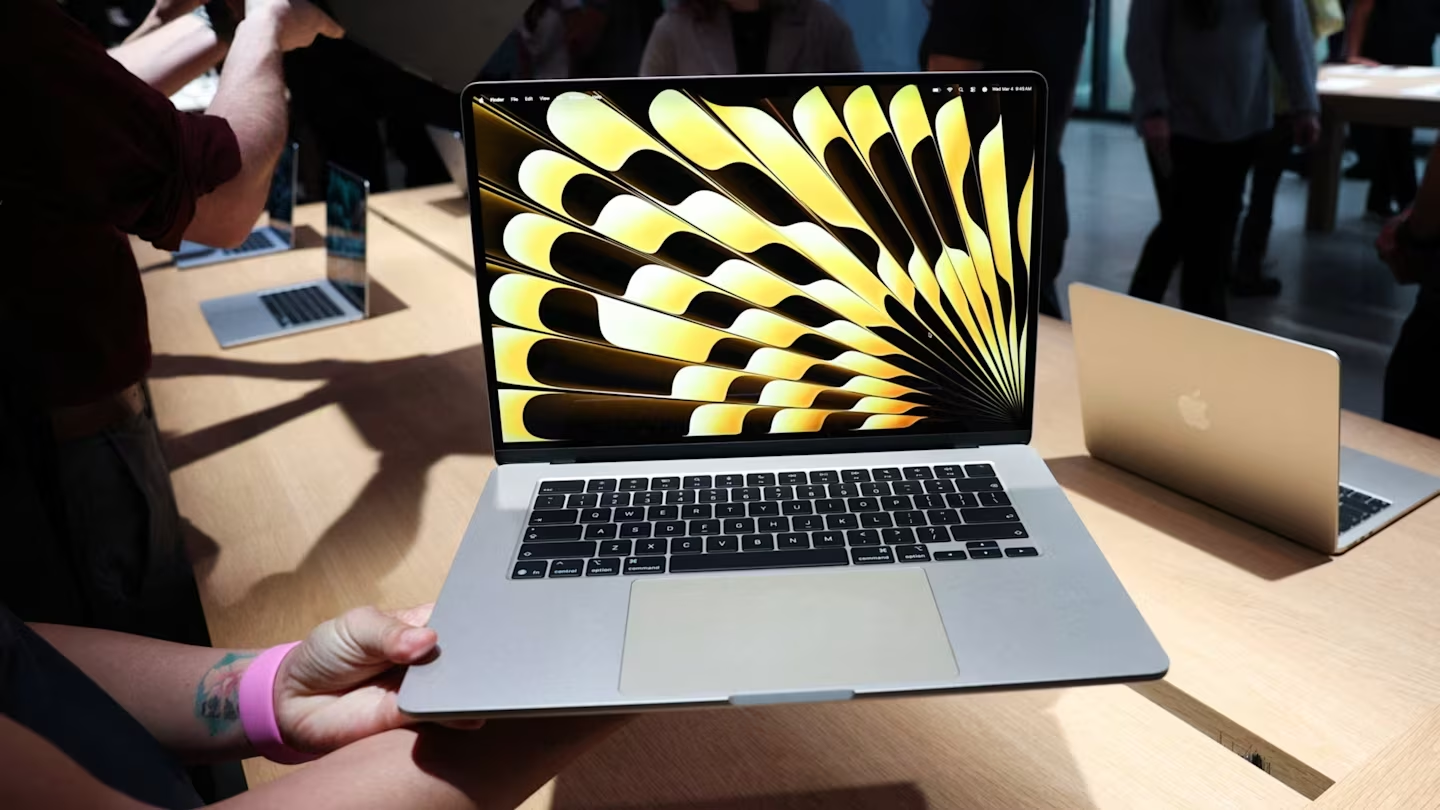
According to changes in the company’s online store, prices have increased for the MacBook Neo, MacBook Pro, MacBook Air, iPad Air and iPad Pro. The starting price of the MacBook Neo, Apple’s new laptop, rose from $599 to $699. The MacBook Air now starts at $1,299 instead of $1,099.
The base 14-inch MacBook Pro rose from $1,699 to $1,999. The 11-inch iPad Pro now starts at $1,199 instead of $999. The iPad Air, the company’s mid-range tablet, rose from $599 to $749. The price increases apply worldwide.
Apple also raised prices for home devices. The standard HomePod speaker now costs $349 instead of $299, while the HomePod mini costs $129 instead of $99. The Apple TV set-top box rose from $129 to $199. The company did not raise iPhone prices on Thursday.
An Apple representative said that “the rapid expansion of AI data centers has created an extraordinary increase in demand for memory and storage.” According to him, the company “has never seen component costs rise so much and so quickly
Apple added that it had until now tried to shield customers from these price increases, but had now “reached a point” where it was forced to begin raising prices on a number of products, including iPads and Macs. “We understand that this is unwelcome news, and we are working tirelessly to find solutions,” the company said.
Back in April, Apple executives warned investors that the memory shortage would intensify over the course of the year. At the time, CEO Tim Cook said the component shortage was already affecting supplies: many Mac models were facing constraints and shipment delays.
“We are not at the point where we can say this will end soon,” Cook said, adding that the constraints were likely to last “several months.”
In March, Apple had already effectively raised prices on new MacBook Air and MacBook Pro models, but at the time this came with more memory and other specification upgrades. In May, the company removed the base $599 Mac mini configuration from its lineup.
John Ternus, who until recently led Apple’s hardware engineering, will inherit the memory crisis on September 1, when he replaces Cook as CEO. The shortage has already affected Apple’s plans for new product releases: in particular, it is holding back the launch of an updated Mac Studio.
In April, Cook said the iPhone had been less affected by the memory shortage than the Mac, but was facing shortages of core processors. In September, Apple plans to unveil new smartphones, including a large foldable model whose price is expected to exceed $2,000.
Samsung Becomes the Second Asian Company Whose Market Capitalization Has Topped $1 Trillion—Shares Rose 15% in a Day
Apple's New Chief Inherits the Company at a Moment of Serious Trouble—It Is Falling Behind in the AI Race, and Global Supply Chains Have Grown Less Resilient
Apple to Change Its CEO for the First Time in 15 Years—John Ternus Will Take the Post on September 1
Apple Nears Launch of First Foldable iPhone—it Could Arrive as Early as 2026