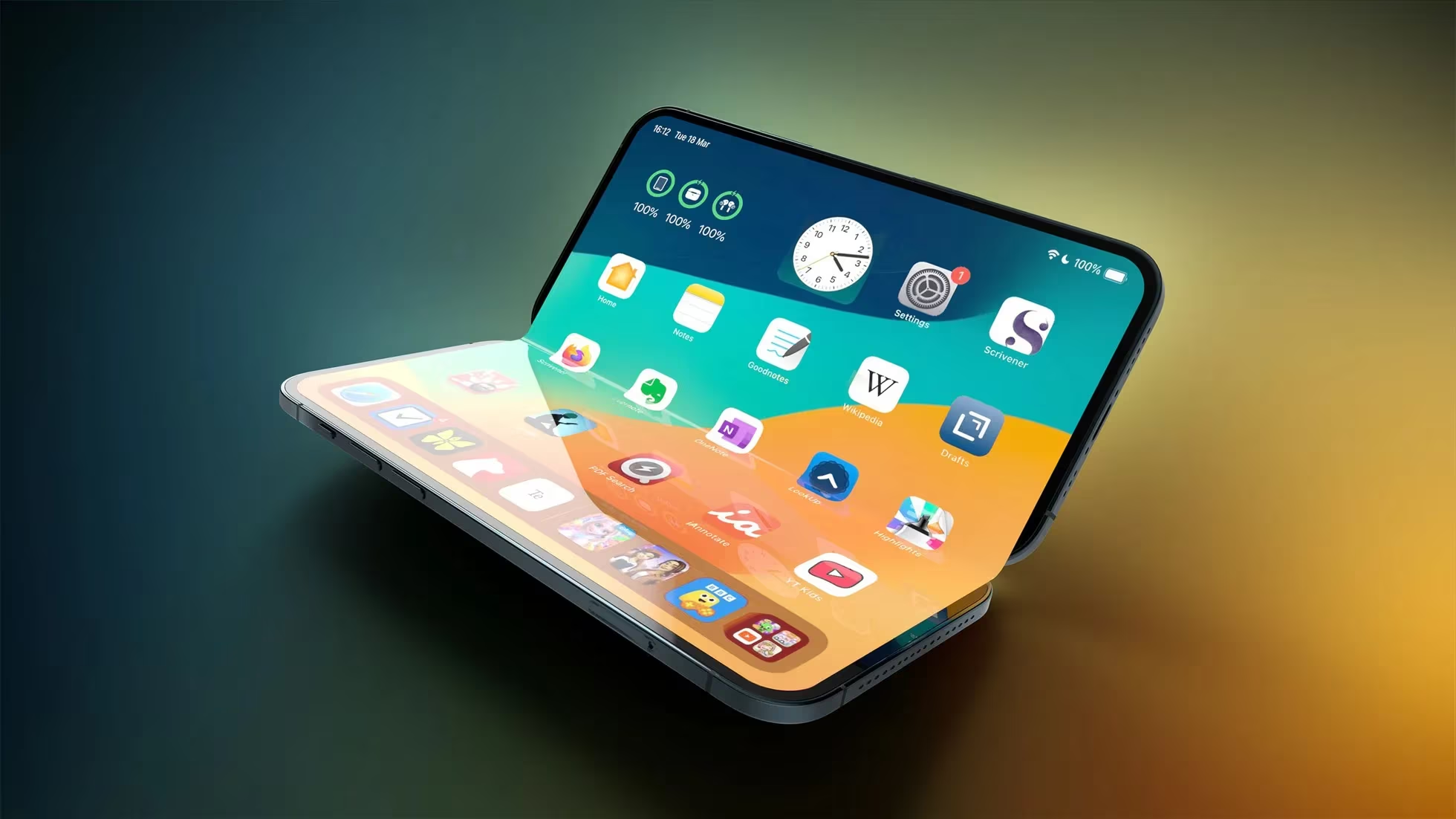
The foldable iPhone remained a rumor for almost a decade, but by 2026 several signs at once suggest that Apple has moved close to a release. The new device is expected to trail the top models in specifications, but still become one of the most visible products in the lineup—and probably the company’s most expensive smartphone.
From the First Rumors to Prototypes: How Apple Spent Almost a Decade Moving Toward a Foldable iPhone
The first rumors appeared back in 2016. At the time, MacRumors reported that LG planned to begin producing flexible displays for smartphones in 2018 and supply them to Apple, Google and Microsoft. Three years later, it became known that Samsung had also offered Apple supplies of flexible screens, and in 2020, according to insiders, delivered the first samples—but no further confirmation followed.
In the years that followed, analysts regularly wrote that Apple was experimenting with the format but could not decide whether to put it into mass production. According to The Information, the first two prototypes appeared only in 2024.
A new wave of rumors began in late 2025, after the release of the iPhone Air—the thinnest smartphone in the lineup. Reviewers called it beautiful, but not the most practical: for the sake of design, Apple sacrificed a number of specifications, above all battery capacity. At the same time, journalists noted that the iPhone Air may have been a test of technologies that would be useful in creating a foldable device. Findings in the iOS 27 beta also point to preparations for the model: lines were found in the code related to detecting the device’s state—whether it is folded or unfolded.
September or Spring: Why the Release Date Remains Uncertain
In April 2026, Bloomberg journalist Mark Gurman wrote that the announcement could take place as early as September, when Apple traditionally presents new smartphones. The same event will probably feature the iPhone 18 Pro and iPhone 18 Pro Max. Smartphones usually go on sale a few weeks after the presentation, but Gurman’s sources said production of the foldable model had not yet been established, so the timing remains uncertain.
In mid-June, AppleInsider, citing Taiwanese media, reported that a release in 2026 might not happen. Journalists reached that conclusion based on a statement by Lin Enping, chairman of Taiwan’s Largan Precision—one of Apple’s suppliers. According to him, the fourth quarter of 2026 will be “busier than in previous years.” This may indirectly indicate that the foldable iPhone will go on sale no earlier than spring. It is possible, however, that Lin Enping was referring to other models—the regular iPhone 18, iPhone 18 Plus and budget iPhone 18e.
Mark Gurman continues to maintain that the foldable iPhone is still planned for 2026. Moreover, according to his sources, at the end of 2027 Apple will release the device’s second generation—its launch will be timed to the 20th anniversary of the first iPhone. According to Gurman, 2027 could be Apple’s biggest year ever in terms of new products. These devices are expected to support business growth in the first year of new CEO John Ternus, who is expected to replace Tim Cook on September 1, 2026.
What Is Known About the Future Device’s Specifications and Price
There is no official information yet—not even the name is known: iPhone Fold or iPhone Ultra. In late May, a photo of a supposed mock-up appeared on the Chinese social network Weibo. If the image is genuine, the device will be less vertically elongated than familiar foldable smartphones such as the Samsung Galaxy Z Fold7 and, as RBC noted, resembles the Huawei Pura X Max.
According to 9to5Mac, the outer screen will have a diagonal of 5.3 to 5.5 inches, while the inner screen will measure 7.6 to 7.8 inches. When unfolded, the device will resemble an iPad Mini, but slightly smaller. Samsung is likely to be the display supplier. Bloomberg’s sources said engineers had managed to make the crease less noticeable and improve the strength of the structure. The smartphone is rumored to have two 48-megapixel main cameras, including an ultra-wide module, and two front-facing cameras—one for each screen. Inside, it will probably use a more powerful version of the next-generation A20 Pro chip. Another feature is the return of Touch ID: the scanner will be built into the power button, with Apple abandoning Face ID because it was unable to fit two modules into the smartphone.
Despite lagging in a number of specifications, the foldable iPhone is likely to become Apple’s most expensive smartphone—with a starting price of no less than $2,000, while versions with more storage may cost up to $2,500. Gurman believes that such a price will deter some buyers, but the mere appearance of the model will help Apple increase revenue. Especially since regular iPhones may also become more expensive: Tim Cook told The Wall Street Journal that price increases are almost inevitable because of the “unstable situation” with components. The main reason is the crisis in the computer-memory market, where prices have been rising since fall 2025 amid the artificial-intelligence boom. According to WSJ analysts’ calculations, the base version of the iPhone 18 Pro could become about $200 more expensive—against that backdrop, the iPhone Ultra will look expensive, but no longer excessively so compared with the rest of the lineup.
Apple Is Close to Releasing AirPods With Built-In Cameras—The Earbuds Will Become “Eyes” for Siri and AI Features
Apple's New Chief Inherits the Company at a Moment of Serious Trouble—It Is Falling Behind in the AI Race, and Global Supply Chains Have Grown Less Resilient
Samsung Becomes the Second Asian Company Whose Market Capitalization Has Topped $1 Trillion—Shares Rose 15% in a Day