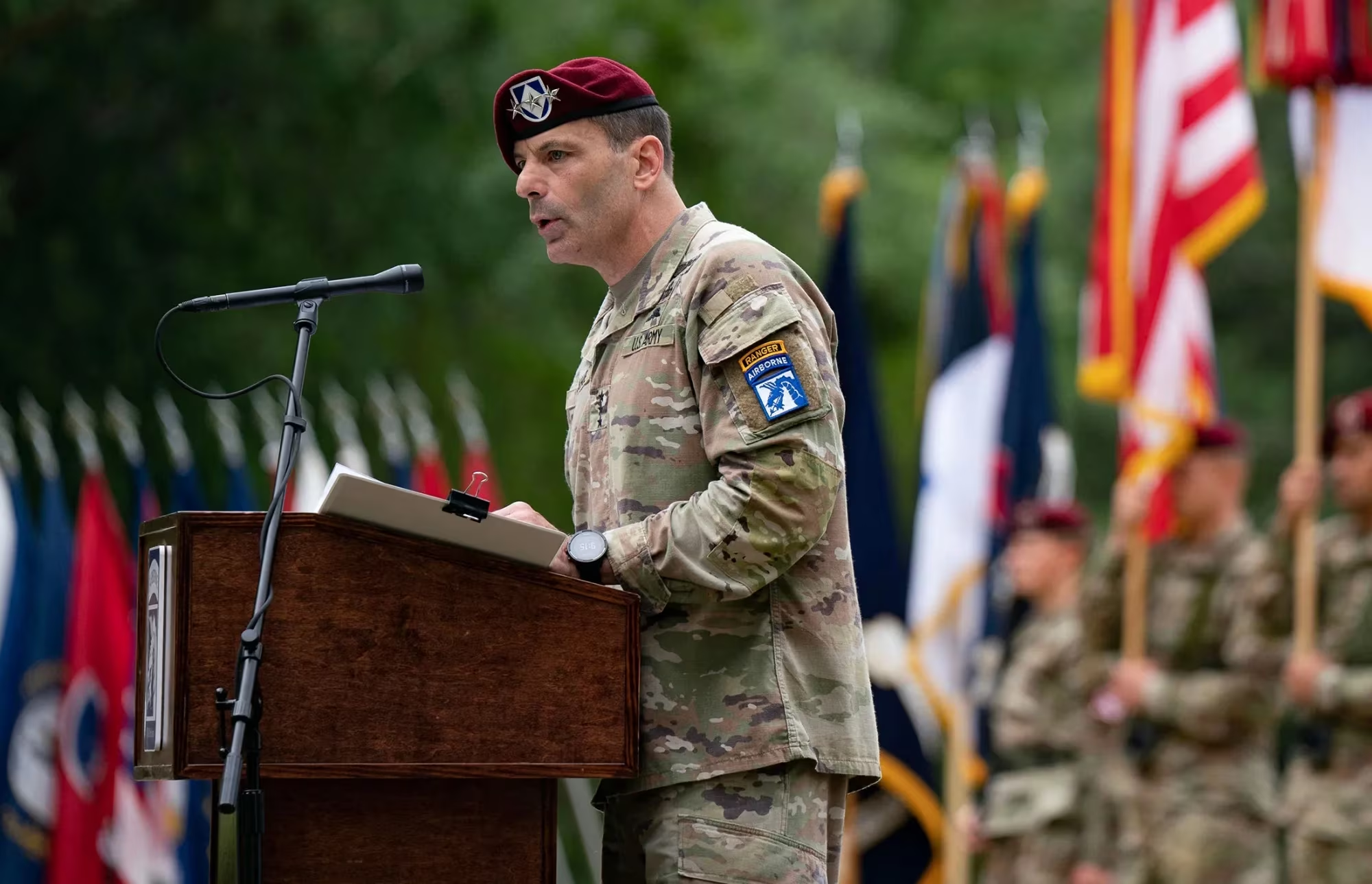
Gen. Christopher Donahue, the commander of US forces in Europe and Africa, left his post on Thursday. His departure, which had earlier surprised military leaders, became another signal that Donald Trump’s administration intends to reduce America’s defense commitments in Europe.
Donahue, regarded as one of the most promising American military commanders, will be temporarily replaced by a lower-ranking general while Trump chooses a permanent successor. He had been nominated to the post by former President Joe Biden. Donahue held the job for about 18 months—significantly shorter than the usual term for such a position.
The US Army confirmed last week that Donahue had decided to leave. The abruptness of the decision intensified speculation about the political reasons for the reshuffle. The Pentagon declined to comment on the situation, but it coincided with Defense Secretary Pete Hegseth’s drive to dismiss a number of generals appointed under Biden and reduce the overall number of senior officers.
A Pentagon official, speaking on condition of anonymity because internal matters were being discussed, said Donahue had made the decision to resign himself and had not been forced out.
“He was in every theater, across every domain,” said Douglas Lute, a former US ambassador to NATO. “This is a sharp move, a disorienting move.”
US Air Force Gen. Alexus Grynkewich, NATO’s supreme allied commander Europe, said on Thursday that Donahue’s departure would be accompanied by a downgrade of the post: it will be held by a three-star rather than a four-star general. That could mean Donahue’s successor will have less authority both in dealings with allies and within the American command system.
The move has heightened concern among former US military officials and America’s European allies. They fear the administration is only beginning to scale back the US military presence in Europe.
Trump has repeatedly said that NATO allies should shoulder a larger share of the cost of defending the continent. He has already ordered the Pentagon to reduce the number of US troops in Europe—a decision that came as a surprise to allies—and cut the military resources Washington is prepared to provide in a crisis. Last month, Hegseth announced a six-month review of the structure of US force deployments.
NATO leaders will gather for a summit in Turkey next week. The United States has already proposed offering political and economic advantages to alliance members that spend more on defense. That has deepened fears that a two-tier system of commitments could emerge inside NATO.
Tensions are also visible in contacts with individual allies. According to people familiar with the situation, senior officials from Britain’s Ministry of Defence struggled to gain attention from the US side during trips to America. Ministers flew to Washington, only to be told afterward that the Pentagon’s top officials were too busy to meet.
European allies saw commanders such as Donahue and Grynkewich as a stabilizing force because they trusted their assessments on force deployments and believed their recommendations were not driven by politics, said Jim Townsend, a former US deputy assistant secretary of defense for Europe and NATO policy.
“He was very respected on the Armed Services Committee, where I serve—members of both parties thought highly of him,” Democratic Sen. Tim Kaine of Virginia said on CBS’s Face the Nation last week. “The news that he was being moved out of the position surprised all of us. And we still have not received clear answers from the Pentagon.”
Donahue also helped organize the initial US military support for Ukraine—a policy Trump opposed during his second term.
He also became a focus of political controversy over the withdrawal of US troops from Afghanistan in 2021. Donahue was the last American service member to leave the country. The moment was captured in a now-famous photograph taken through a night-vision device: the general boarding the final aircraft out of Kabul as the city was falling under Taliban control.
Trump and Hegseth have regularly criticized Biden over the Afghanistan withdrawal. Last year, Hegseth announced a new review of the decisions that led to the pullout, describing it as an effort to secure accountability for “one of America’s darkest and deadliest international moments.”
Pentagon Chief Fires Commander of U.S. Army in Europe and Africa
Trump Again Threatens to Withdraw U.S. Troops From Germany
Hegseth Fired the Army Chief of Staff and Two More Generals—On the Eve of a Possible Ground Operation Against Iran
Macron Accused Trump of Undermining NATO-He Questions U.S. Commitments Daily and Is Seriously Discussing Leaving the Alliance