Donald Trump’s threat to withdraw US troops from Germany after Berlin criticised the war against Iran no longer looks as weighty as it once did. Much of that is because the security relationship between the two countries has ceased to be one-sided.
During the conflict, Germany allowed the military bases on its territory to be used in support of US strikes, providing Washington with critically important logistics—a form of support other European states did not agree to. At the same time, Berlin sharply increased military spending after Trump returned to the White House and announced plans to build the largest conventional army in Europe, in an effort to reduce its dependence on American protection. These efforts have been so visible that a senior Pentagon official recently described Germany as an example for Europe—a country taking greater responsibility for its own defence.
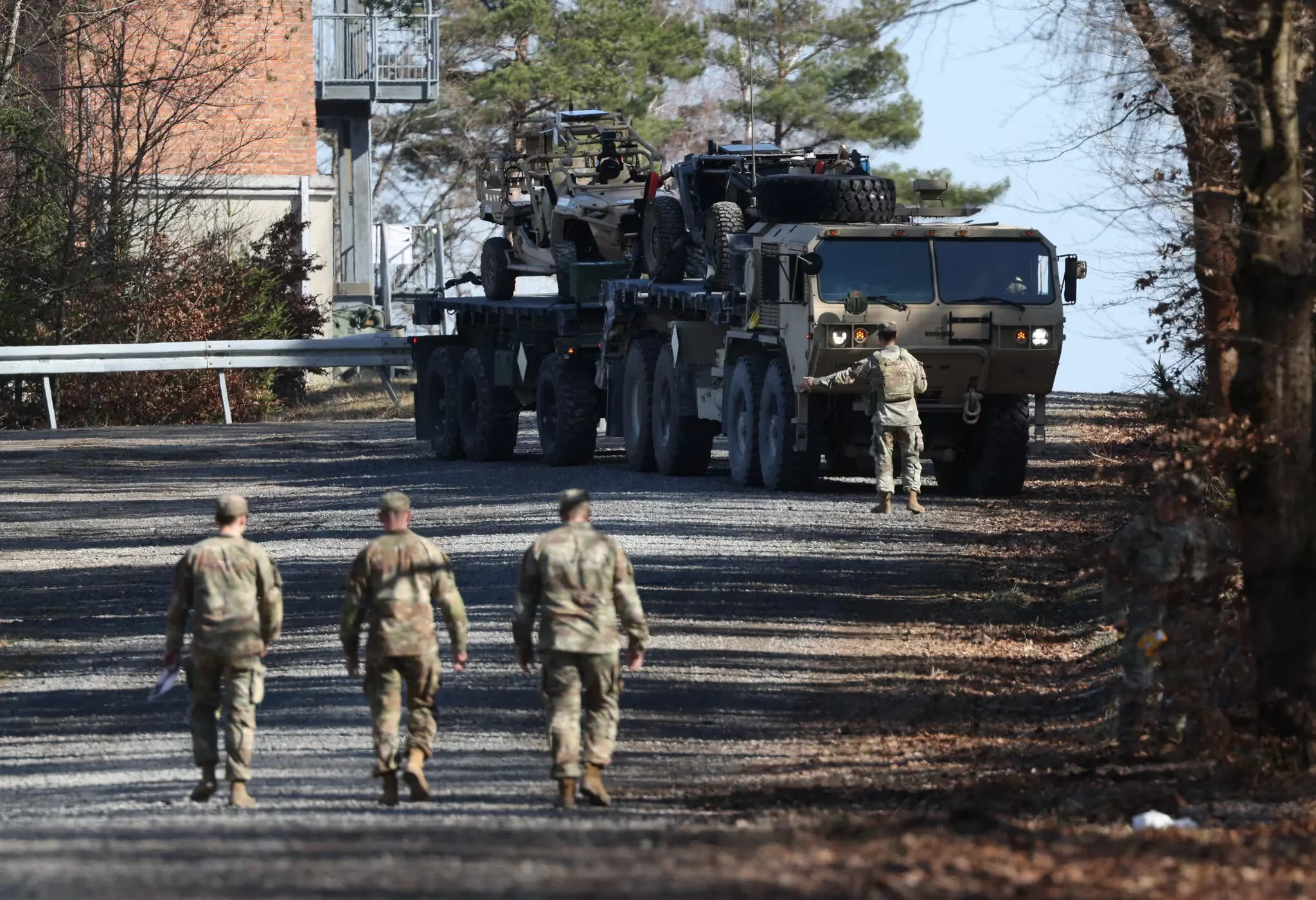
Another factor is the history of Trump’s previous statements of this kind. Germany hosts about 35,000 US troops—a legacy of the cold war. The country provides land for bases rent-free and finances the local staff who service the contingent. At the same time, a significant share of those forces operates in the interests of the United States itself—including air bases from which flights to the Middle East regularly depart, and military hospitals where wounded Americans from other regions are treated.
In 2020, during his first presidential term, Trump tried to reduce the presence, announcing plans to withdraw 12,000 troops. At the time, he called Germany a “delinquent” because it was falling short of NATO defence-spending targets. Congress blocked the initiative, and after Trump’s election defeat, Joe Biden’s administration abandoned those plans.
Since then, Germany has expanded its military commitments. Chancellor Friedrich Merz, who took office a year ago, initiated a loosening of budget constraints to enable large-scale rearmament. Berlin also helped persuade NATO allies to commit to raising defence spending and infrastructure investment to 5% of GDP by 2035—the level Trump had insisted on.
These steps have been warmly received at the Pentagon. Deputy defense secretary Elbridge Colby noted on social media that “after years of disarmament, Berlin is stepping up”.
The military situation has not changed in recent days. The political atmosphere has. Merz publicly criticised Washington. On Monday, he told German schoolchildren that Iran had “humiliated” the United States with its stance in negotiations and cast doubt on Trump’s strategy for ending the conflict. “The Americans obviously have no strategy,” the chancellor said.
Trump responded with criticism on social media, and then on Wednesday threatened a troop withdrawal, saying the United States was “studying and considering the possibility of reducing the contingent in Germany”.
Such a move could prove difficult to implement. Any reduction in the overall number of US troops in Europe requires congressional approval. The National Defense Authorization Act passed last year sets a minimum threshold of 76,000 troops on the continent. Germany hosts nearly half of that contingent, so in the event of a withdrawal Washington would either have to find new bases elsewhere in Europe quickly or seek congressional approval for a broader reduction.
Speaking to troops in western Germany on Thursday, Merz did not directly answer Trump’s remarks, but he underscored the importance of allied relations. “As you know, this transatlantic partnership is especially close to our hearts—and to mine personally,” he said, wearing a camouflage jacket with a name patch.