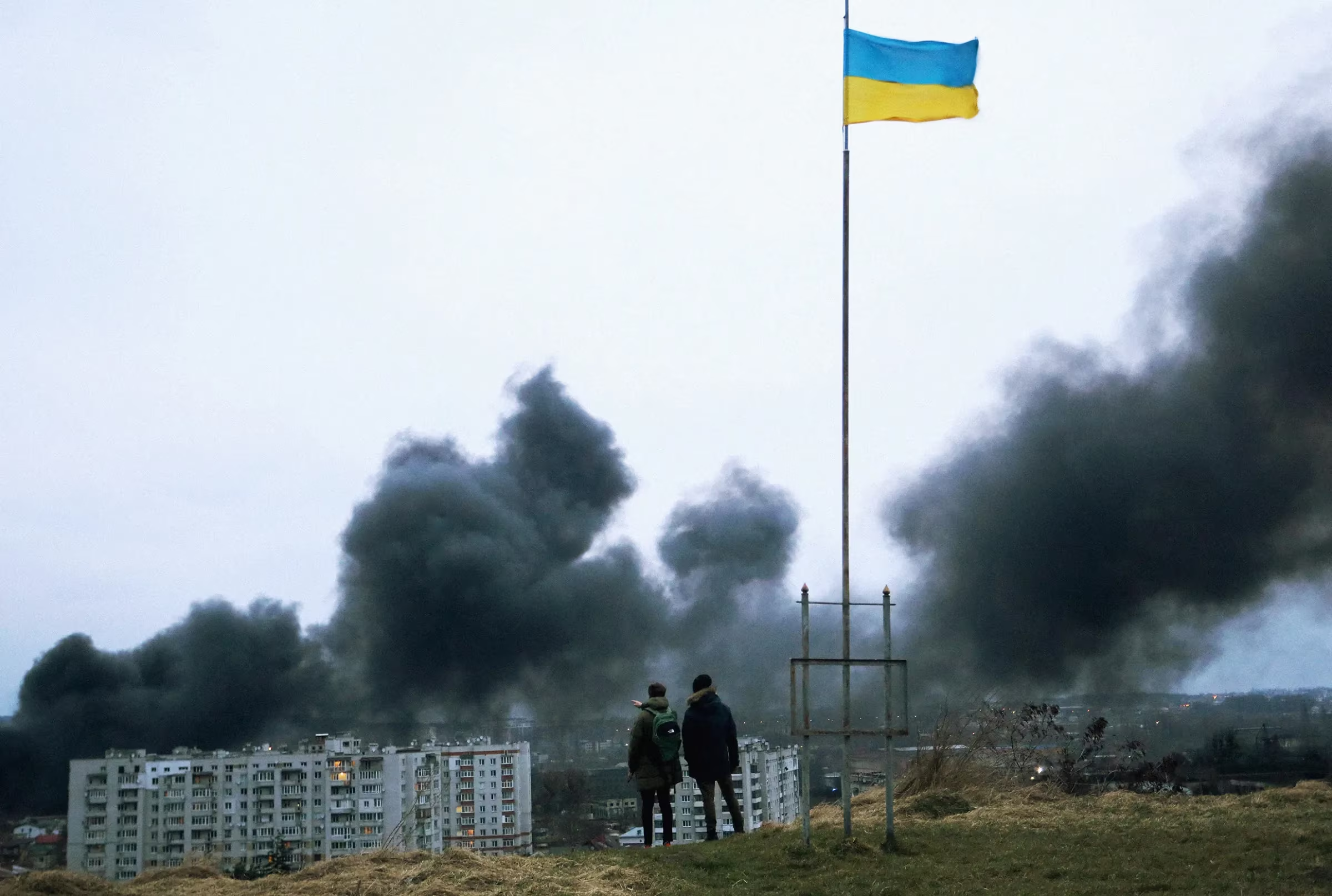
Informal negotiations with Russia have resumed, and representatives of Ukraine and the team of U.S. President Donald Trump are in daily contact, The Economist reported.
“One idea being discussed is a two-stage ceasefire: first, limiting hostilities to a 50–70 km zone on both sides of the front line, and then a broader agreement,” the publication said.
A senior Ukrainian official said Russia was unlikely to make any moves before October, when it may want to offer Trump support ahead of the elections—“and get something in return.”
“It is more likely that the Russians will drag things out until next spring, betting that a devastating winter missile and drone campaign against Ukraine’s energy infrastructure could force them into concessions,” the outlet noted.
At the same time, the report says the obstacles to a peace agreement “remain enormous.” According to The Economist, the proposed arrangements are secret and disputed, but are said to include legal recognition of Russia’s occupation of all of Donbas and Crimea, as well as de facto recognition of the current borders in Zaporizhzhia and Kherson regions. These terms are unacceptable to Ukraine.
Russia is also expected to rely on Trump’s inconsistency and on the precedent created after he lifted sanctions on Iran. “It would be unwise to expect Putin to give up his war against Ukraine, or not to use any new developments, even a ceasefire, to advance it. On the other hand, a new picture is emerging, and it is mostly being created by the Ukrainians,” the publication said.
The outlet notes that the shift in mood in Washington is “no less encouraging.” “Two Ukrainian arguments are beginning to take root there: that Russia cannot be trusted, and that Ukraine is a winner, not a loser,” the article says. Sources close to the White House also note a change in Trump’s own attitude, suggesting that the conflict has become “humanized” for him.
“Trump burned himself on his Iranian experience and now understands that without pressure on Putin, he will not get what he wants,” a former Ukrainian official said. According to European diplomats, there are grounds to believe that an opportunity may emerge to reopen dialogue with Trump on Ukraine. The cautious optimism is driven by the agreement with Iran.
Against the backdrop of these signals, Russian Foreign Minister Sergey Lavrov rejected Europe’s proposed terms for ending the war and said the real goals of European leaders were “to save the Zelensky regime and preserve it as a foothold for continuing the struggle against Russia.” The minister wrote this in an article for Politico, though the publication reportedly canceled it at the last moment.
In the article, Lavrov says Europe wants to secure a quick ceasefire only to prevent the collapse of the Armed Forces of Ukraine at the front, “freeze” the conflict without eliminating its root causes, and immediately deploy a military contingent from the British-French “coalition of the willing.” According to him, by 2030 Europe plans to achieve “combat readiness” for a conflict with Russia, and until then will try to buy time by various means. Ukraine, meanwhile, is seen as the “strike fist” of future European forces autonomous from the United States and NATO.
“This situation carries serious risks for global security, since a direct clash between NATO and Russia could quickly escalate into an exchange of nuclear strikes with catastrophic consequences,” he wrote.
Russia’s conditions, Lavrov stressed, are “reliable security guarantees for Russia on its western borders, as well as the protection of the honor and dignity of its citizens and compatriots, including the right to their native Russian language and Orthodox faith.”
“Trust cannot be restored, nor dialogue resumed, through ultimatums like the one presented to Russia in London on June 7,” the minister concluded.
At the beginning of the month, the leaders of Britain, France and Germany put forward five conditions for achieving peace in Ukraine in a joint statement. They included ending hostilities along the line of contact, security guarantees for Ukraine, freezing Russian assets until Russia compensates Ukraine for the damage it has caused, and “protecting European security interests.”
Europe Offers Russia Peace Along the Front Line—but in a Way That Ensures Moscow Will Refuse
Ukraine Talks Have Stalled Over Territorial Disputes and Security Guarantees—Report to U.S. Congress
The U.S. Has Proposed That Ukraine Withdraw Its Troops From Donbas, Reduce the Size of Its Army, and Accept a Frozen Front Line in Exchange for Broad Security Guarantees
Peace Plan: How It All Began and How It Changed