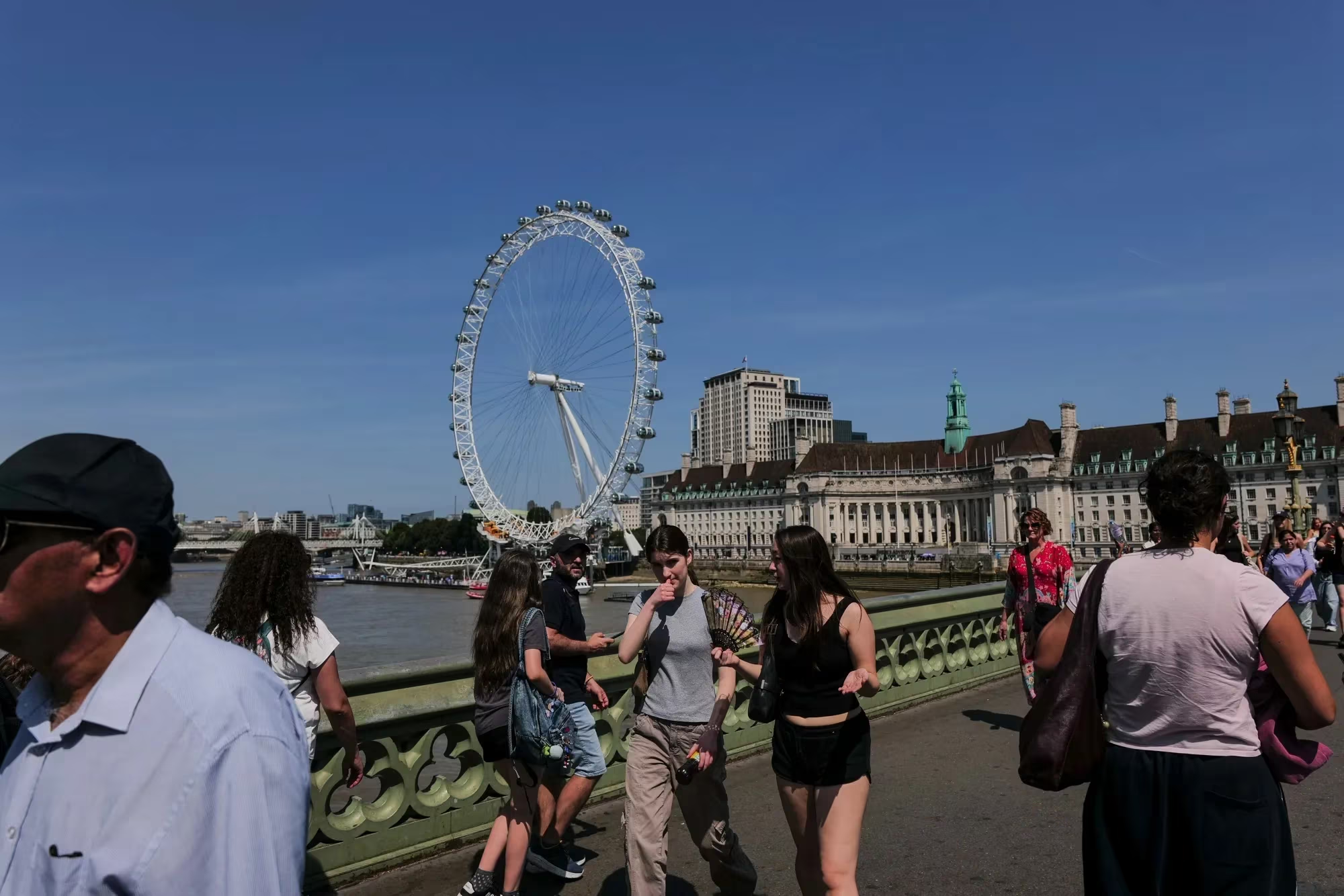
Anomalous heat in southern Britain is leading to school closures and transport disruption after overnight thunderstorms caused flash flooding in parts of London.
The Met Office has issued a rare red warning for extreme heat for parts of southern England and Wales. It will be in effect from 9:00 a.m. on Wednesday until 9:00 p.m. on Thursday. Temperatures are expected to rise to at least 39°C, which could set a June record.
According to researchers and the Met Office, climate change is making summers in Britain hotter, while heatwaves are becoming more frequent and intense. The current heat is moving north from the continent under the influence of a high-pressure zone, changes in the jet stream and a developing El Niño.
“These are record-breaking temperatures, and they will affect people’s health,” said Met Office meteorologist Alex Deakin. According to him, Britain is “not adapted to these temperatures” because it encounters them rarely.
Several schools and nurseries in London have already introduced shortened days. Nonsuch High School for Girls in Sutton, Camden School for Girls and St Dunstan’s asked parents to collect children at 1:00 p.m. Aerodrome Primary Academy in Croydon canceled off-site activities because of the heat.
National forecasters warned of possible transport disruptions and infrastructure damage.
In the morning, service on the Elizabeth line was disrupted because of flooding: according to Transport for London, trains were not running to Heathrow Airport terminals 2, 3 and 4.
Rail passengers were advised over the next two days to limit travel in red-warning areas to what is strictly necessary. According to Network Rail, trains are expected to continue running, but extreme weather may affect the condition of tracks and ground, as well as signaling and power systems.
Transport for London urged passengers to check route status before traveling and consider whether their journey is truly necessary. Because of the forecast heat, disruptions are possible on rail and Underground lines. London Overground and the Elizabeth line may be among the most vulnerable.
Experts warn that extreme heat poses health risks.
“A heatwave in June is a normal occurrence, but temperatures approaching 40°C were unprecedented for Britain before 2022,” said Professor Richard Allan of the University of Reading. According to him, this week’s heat will be more humid and oppressive, making it harder for the body to cool itself and posing particular danger to people with chronic illnesses.
Thunderstorms hit London overnight. The fire service received about 400 calls related to flooding and fires caused by lightning. Thames Water’s discharge map shows sewage spills across London.
The extreme weather coincided with London Climate Action Week.
“Britain is not ready for the consequences of climate change,” said Stefan Smith, professor of energy systems and the urban environment at the University of Reading. According to him, building design and urban planning must adapt to hotter conditions.
Heatwave in Europe Caused 2,300 Deaths
The European Agency Warns of Rising Climate Risks
The World Is Losing Control Over the Pace of Global Warming
Scientists Warn of the Risk of a “Super El Niño” This Year—It Could Hit Global Food Security