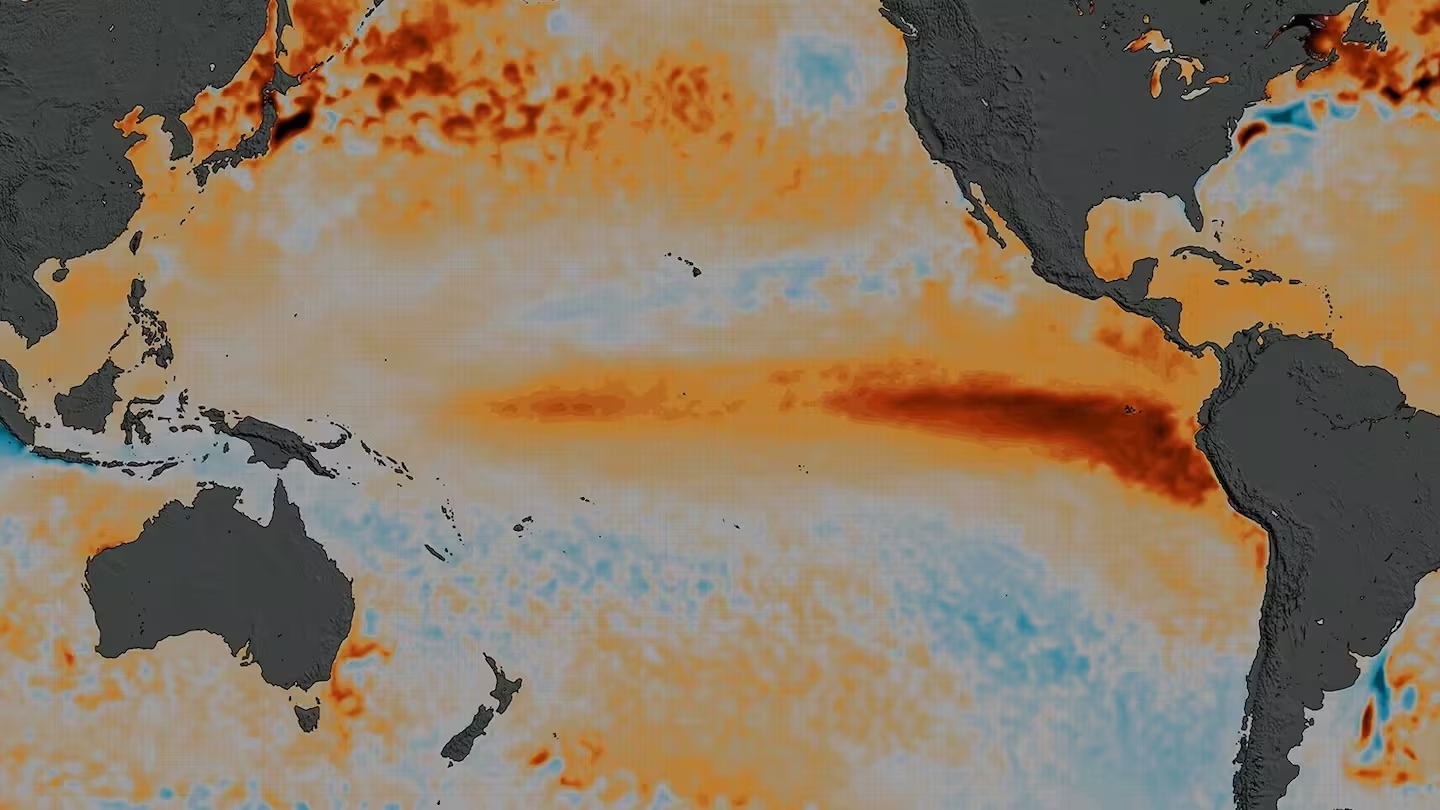
Scientists are warning about the risk of a new powerful El Niño cycle that could intensify global climate disruptions and threaten food security. That is according to [The Washington Post](https://www.washingtonpost.com?utm_source=chatgpt.com).
El Niño is a periodic warming of surface waters in the equatorial Pacific Ocean that can influence weather patterns around the world. This year, water temperatures in parts of the eastern and central Pacific are forecast to rise roughly three degrees above average and approach record levels.
The newspaper notes that one of the strongest El Niño events in recorded history—in 1877 and 1878—coincided with severe droughts and crop failures that triggered famine in India, China, Brazil, and several other countries. Historians estimate that more than 50 million people died, representing roughly 3–4 percent of the world’s population at the time. Adjusted for today’s global population, that would amount to at least 250 million deaths.
Researchers warn that similar climate shocks could theoretically happen again today.
Washington State University associate professor Deepti Singh said multi-year droughts similar to those seen in the 1870s remain possible, but current climate conditions make the potential consequences even more dangerous.
“Concurrent multi-year droughts like those in the 1870s can happen again. What has changed is that our atmosphere and oceans are now significantly warmer than they were in the 1870s, which means the associated extremes could be even more severe,” Singh said.
According to Singh, intensifying droughts linked to a possible “super El Niño” could create major risks for food, water, and economic security across many parts of the world.
“The heightened drought risk associated with this super El Niño event would threaten food, water, and economic security in many regions, with potentially global consequences for interconnected socio-economic systems,” the scientist added.