This is the story of the 425th Separate Assault Regiment “Skala”—one of those cases where, gradually, piece by piece, a picture emerges that is deeply unsettling.
It began with an investigation by Babel. Journalists found that in the Armed Forces of Ukraine’s Skala assault regiment, at least 26 non-combat deaths of recruits were recorded over six months—and those deaths may have been the result of abuse and beatings. People died during preparation and training, between late 2025 and spring 2026. Most died shortly after being mobilized. The official causes of death were most often listed as pneumonia, cardiovascular disease and other illnesses. Dry medical formulations behind which, it turns out, something very different was hidden.
Relatives of the dead told the same story: medical help was provided late, and signs of beatings were found on the bodies. The investigation collected testimony about cruel treatment of recruits, beatings, confinement in locked rooms and unauthorized methods of coercion.
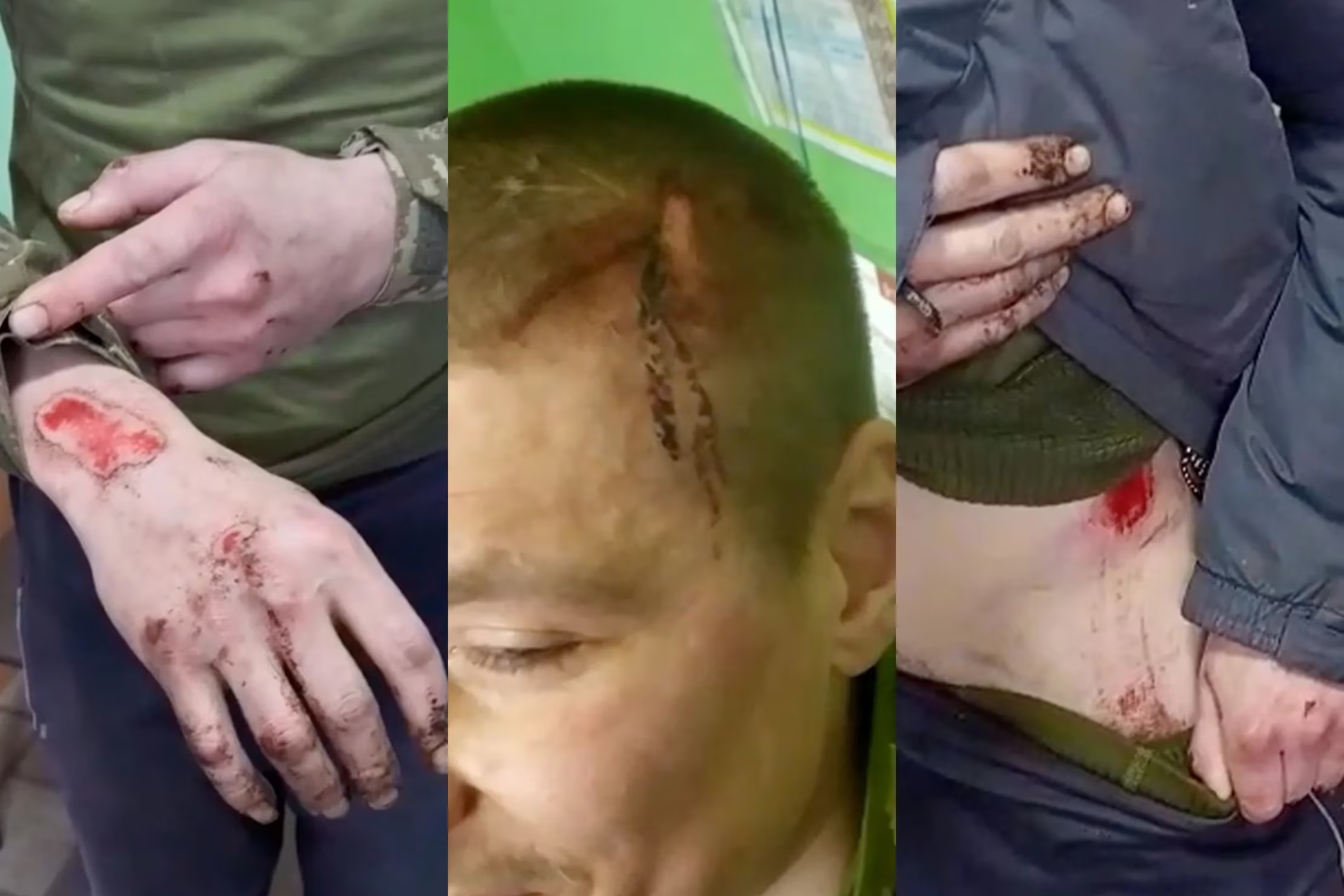
One of the central figures in the investigation is Oleksandr Semenov. He fled the regiment’s location to a hospital in Kropyvnytskyi. He had injuries: a smashed head, broken fingers, a cut on his back and scratched arms. A man fled his unit—to a hospital.
The article mentions the regiment’s distribution point, which was called the “chicken coop.” It was guarded by “turnkeys”—the word itself, drawn from the vocabulary of camp guards, says something about how the place was run. In the “chicken coop,” there were constant acts of abuse and beatings, as well as exhausting physical punishments for any infraction.
And then the investigation lists what adds up to a system. Stories in which relatives learned of a death only after the fact, while the circumstances remained unclear or contradictory—the family’s version against the unit’s documents. Testimony that some soldiers managed to get in touch before their deaths and describe beatings, cruel treatment and a worsening condition—before contact was cut off. Confinement in locked rooms or punishment cells, without normal access to communication and without basic conditions. Forced restriction of movement—people were kept under constant control and were not allowed to leave freely even for everyday needs.
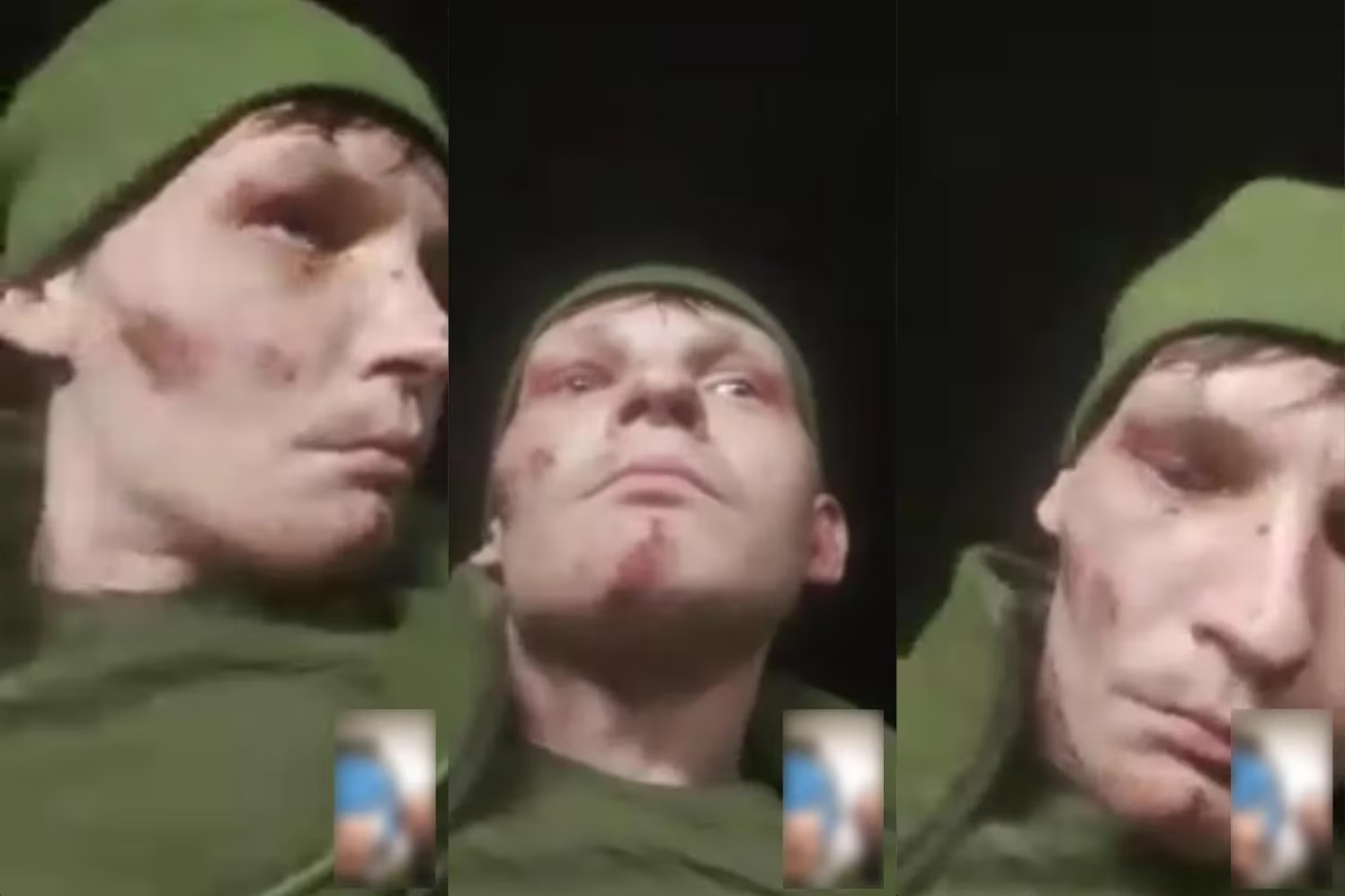
And then there are details that chill the blood. Recruits in the regiment were called “disposables”—a hint at imminent death in combat. There were many drug users in the regiment, as well as people with mental illnesses—and both groups were brought into service. And the recruits’ camp was mined around its perimeter. Some soldiers were blown up by those mines.
The military ombudsman’s office confirmed that its inspection found shortcomings in medical support, and that the share of non-combat deaths in Skala is higher than in most other units.
The regiment itself denied all of this. Skala said the authors generalized and reduced the unit’s entire history to isolated tragic cases. According to the regiment, 18 of the 26 deaths described by Babel occurred in a hospital or on the way to one and were linked to illnesses among mobilized soldiers. The regiment also said that most of the claims in the article were based on testimony from “SZCh men”—that is, those who had gone absent without leave. The command, meanwhile, said it was ready to cooperate with law enforcement and promised to analyze the issues raised.
But behind the general figures are specific people, and their stories are the most frightening part of this case
Ivan Terentiev, 46. He was called up for service on February 20. Five days later he arrived at military unit A4862, and three days after that he was dead—his sister Olena told Korotko. Relatives learned of his death only a week later. The certificate listed the cause of death as “unspecified cardiomyopathy”—although the man had never previously complained about his heart. When relatives saw the body, they began to suspect that Terentiev may have been killed.
His sister’s words are better than any retelling: the body was half blue, the collarbone and ribs were broken, the neck was turned. On the left arm were traces of an IV drip; they said some kind of help had been provided. The knees were scraped, as if he had been dragged somewhere. Relatives were also sent photographs—the man lying dead in a tent, on the ground, “on black plastic.” An investigative team questioned a medic, who said that the soldier with the call sign “Teren” arrived at the training facility on February 25, complained of feeling unwell on the 26th, and for two days in the tent they supposedly gave him an IV drip. His sister, after beginning to find out more about the unit, learned: “they don’t live there for more than two weeks.” Her phrase is worth quoting in full—“What they do to them there, I can’t even imagine. Missing persons, pneumonia, cardiomyopathy. To lose a person in six days—what could they have been doing?” The family is trying to secure a second independent examination, but the unit is not engaging with them.
The second story is that of Bohdan Nechyporchuk. It was told by Oleh Torhalo, head of the public organization Ukraine–India: Bohdan, the son of one of his employees, was “busified” straight from his workplace, a service station in Kyiv. His father is a person with a Group I disability and cannot move independently, his mother is also disabled, and his brother is at the front. At the recruitment center, Bohdan underwent a rushed medical commission the same day, which, according to Torhalo, was a complete fiction: whatever a person said, everyone was declared fit without restrictions. That same day he was sent to one of Skala’s units. His mother somehow found the commander’s number, called him and asked him to give her son a phone for at least one call. At first he told her not to worry—“they would make a tiger out of her son and send him to defend the country.” Then he stopped answering. No contact, no information. Two weeks later, Liudmyla Stepanivna received a call from the hospital and was told to come identify her son’s body. She saw a large dent in his head, bruises, beaten hands taped to his body. At the hospital, they said Bohdan had been brought in already in a coma and that nothing could be done. The cause of death was listed as “toxic encephalopathy”—and explained this way: “when drugs have eaten the brain to a vegetative state.”
There was another high-profile episode—this one not involving a recruit. Azad Safarov, a journalist with the British television channel Sky News, said that in March 2025, near Dobropillia, soldiers from the Skala assault regiment shot up a car with a female driver working for the British channel. The journalists’ car had been left on the regiment’s premises. It had initially been agreed that the driver would be sent to a shelter at headquarters, but she was never called there—instead, she was told to remain in the car. Closer to night, someone approached the woman and fired at the car at point-blank range from the driver’s side. The vehicle was armored, and the driver was not injured. After the shooting, another soldier ran out, began collecting shell casings and told her to leave, “because now they’ll shoot up the rest of the cars.” She tried to explain that the press officer had told her to park and stay in the car. Instead, she was threatened: if she did not leave, things would get worse. Twelve bullet holes were later found in the car. According to Safarov, Sky News could have caused an international scandal, but chose not to—“because they support our country.”
After the publications, an official response began to unfold
The SBI—the State Bureau of Investigation—opened an inquiry. Its press service said the information had been entered into the Unified Register of Pre-Trial Investigations under Part 5 of Article 426-1 of Ukraine’s Criminal Code—abuse of power or official authority by military officials that caused grave consequences. The SBI said a set of procedural actions was being carried out to establish an objective picture of events, verify the reliability of the published facts and clarify all the circumstances described in the journalistic material. It was noted separately that the journalist who conducted the investigation said that in Kropyvnytskyi, recruitment-center employees and representatives of the Skala regiment took away 160 drug-dependent people who had come to a methadone distribution point.
Then a monitoring group from the ombudsman’s office went to the site to check information about possible violations of servicemen’s rights in the 425th regiment. Military ombudsman Olha Reshetylova said that since January the military ombudsman’s office had sent nine reports to law enforcement about crimes in the regiment.
And finally, a personnel decision. The commander of the 425th Separate Assault Regiment Skala, Lieutenant Colonel Yurii Harkavyi, was suspended from his duties for the duration of the investigation, regiment spokesman Bratushchak said. The General Staff of the Armed Forces of Ukraine confirmed to Babel that he had been suspended the day before, pending the review. Law enforcement officers are working in the unit, and the pre-trial investigation is being conducted by the State Bureau of Investigation. In addition, by decision of Commander-in-Chief of the Armed Forces of Ukraine Oleksandr Syrskyi, a comprehensive commission headed by the deputy chief of the General Staff is working in Skala. The wording of the grounds for the investigation included something that had not appeared in the first reports: possible violations of servicemen’s rights and driving soldiers to suicide in Skala.
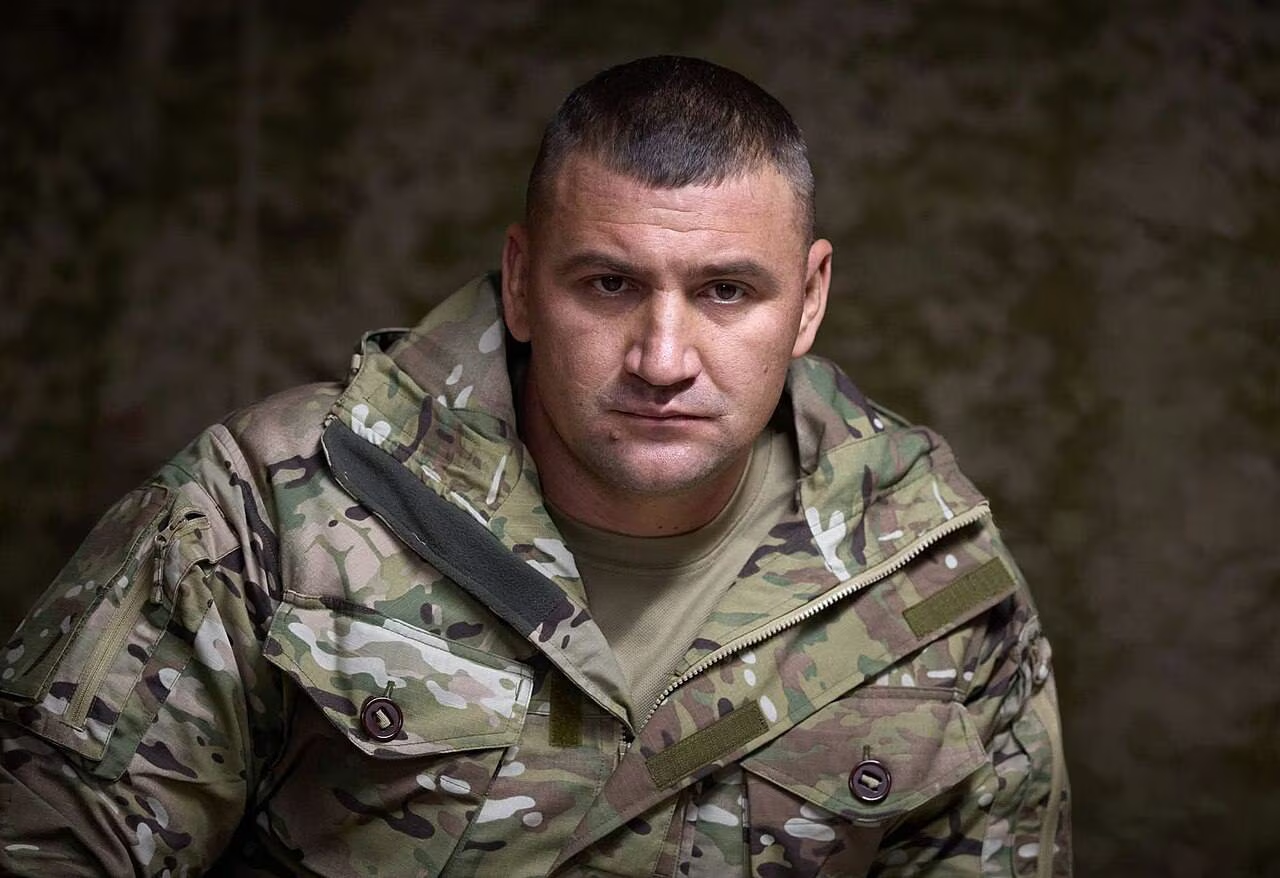
Yurii Harkavyi.
That is the full chain—from the dry figure of “at least 26 non-combat deaths” to specific names, to Terentiev’s half-blue body, to Bohdan’s hands taped to his body, to the mined perimeter of the training camp and the word “disposables.” A story in which people mobilized to defend the country died before they ever reached the front.
Lubinets Reported 6,000 Complaints Against Military Recruitment Offices and Killings Inside Draft Centers
Mobilized Man Dies in Donetsk Region With a Head Injury—His Body Was Found on a Road After Recruitment Officers Were Taking Him to a Training Center
In Dnipropetrovsk Region, a 43-Year-Old Architect, Yevhen Lagunov, Died Six Days After Mobilization
At Odesa TCC, People Were Beaten, Held and Threatened With Sexual Violence