Central and Eastern Europe faced intense heat on Saturday after the “heat dome” that brought record temperatures this week shifted east.
That brought some relief to Western European countries that had suffered from the heat in recent days, but it was followed there by a higher risk of severe thunderstorms. Hot weather can intensify such events.
The current heat wave is already Europe’s second in two months. June temperature records were broken in the United Kingdom, France, the Netherlands and other countries. Scientists said in a report that such extreme heat at the start of the European summer would have been “virtually impossible” before carbon emissions began warming the planet.
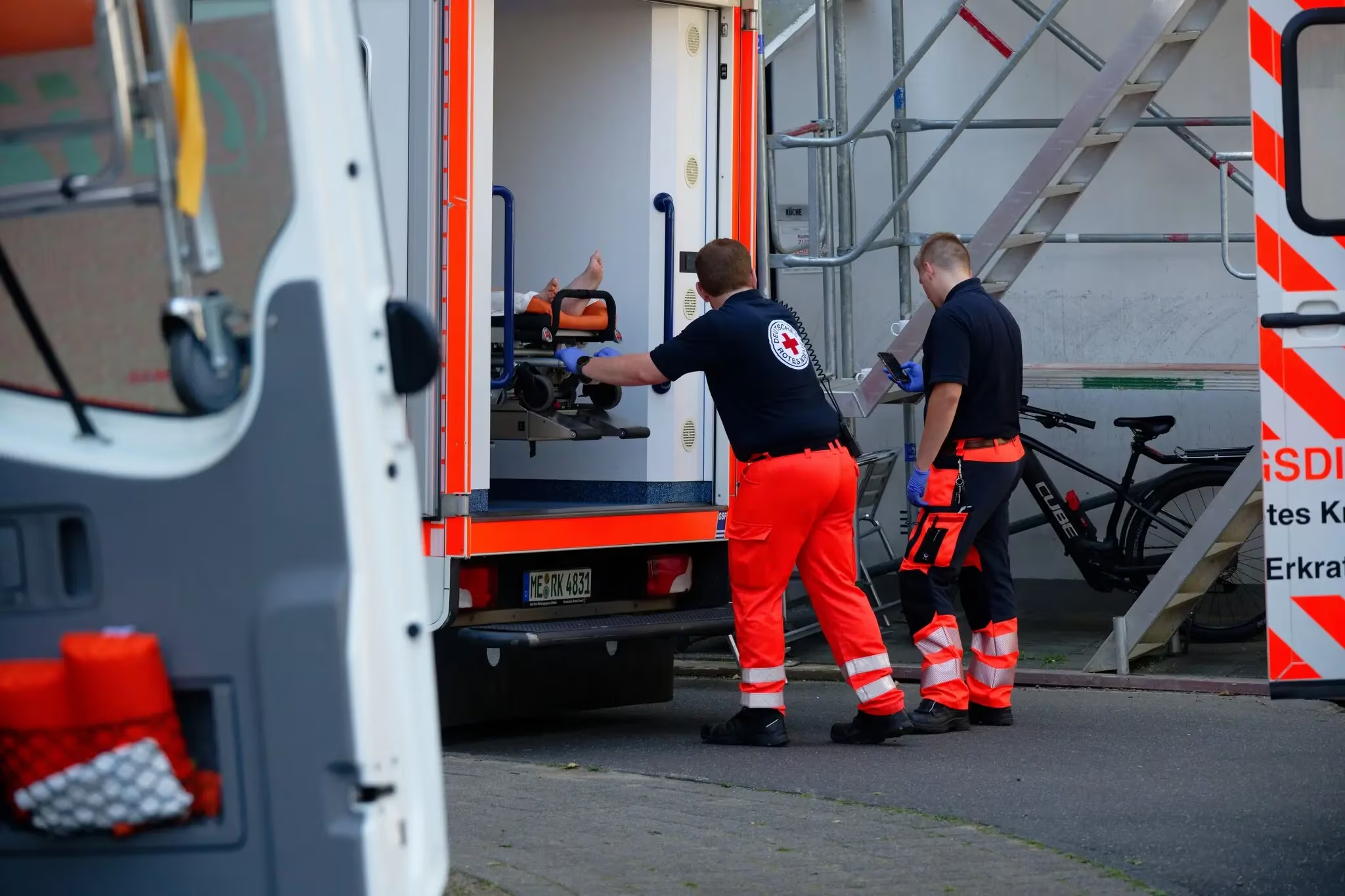
The heat disrupted everyday life for millions of people and, at a minimum, contributed to a number of deaths. Elderly people and those who work outdoors proved especially vulnerable. In France, at least 40 people drowned, most of them young people swimming in unequipped areas.
The heat wave also tested Europe’s infrastructure, affecting railways, factories and electricity providers.
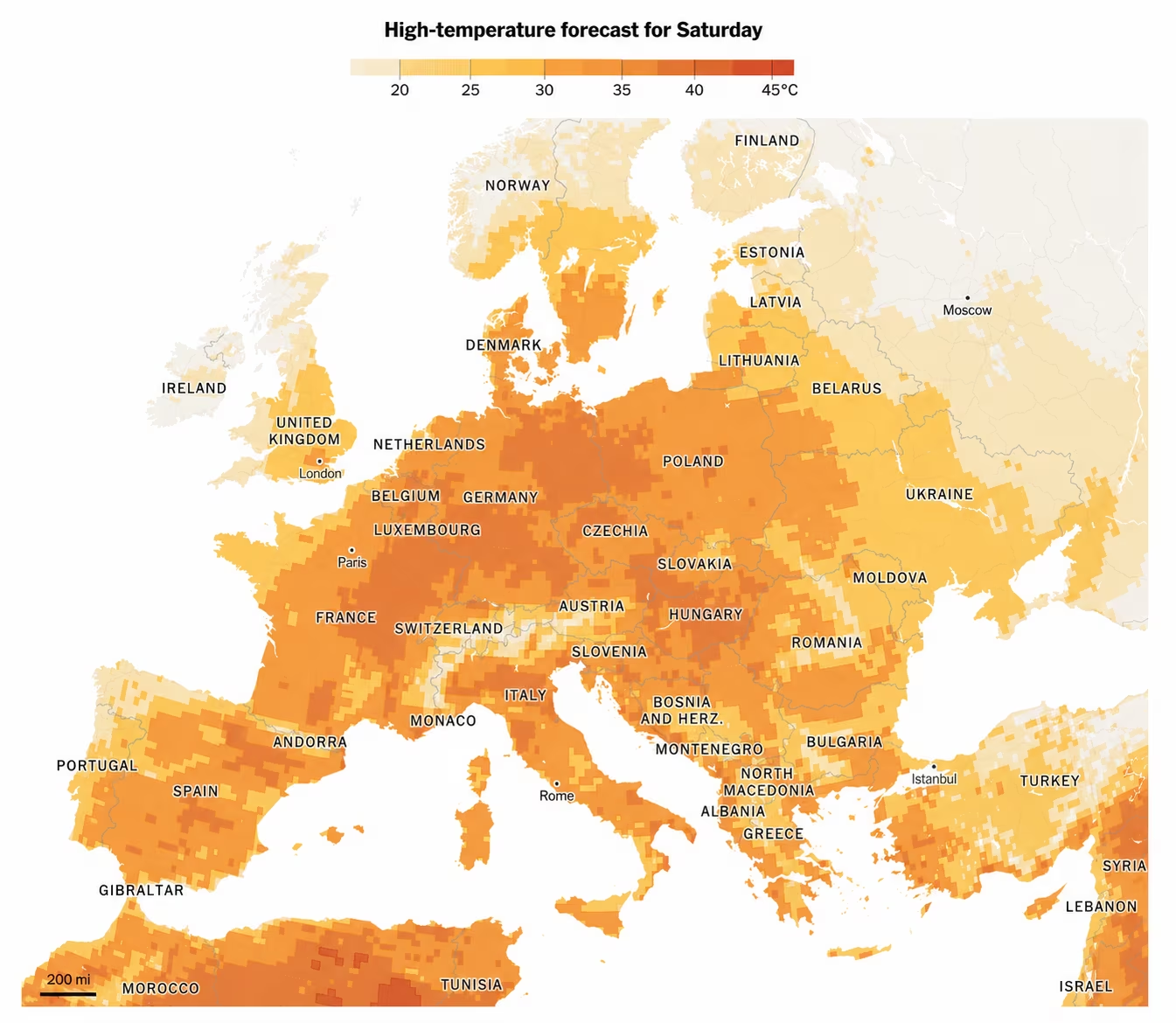
Note: data are as of 3:00 p.m. Central European Time on Saturday, June 27. The forecast is for 24 hours beginning at 8:00 a.m. Central European Time on Saturday, June 27.
In Germany, the heat is expected to peak on Saturday, Deutscher Wetterdienst, the national weather service, said. Severe heat is forecast across the country, with temperatures reaching 42 degrees Celsius in places. The northwestern coast has already become cooler, but severe thunderstorms and downpours are expected there.
In France, where the highest average temperature ever recorded was registered this week, the heat has begun to ease in some areas. However, in the northwest, temperatures could also reach 42 degrees on Saturday, Météo-France said. Severe thunderstorms, wind gusts and hail are possible in several regions.
Almost all of Poland was under a heat warning on Saturday. According to the European MeteoAlarm system, temperatures exceeded 34 degrees, and in some areas they could rise to 39 degrees on Sunday and Monday.
Italy’s Health Ministry issued its highest-level heat warning for more than a dozen regions. The Swiss weather service warned of a “high danger” of extreme heat across much of the country, including the areas of Zurich, Basel and Lausanne.
An elevated alert level for extreme heat is also in effect in parts of Austria, Czechia, Croatia, Hungary, Romania, Slovakia and Slovenia.
Europe is heating rapidly. Scientists have no doubt that heat waves around the world are becoming hotter, more frequent and longer-lasting, while Europe is warming faster than any other continent.
In 2025, almost the entire continent was warmer than usual. Researchers estimate that in recent years, tens of thousands of heat-related deaths have been recorded annually in Europe.
The problem is compounded by the fact that many homes, schools and businesses in Europe were built for a cooler climate. In the United Kingdom, many buildings were, on the contrary, designed to retain heat, making cooling especially difficult during hot weather.
Air conditioning is not a quick solution. In France, installing it has become a politically sensitive issue, while in the United Kingdom high electricity prices deter many residents.
Even in hotter Mediterranean cities, where old courtyards, heavy shutters and white stone facades help keep buildings cool, many new buildings were constructed using technologies that retain heat.