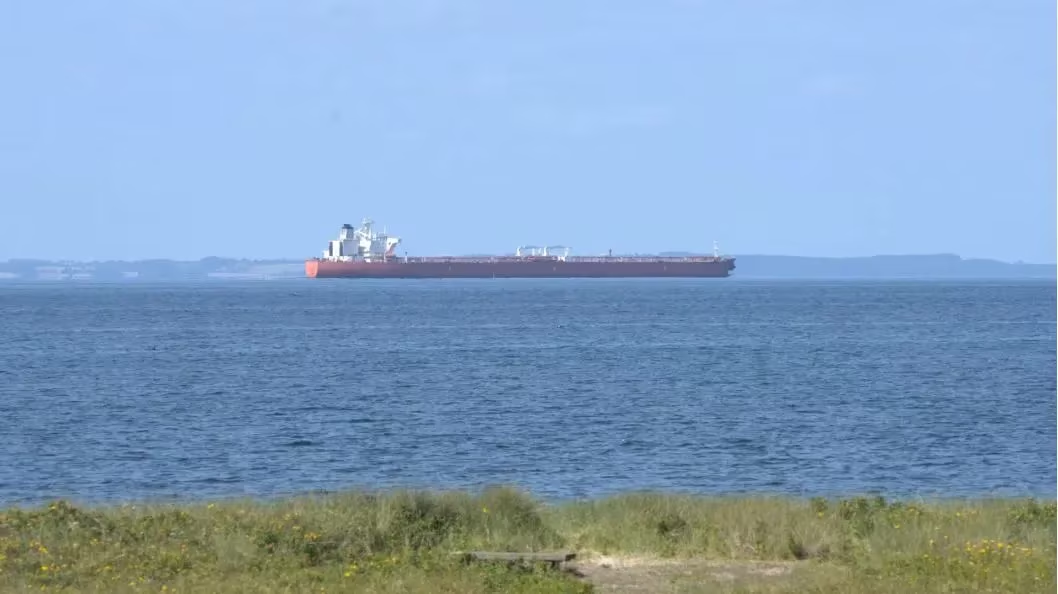
Seaborne exports of Russian oil rose in the week to June 21 to 4.11 million barrels per day—the highest level since the start of the year, Bloomberg calculated based on tanker-tracking data.
The four-week average to that date was 3.89 million barrels per day. Since the start of the year, Russia has exported an average of 3.52 million barrels per day by sea—more than the average for any year since February 2022.
The increase is partly linked to Ukrainian strikes on Russian refineries. Oil that Russia cannot process after attacks on a plant in Moscow and a refinery in Tyumen is being exported in crude form.
However, Russian oil is facing competition from Iran. After the temporary peace agreement between Washington and Tehran, the Strait of Hormuz formally remains open, the naval blockade of Iranian ports has been lifted, and the U.S. Treasury has allowed sales of Iranian oil until August 21—during negotiations on a final settlement.
Some Iranian grades effectively compete with Russia’s Urals, and demand for them in India is growing. At the same time, a parallel U.S. waiver that made it easier for Indian buyers to purchase Russian oil expired on June 17 and has not yet been extended.
This is already reflected in prices. Since the start of June, global oil prices have fallen by about 16%, while the main Russian export grades have dropped by 20%.
According to Argus Media, over the four weeks to June 21, Urals in the Baltic Sea fell by $8.10 to $69.98 a barrel. Urals in the Black Sea declined by $7.90 to $69.37, while ESPO in the Pacific fell by $7.40 to $79.87.
The price of Russian oil for buyers in India, including delivery, has been falling for a ninth consecutive week. Over that period, it has declined by $8.80 to $90.36 a barrel.
The Russian budget assumes an average annual oil price of $59 a barrel.
Russia Loses About 25% of Gasoline Production After Strikes on Refineries
Ukrainian Strikes on Ports and Refineries Have Put 20% of Russia’s Oil Export Capacity Out of Action
The White House Agreed to Lift Restrictions on Iranian Oil Exports
Indian Refineries Prepare to Nearly Halt Purchases of Russian Oil After U.S. Sanctions on Rosneft and Lukoil