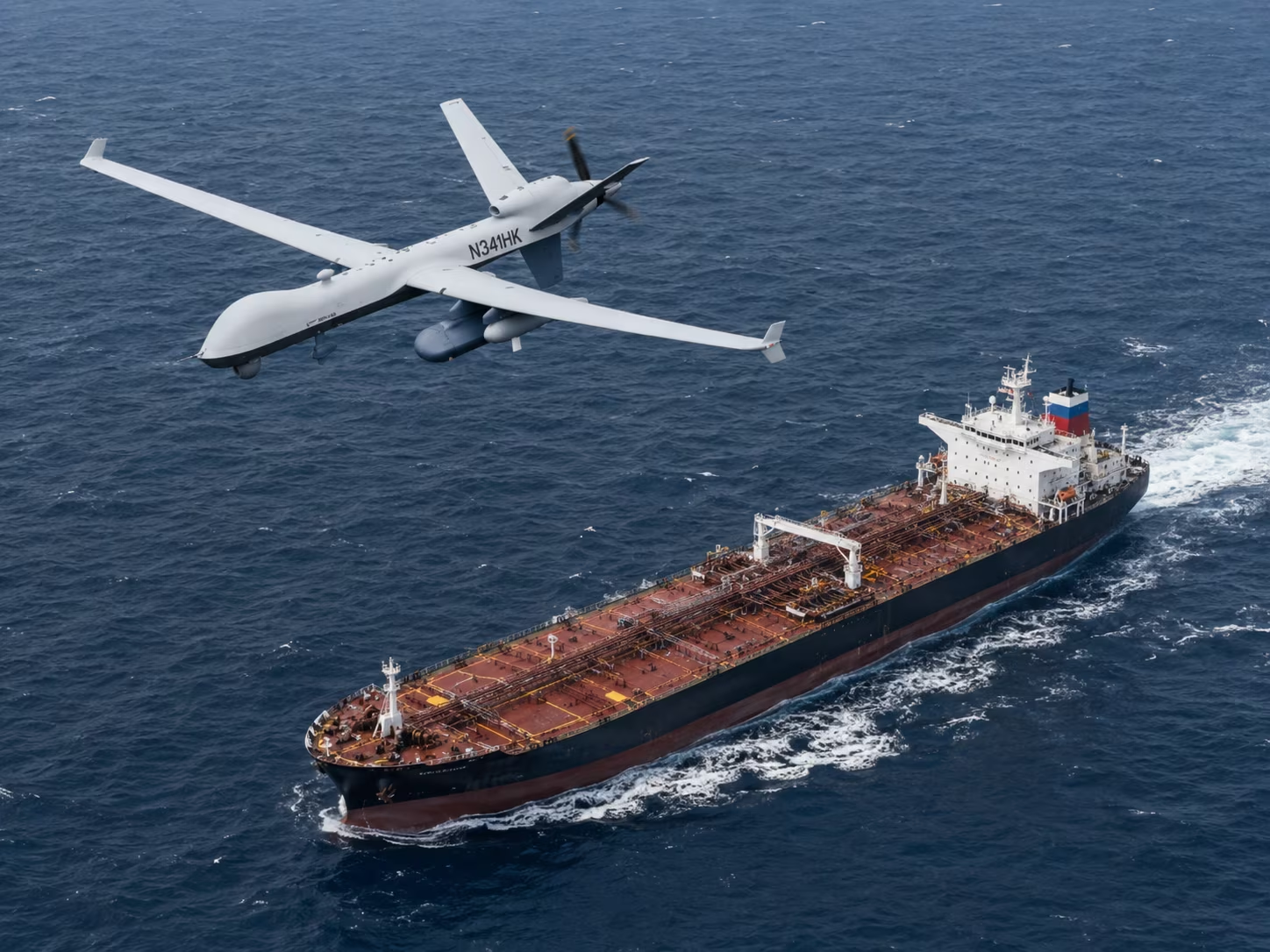
Russia used a fleet of sanctioned shadow oil tankers to launch reconnaissance drones over sensitive nuclear infrastructure sites in Britain and continental Europe, according to a report by the International Institute for Strategic Studies (IISS).
According to the institute, the maritime reconnaissance campaign lasted 15 months and affected 13 European countries. From August 2024 to February 2026, it was aimed at identifying vulnerabilities in NATO’s air-defense system.
The operations targeted military bases, airports, and critical civilian infrastructure.
IISS matched specific drone sightings with the locations of vessels from Russia’s shadow fleet. One of the main targets was RAF Lakenheath in Suffolk—a US facility that was preparing to host nuclear weapons. In November 2024, drone incursions were recorded over the base and three other US facilities in England over the course of a week.
Similar episodes were recorded near strategic nuclear sites in continental Europe. Drones appeared near the heavily guarded Île Longue submarine base in Brittany, which hosts a significant part of France’s nuclear deterrent, as well as near air bases in Belgium and the Netherlands capable of receiving nuclear weapons.
After Russia’s invasion of Ukraine in 2022, the mass expulsion of Russian intelligence officers from European capitals seriously weakened Moscow’s traditional human-intelligence network on the continent. In response, analysts believe, the Kremlin began using sanctioned commercial vessels as covert mobile platforms for launching drones.
Analysts identify the sanctioned Russian tanker Hav Dolphin as one of the key vessels in the campaign. During the incidents near the Suffolk air base, it was anchored off Hull and was later spotted near Portsmouth during a security breach at a French naval base in December 2025.
Analysts assess that the Hav Dolphin could have been used as a mobile carrier for sophisticated long-range military drones, including the Orlan-10. These compact multipurpose aircraft can operate at distances of more than 300 miles, allowing them to be launched from international waters or busy commercial routes.
The IISS report also describes other coordinated maritime operations. In one case, drones were launched from a Russian intelligence vessel toward a French aircraft carrier. The geography and chronology of these episodes, experts assess, point not to isolated incidents but to an organized state-run program.
Another episode occurred on December 2, 2025, in the Irish Sea—during Ukrainian President Volodymyr Zelensky’s diplomatic visit to Dublin. Four large military-type drones remained over the Irish naval vessel LÉ William Butler Yeats for two hours before heading toward the coast.
During the incident, the Maltese-flagged vessel Vezhen was 37 miles from the scene. It had previously been detained by Swedish authorities in connection with damage to undersea fiber-optic cables in the Baltic Sea. Satellite data also confirmed the nearby presence of a second, unidentified vessel traveling with its transponder switched off to avoid tracking.
Western politicians and defense officials initially played down the significance of the airspace violations and were slow to formally link them to Moscow. Security experts warn that such caution exposed a gap between the West’s defense capabilities and its political willingness to use them.
NATO’s Maritime Command said the alliance is analyzing emerging threats linked to the launch of drones from the sea. NATO representatives stressed that allies maintain constant surveillance of the maritime domain and have the necessary capabilities to respond both to sabotage against infrastructure and to operations involving drones launched from vessels.
France Seizes Russian Shadow-Fleet Tanker Off Sicily
U.K. Conducts First Operation Against Russia’s Shadow Fleet
Fifteen Unknown Drones Detected Over a Military Base in Belgium
The Russian Vessel Yantar Collects Data on NATO Subsea Cables and Pipelines