Two police officers involved in the Henry Novak case have become subjects of an investigation into gross misconduct, the British police watchdog said.
Novak, 18, died in December 2025 after he was stabbed by Vikrum Digwa in Southampton. After the attack, Digwa falsely told police he had been the victim of a racist assault. As a result, the officers who arrived handcuffed Novak and treated him as a suspect, even though he said he had been stabbed and could not breathe.
The investigation will also determine whether race played a role in the actions of the police. The case has prompted accusations from the far right that Novak’s treatment was linked to “anti-white” bias.
The Independent Office for Police Conduct initially treated the officers involved in the incident as witnesses, meaning it saw no signs of possible misconduct. On Wednesday, however, the agency said it had changed its position. This followed, in particular, meetings with Novak’s family and its lawyer, as well as a formal complaint from the murdered student’s relatives.
The IOPC said it would examine “whether Henry’s race or religion, or that of the Digwa family, influenced the actions and decisions of the officers, and whether police decisions were shaped by assumptions or prejudices connected to community tensions at the time.”
According to the agency, both officers who were first to arrive at the scene late on the evening of December 3, 2025, may have breached professional standards relating to duties, the use of force and conduct that undermines public confidence in the police.
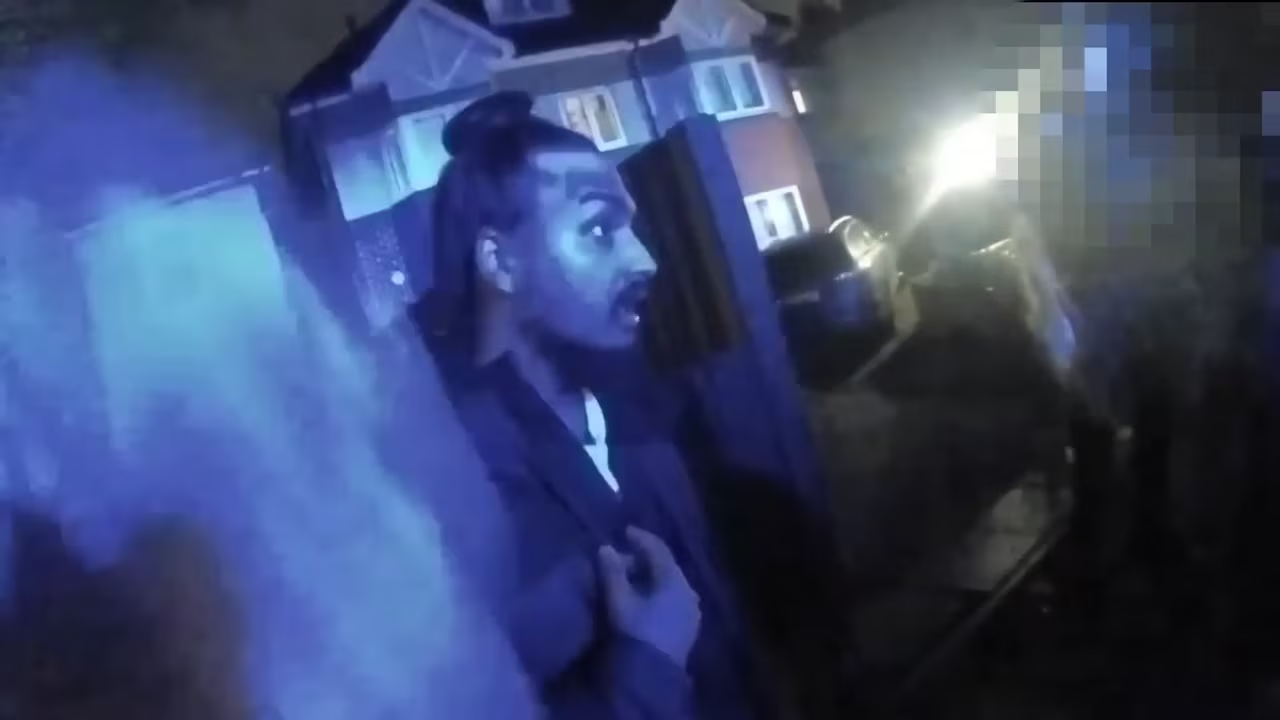
Footage from one of the police officers’ body cameras.
This concerns a possible failure to recognize that Novak needed urgent medical assistance, to respond immediately to his statements that he had been stabbed and could not breathe, and the decision to arrest and handcuff him instead of providing first aid.
According to the IOPC, one of the officers may also have breached the standard relating to authority, respect and courtesy, because he allegedly effectively ignored Novak’s statement that he had been stabbed.
IOPC representative Derrick Campbell said investigators met with Novak’s family earlier this month and discussed the investigation in detail after the criminal proceedings concluded.
“We have a duty to continually review the evidence obtained during the investigation and assess any indications of possible misconduct by the officers involved. As a result, two police officers will now become subjects of a gross-misconduct investigation,” he said.
Campbell stressed that issuing notices of possible gross misconduct does not automatically mean disciplinary proceedings will follow. A decision on whether the officers should face a disciplinary panel will be made after the investigation is completed.
The IOPC will also examine why Novak was put in handcuffs while Digwa was not handcuffed when he was detained on suspicion of attempted murder after police realized Novak had been stabbed.
Digwa has already been found guilty of Novak’s murder and sentenced to life in prison with a minimum term of 21 years. The sentence is being appealed by senior government officials, who consider it excessively lenient.
In Southampton, 18-Year-Old British Student Henry Nowak Was Fatally Wounded by Sikh Attacker Vickrum Digwa, but Police Mistook Him for the Assailant and Handcuffed Him
British Court to Review “Too Lenient” Sentence for Sikh Man Vikram Digva, Who Killed 18-Year-Old Henry Novak