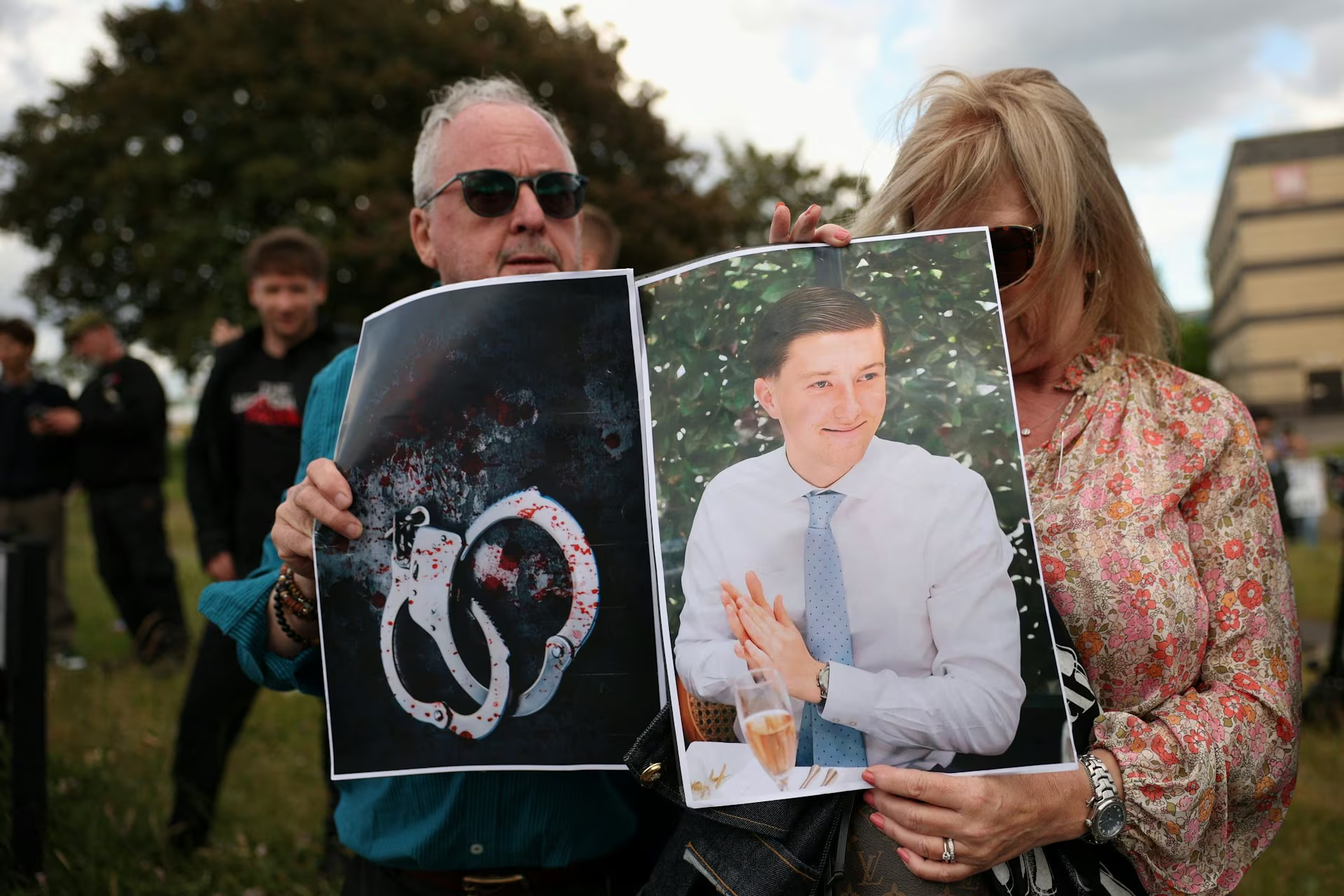
Eighteen-year-old Henry Nowak was killed in Southampton in December 2025 after a chance encounter on the street. He was returning to student accommodation after an evening walk when 23-year-old Vikrum Digwa stabbed him. After the attack, Digwa lied to police, claiming that he himself had been the victim of a racist assault.
The case drew broad attention after body-camera footage from police officers was released on Monday, June 1, after Digwa had already been sentenced to life in prison. It shows officers handcuffing Nowak as he lay dying while his attacker watched. The court heard that police kept Nowak in handcuffs for about a minute before realizing that he was gravely wounded and beginning first aid.
It was this footage that triggered the political scandal. Right-wing commentators, activists and Reform UK leader Nigel Farage interpreted the police officers’ actions as evidence of “anti-white bias.” In their version, officers believed Digwa precisely because he claimed to have been the victim of a racist attack, while Nowak was white. Supporters of this view argued that police may have feared accusations of racism and therefore initially treated the dying Nowak as a suspect rather than as a victim.
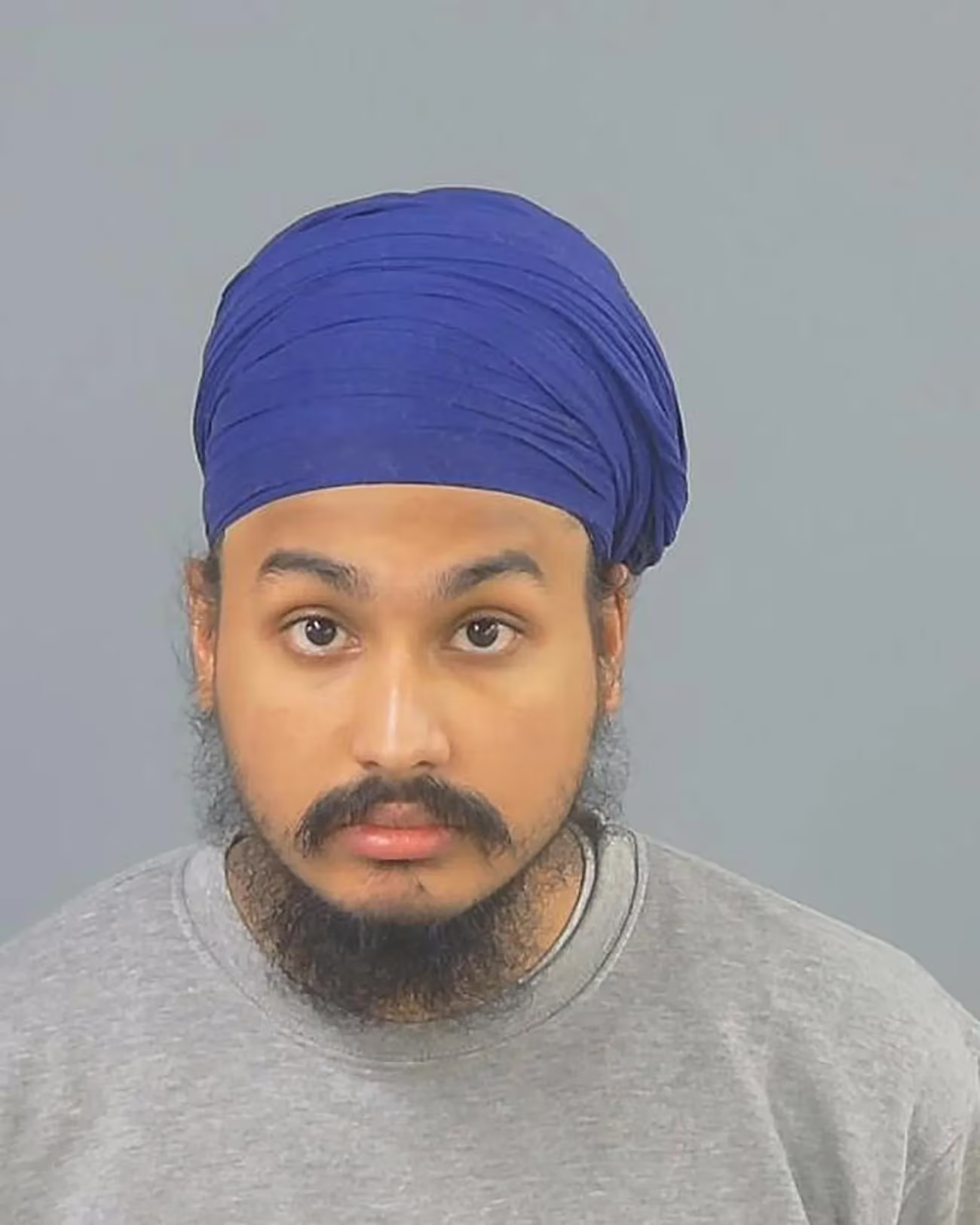
Vikrum Digwa.
Farage said Nowak’s death and the police response proved the existence of “two-tier justice” in Britain. He urged his supporters to respond with “pure cold fury” and said that “white lives matter just as much as black lives.” Those remarks quickly became part of a broader argument over whether anti-racist policing policies could have led officers to misread the situation at the crime scene.
For supporters of this interpretation, the main argument was the video itself. In it, Nowak says he has been stabbed and cannot breathe, yet officers still first place him in handcuffs. Right-wing commentators argued that such a response showed not merely an error at the scene, but a deeper problem: police fear of disregarding a racism allegation, even when it was made by the real attacker.
Nowak’s family urged people not to use their son’s death to inflame hatred. His father said he did not want the tragedy to become a cause for further division, hatred or tension. But on Tuesday evening, a protest in Southampton descended into violence.
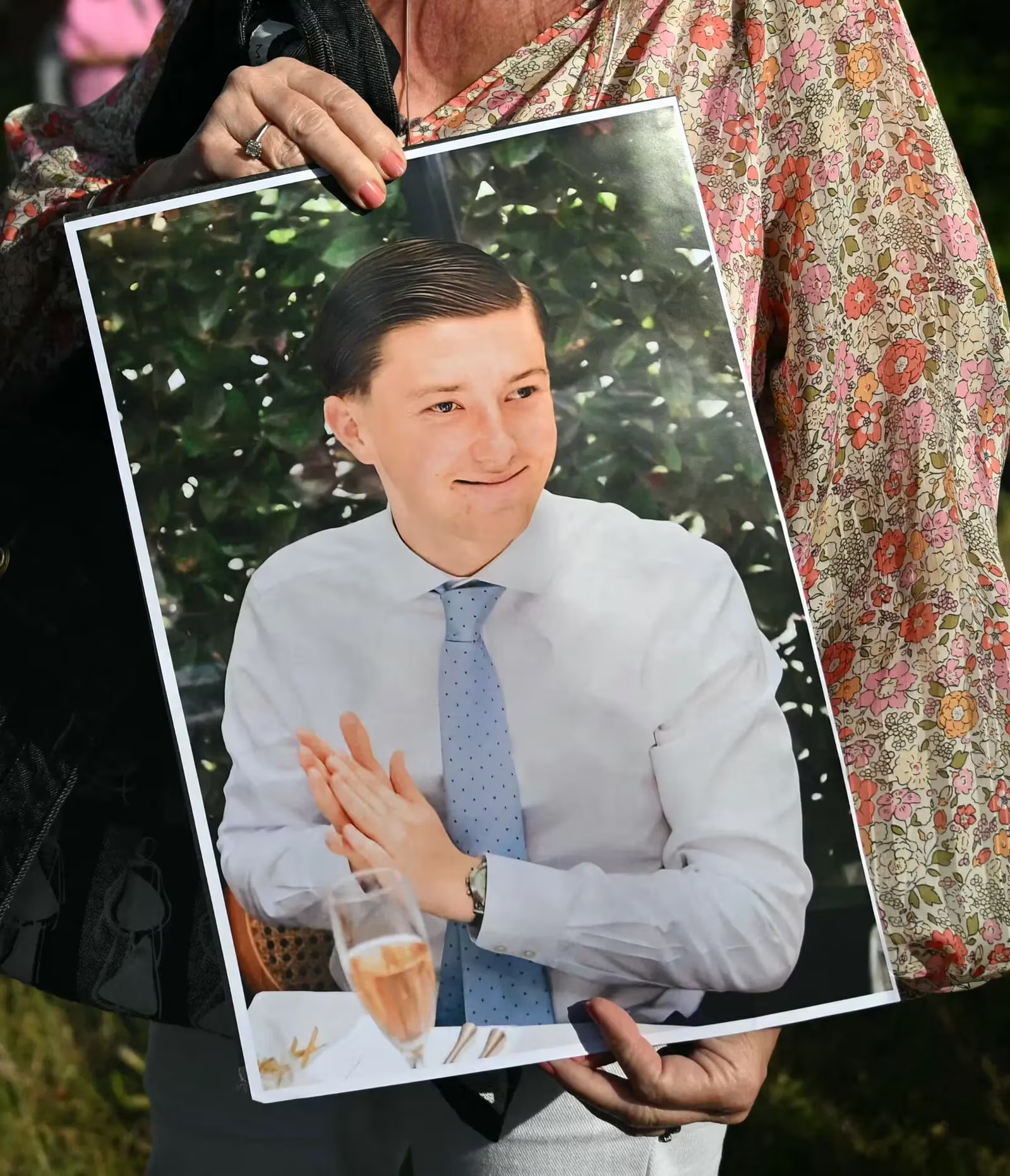
Henry Nowak, who was stabbed to death last December. His killer, Vikrum Digwa, was sentenced to life in prison on Monday.
British police and politicians urged calm on Wednesday morning after a protest in Southampton, in southern England, ended in attacks on police officers.
On Tuesday evening, hundreds of people gathered outside the city’s main police station. Some protesters then tried to reach the street where Vikrum Digwa’s family lives and clashed with officers who had blocked the road. Attacks on officers also took place in other parts of Southampton.
Video footage shows demonstrators throwing stones, flares and trash bins at police, as well as striking and kicking their shields. Some protesters were draped in the British flag.
British Home Secretary Shabana Mahmood, who is responsible for policing, called what happened “completely unacceptable.”
“There can be no justification for using this tragedy to stir up violence and disorder,” Mahmood said. “Those responsible can expect to face the full force of the law.”
She also thanked police officers who, she said, “showed great courage and restraint this evening in the face of shameful violence directed at them.”
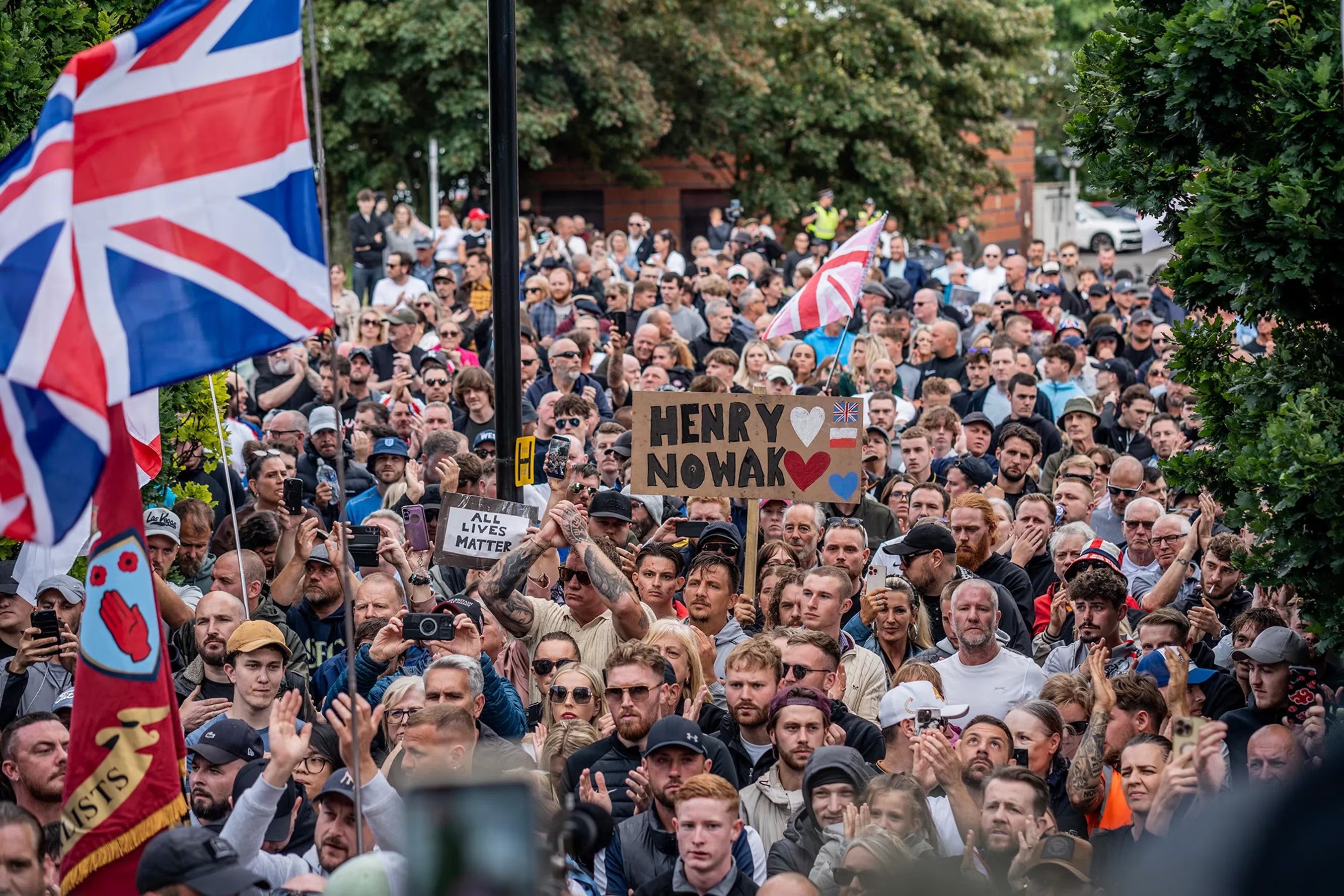
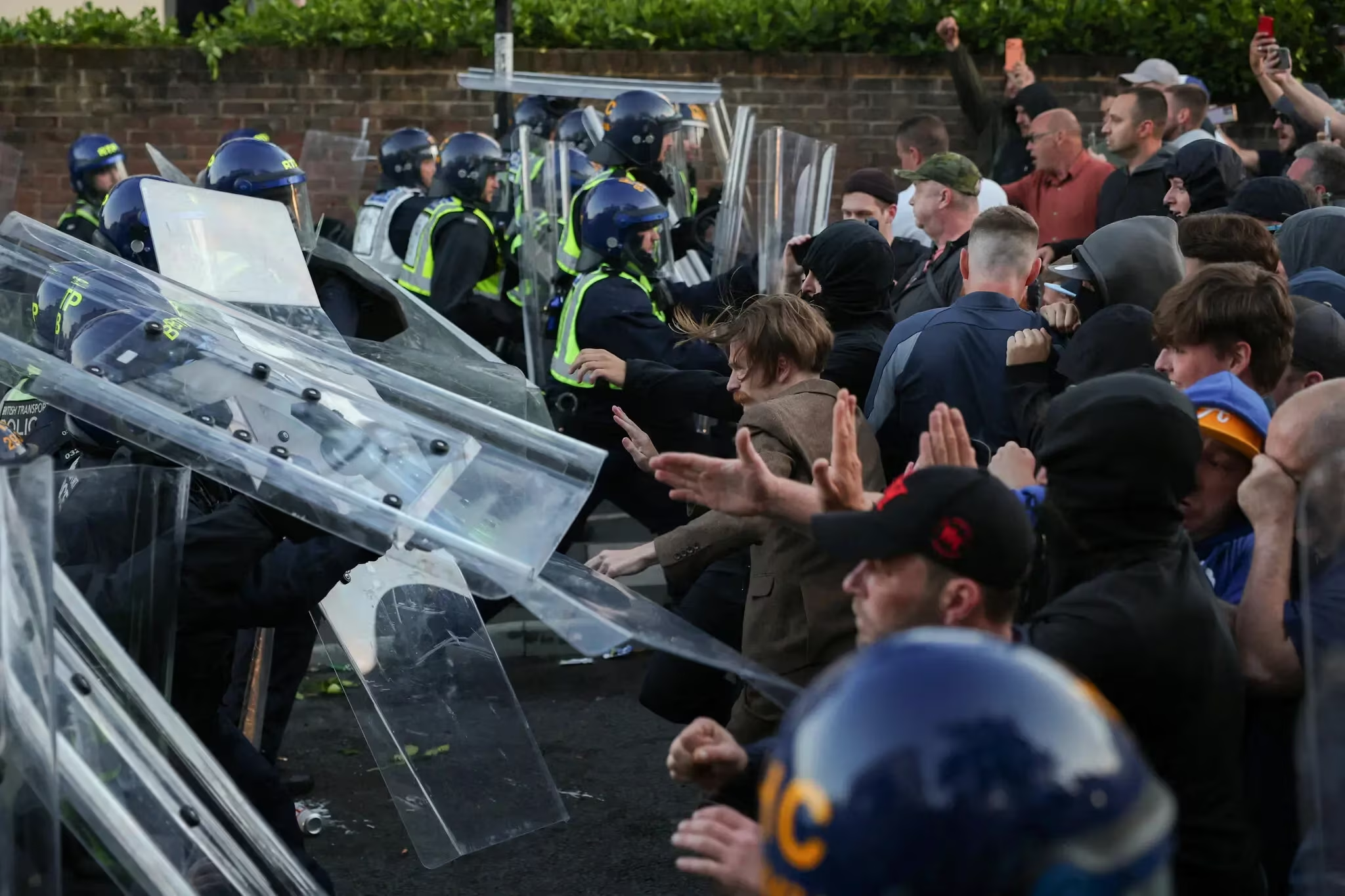
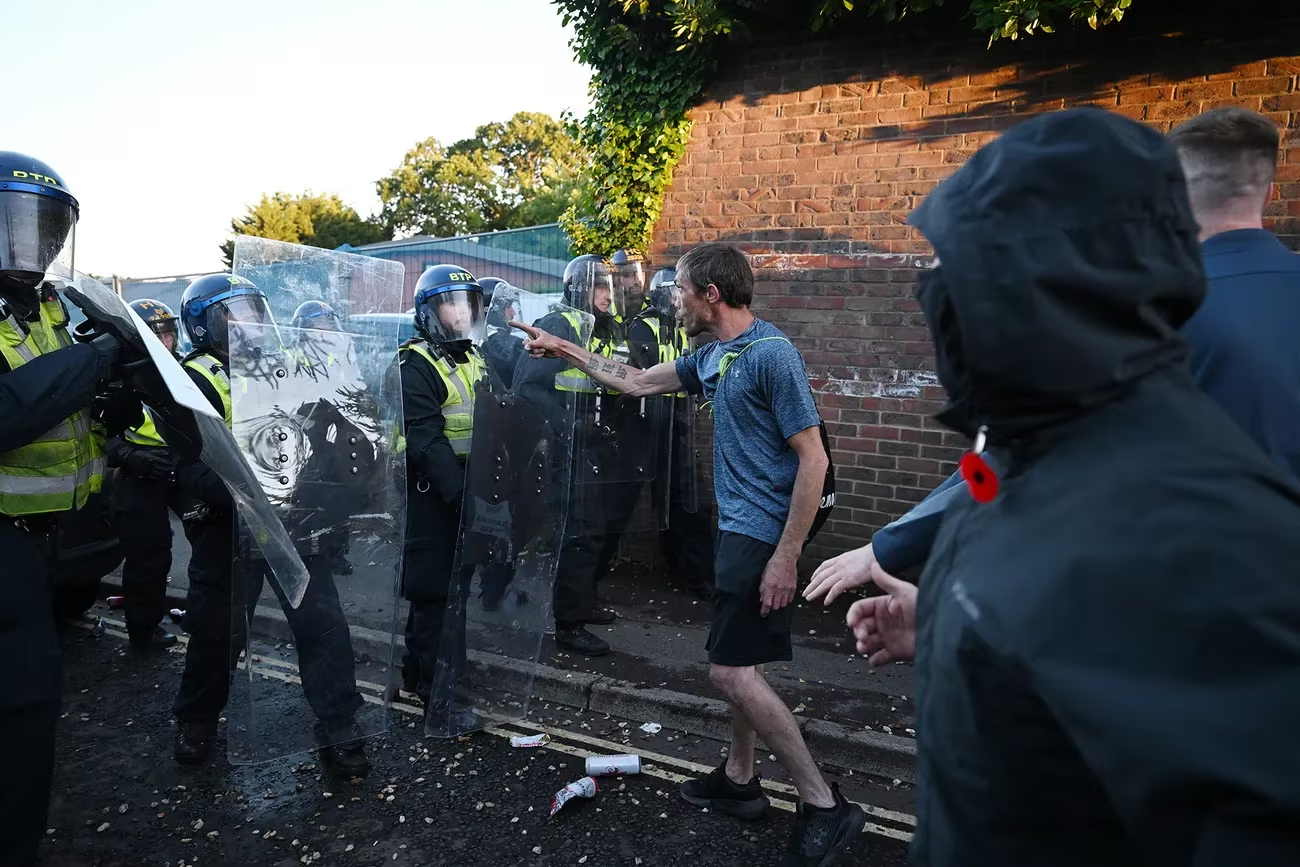
Hampshire and Isle of Wight Constabulary, which is responsible for policing in Southampton, said 11 officers were injured during the unrest.
Prime Minister Keir Starmer said in a televised interview from Downing Street on Tuesday evening that the police had “serious questions” to answer, but accused Farage of trying to use the tragedy to divide society.
“He would be wrong in any circumstances, but when Henry’s family says, ‘Please don’t do this, this is our son,’ then as politicians, as people, we should start where they start,” Starmer said.
Mahmood also said people had a right to be shocked by the footage and to demand answers from police, but that “misinformation and inflammatory comments” online were making the situation worse. She said the killing must not be allowed to pit communities against one another. She also warned that police officers with no connection to the original incident were already receiving threats.
Tommy Robinson also called for protests. Robinson, whose real name is Stephen Yaxley-Lennon, posted online calls to gather in Southampton and spoke to participants outside the police station. He said “an entire race” had been “betrayed” by British police.
The case has again drawn attention to internal documents and guidance in British policing on racism and discrimination. Some figures in the opposition Conservative Party, including Chris Philp, the party’s law-and-order spokesman, criticized the 2022 Police Race Action Plan, which referred to tackling racial inequality in policing. That document is not formal policy or training material for officers.
The National Police Chiefs’ Council, which coordinates police forces across the country, said on Tuesday that it would review its guidance on anti-racism policy to make the wording clearer.
The council’s chair, Chief Constable Gavin Stephens, said it was essential that police act “without fear or favor, keeping the peace and enforcing the law.” That, he said, is how police should earn the trust of all communities.
He noted that police forces across the country had been urged to step up efforts to combat racism and discrimination.
“We hear legitimate concerns about how some of these commitments are worded, and where necessary we can and will make changes. But that should not distract from the aim—to improve the quality of policing,” Stephens said.
These statements became part of a broader confrontation over how authorities and public figures respond to killings in which the race of the victim and the offender becomes a political factor. For critics of the police, the Nowak case became not only a question of an error at the crime scene, but also an example of how fear of accusations of racism may have shaped officers’ first actions. For the government and police leadership, the main emphasis was different: preventing the killing from being used for violence, threats and clashes between communities.
It was this difference in emphasis that triggered a new wave of criticism. Shabana Mahmood, Britain’s home secretary of Pakistani origin, said the tragedy must not be used to incite disorder and that online misinformation was worsening the threats. But for supporters of the “anti-white bias” interpretation, that response looked like an attempt to quickly close down the most uncomfortable question: why police first believed Digwa’s claim of a racist attack and handcuffed a mortally wounded white student.
A similar dispute had earlier emerged in the United States after the killing of Ukrainian refugee Iryna Zarutska on a train in Charlotte. Zarutska, 23, was stabbed to death by a Black man with a long history of arrests and signs of severe mental illness. Afterward, some American conservatives said the crime would not have received such a cautious response if the racial roles had been reversed. On The View, Whoopi Goldberg urged people to “stop politicizing” the killing and said it was “not politics,” but a question of how society treats people with mental illness. For her critics, this became an example of a double standard: killings of Black people by white police officers became the basis for mass movements and the nationwide Black Lives Matter campaign, which Goldberg supported, while the killing of a white Ukrainian refugee by a Black offender was presented chiefly as a tragedy of the mental-health system.
It is precisely within this contradiction that the Henry Nowak case now sits. Some demand that people not incite violence or transfer the guilt of a criminal onto entire communities. Others see those appeals as a way to avoid discussing the question that became central after the video was released: whether modern anti-racist policy could have led police to believe a false allegation of racism more quickly than a mortally wounded white young man.