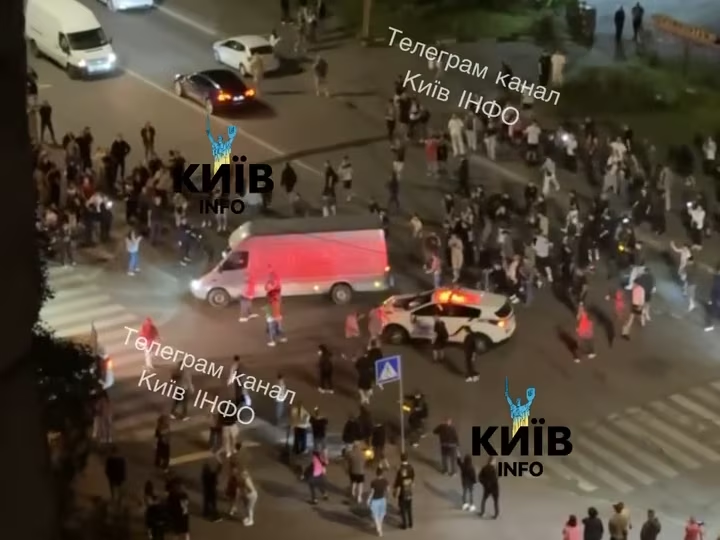
A large protest against “busification” broke out in Kyiv’s Desnianskyi district: to remove one mobilized man, as many as 15 patrol-police crews were brought to the TCC building. Judging by eyewitness footage, the man was ultimately taken away—the crowd tried to prevent his removal, and during the clash police used tear gas.
“Busification” is the term used in Ukraine for the practice of forcible mobilization, when people are detained on streets, near metro stations, at gas stations and in shopping centers and taken away in TCC (territorial recruitment center) minibuses without proper checks of documents or deferments. By the spring of 2026, such detentions had become a daily reality in large and small cities, while clashes between passersby and TCC officers and attempts to free detainees had grown from isolated episodes into regular scenes—often involving police called in to provide forceful support. The deployment of 15 patrol-police crews for the sake of one mobilized man shows the scale of resistance and how familiar this picture has become for residents.
At the same time, the problem is being systematically suppressed. Ukrainian authorities avoid public discussion of the TCC’s methods, limiting themselves to promises to “look into individual violations,” while major media cover forcible mobilization sparingly and cautiously—the main source of information remains eyewitness footage on social media. At the same time, the volume of complaints is growing: the ombudsman and human rights organizations are receiving thousands of reports of unlawful detentions, beatings and the mobilization of people with deferments and disabilities, but the response remains selective, and most incidents receive no legal assessment.
What “Doesn’t Exist.”
A Month Ago Zelensky Ordered the New Defense Minister to “Deal With Busification.”
Mobilization Reform in Ukraine May Not End “Busification,” but Turn Its Enforcers Into Police Officers
Ukraine’s Ombudsman Said the TCC Is Systematically Violating the Constitution