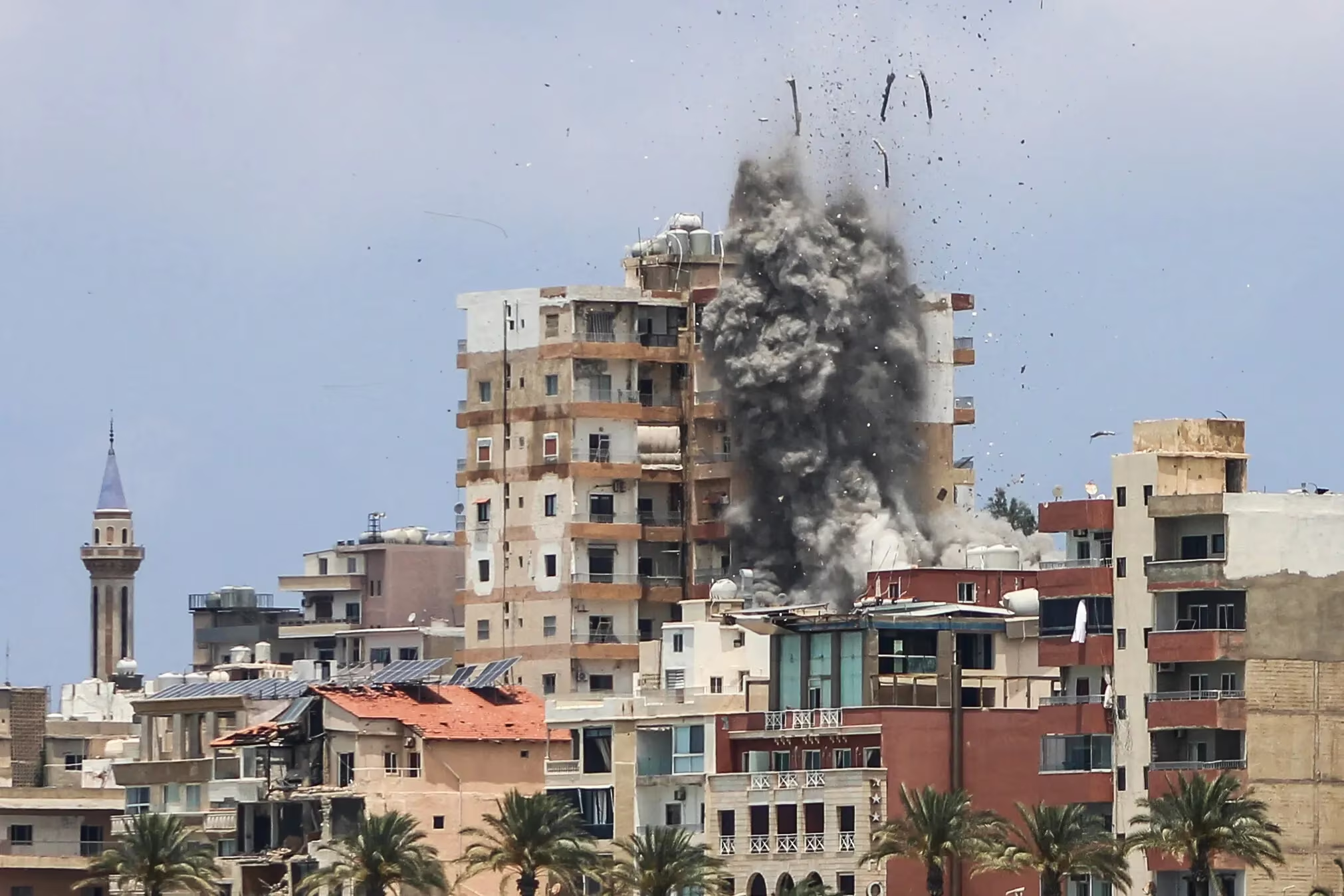
On Tuesday, Israel carried out a series of airstrikes on Tyre in southern Lebanon. The attack came several hours after the Israeli military issued an evacuation warning for the entire area, and was another sign that the U.S.-brokered ceasefire had effectively failed to take hold.
According to Lebanon’s Health Ministry, at least eight people were killed in the strikes and dozens more were wounded. Lebanon’s state news agency reported that the Israeli military also attacked towns and villages across the country’s south, including areas not covered by evacuation warnings.
For the first time, the evacuation warning for Tyre included the Christian quarter of the ancient port city. This signaled an expansion of the Israeli operation. Tyre, a UNESCO World Heritage Site, had about 100,000 residents before the latest war between Israel and the Iran-backed armed group Hezbollah began in March.
The continuing conflict has become one of the main obstacles for Donald Trump’s administration as it tries to secure an agreement to end the U.S. war with Iran. Tehran insists that both conflicts must be linked in any peace agreement, while Israel rejects attempts to connect them.
On Sunday, an Israeli strike on the Dahiyeh district on the southern outskirts of Beirut, where Hezbollah has strong positions, led to the first exchange of strikes between Iran and Israel since the fragile ceasefire took effect in April. After that, Iran promised to attack Israel again if it continued its offensive, including in southern Lebanon.
While Trump is trying to prevent negotiations to end the war with Iran from collapsing, Israel and Lebanon last week agreed on a new U.S.-brokered ceasefire after talks in Washington.
However, Hezbollah, which did not take part in those negotiations, rejected the proposed framework because it required the group to cease fire without immediate concessions from Israel. Hezbollah remains Lebanon’s most powerful military force, and the Lebanese government cannot force it to observe a ceasefire. After the new cessation of hostilities was agreed, Israel and Hezbollah continued to exchange strikes.
The evacuation warning for Tyre triggered a new wave of flight from one of southern Lebanon’s largest cities, known for its well-preserved archaeological sites, including Roman ruins. The evacuation also included the Christian quarter, located near those ruins and long considered a relatively safe place during wars.
According to Lebanon’s state news agency, temporary shelters quickly filled with people, while rescue services worked to evacuate elderly residents.
During repeated flare-ups of the conflict between Israel and Hezbollah in recent decades, residents of other parts of the city often took shelter in the coastal lanes of the Christian quarter, which was once a popular weekend destination for Lebanese visitors. Since the latest Israeli operation began in March, the area had not been hit by strikes that targeted other parts of the city.
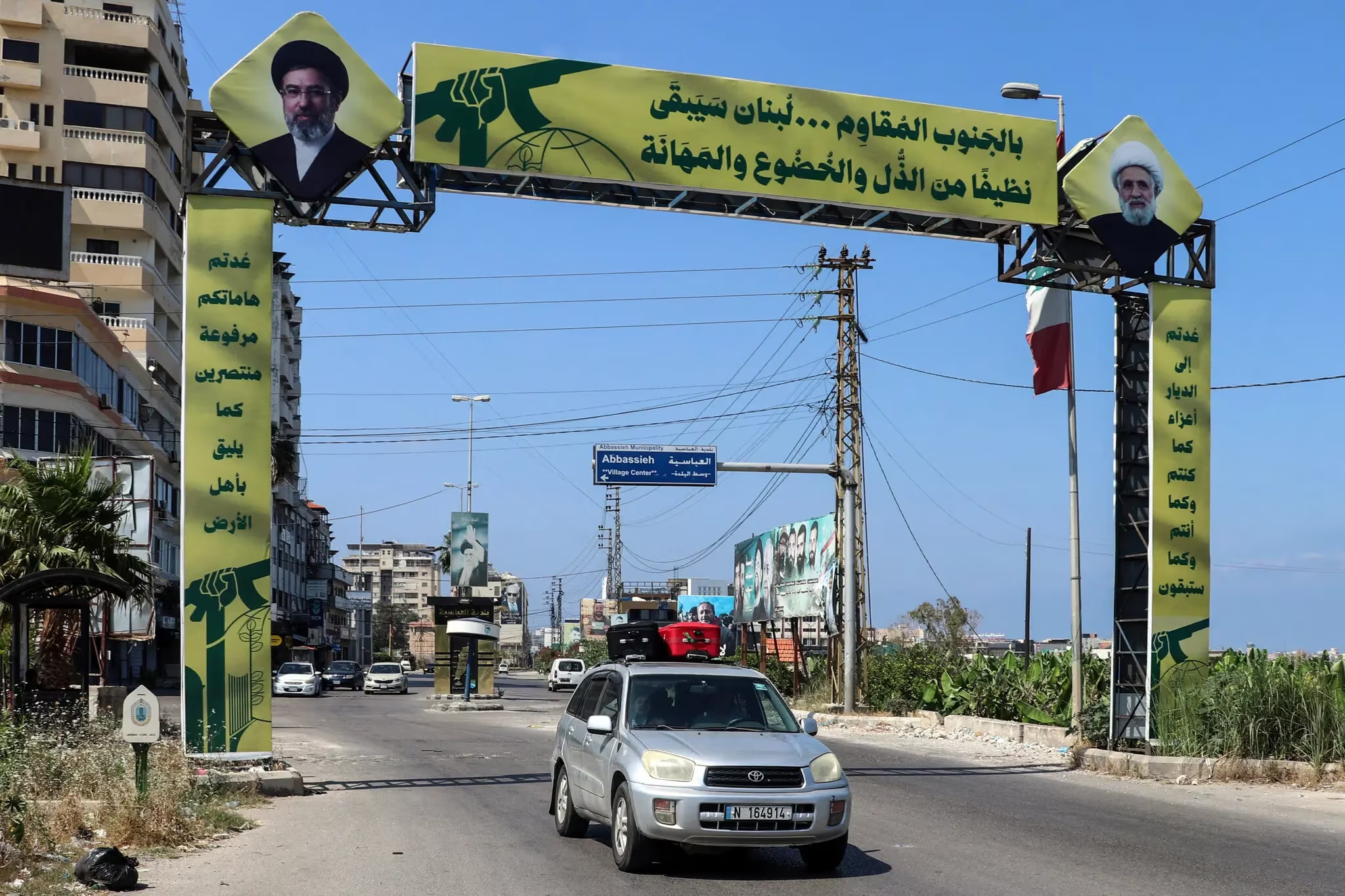
A car loaded with suitcases leaves Tyre after Israel issued an evacuation warning for the city. June 9, 2026.
Last week, the Israeli military said it had “identified the activity of dozens of Hezbollah fighters inside the Christian quarter” and called on residents to “demand that members of the organization leave your neighborhoods.” The Israeli military provided no evidence to support those claims.
After that warning, Lebanese authorities tried to prevent the quarter from being drawn into the fighting. According to Lebanon’s state news agency, army patrols entered the Christian quarter to begin “security and precautionary measures.”