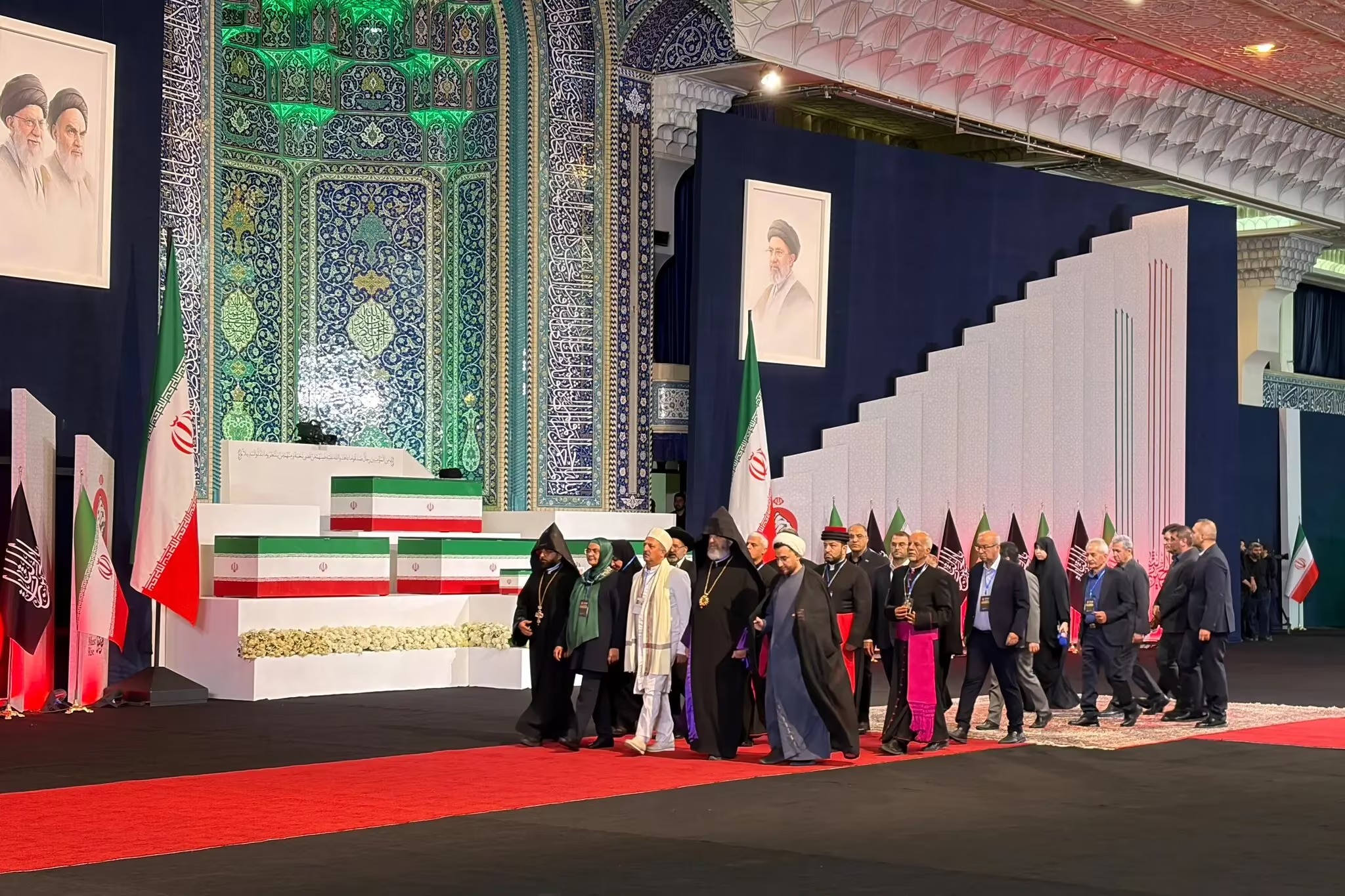
On Friday morning, July 3, Tehran woke up in black. Mourning banners hung from overpasses and buildings; billboards with portraits of Ayatollah Ali Khamenei lined major roads and intersections. Iran began a week of mourning events and burial ceremonies for the country’s supreme leader, and foreign leaders and official delegations began arriving at the site where his coffin is lying in state.
Iranian state media showed footage of the farewell: Iranian and foreign officials, members of paramilitary groups, and religious leaders approaching the coffin and standing before it. Some bowed their heads, some prayed, and some wept.
Friday’s ceremony opened a series of mourning events. On Saturday, the coffin will be opened for public viewing. After a procession in Tehran on Monday, Khamenei’s body will be taken to holy Shiite cities in Iraq and then buried in his hometown of Mashhad.
The coffin, draped in the Iranian flag, is topped with a black turban and a black-and-white checked scarf—similar to one Khamenei often wore. In Iran, such a scarf is associated with the Basij militia, while the black turban denotes the status of a cleric regarded as a descendant of the Prophet Muhammad. The ceremony took place at Tehran’s Grand Mosalla, a large prayer complex where Khamenei repeatedly delivered major speeches. According to state media, coffins of family members killed alongside him stood nearby.
The city’s mourning imagery also speaks to the future. On some billboards, Khamenei is shown alone—in the familiar official style that dominated the country’s political space for decades. On others, he appears alongside his son and successor, Mojtaba Khamenei: a visual link between the end of one era and the beginning of another.
The authorities are seeking to present Khamenei as a respected leader of international stature. But for many Iranians, the costly, days-long funeral may become a source of resentment. During 37 years of authoritarian rule, Khamenei harshly suppressed dissent, while the country under him sank ever deeper into economic problems, poor governance, and corruption.
The delay in the funeral itself—it is taking place more than four months after the supreme leader’s death—reflects the unusual position in which Iran found itself. The country had endured US and Israeli strikes, and the authorities were not certain they could ensure security for a large public ceremony.
The funeral comes during a period of serious instability. Over the past six months, Iran has faced protests, regional conflict, security tensions, and internet shutdowns—all of which disrupted daily life and deepened uncertainty. For many Iranians, the death of the leader who had shaped the country’s political system for decades became another turning point in a succession of shocks.
The scale of the arriving guests is emphasized by the organizers themselves: according to their representative, more than 1,000 people in foreign delegations arrived for Friday’s farewell alone.
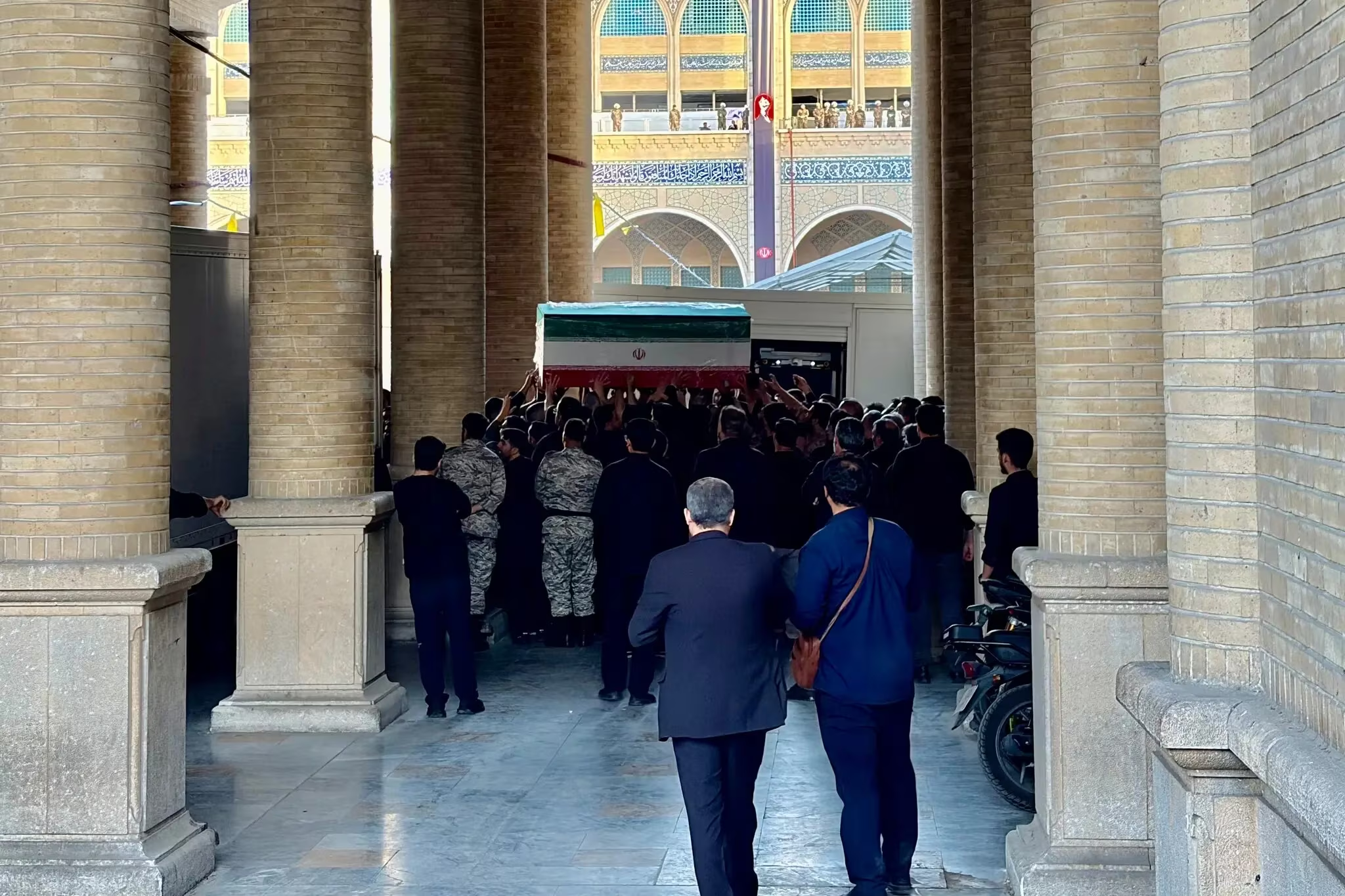
Participants in the mourning ceremony carry Ayatollah Khamenei’s coffin during the farewell in Tehran. July 3, 2026.
Russia, according to Kremlin spokesman Dmitry Peskov, will be represented by former president and deputy chair of the Security Council Dmitry Medvedev. Moscow supported Iran during its war with Israel and the United States, while Iran supplied Russia with drones that Moscow used to attack Ukraine.
China sent senior lawmaker He Wei, vice chairman of the country’s top legislative body. For Tehran, Beijing is an increasingly important economic partner: in recent years China has been the main buyer of Iranian oil.
Leaders of foreign Shiite communities, including from Pakistan, also arrived. Over six days of public events, Iranian authorities intend to emphasize Khamenei’s role as a Shiite spiritual leader with supporters across the Muslim world.
Judging by footage from state media, representatives of several Iran-linked armed groups in Iraq attended Friday’s ceremony, including Kataib Hezbollah, which has attacked US facilities in Iraq in recent months. The footage also shows relatives of slain leaders of Lebanon’s Iran-backed Hezbollah.
Iraqi President Nizar Amedi and parliament speaker Haibat al-Halbusi took part in the mourning events. Their presence comes at a difficult moment for Iraq’s new government, which faces growing pressure over its ties to Iran.
The funeral brought into one hall parties that are in acute conflict or direct confrontation with one another.
Iraqi Kurdistan President Nechirvan Barzani met with Iranian officials on Friday, state media reported. His region hosts exiled Iranian Kurdish groups that remain in an informal conflict with the Islamic Revolutionary Guard Corps; in recent days, local media have reported clashes.
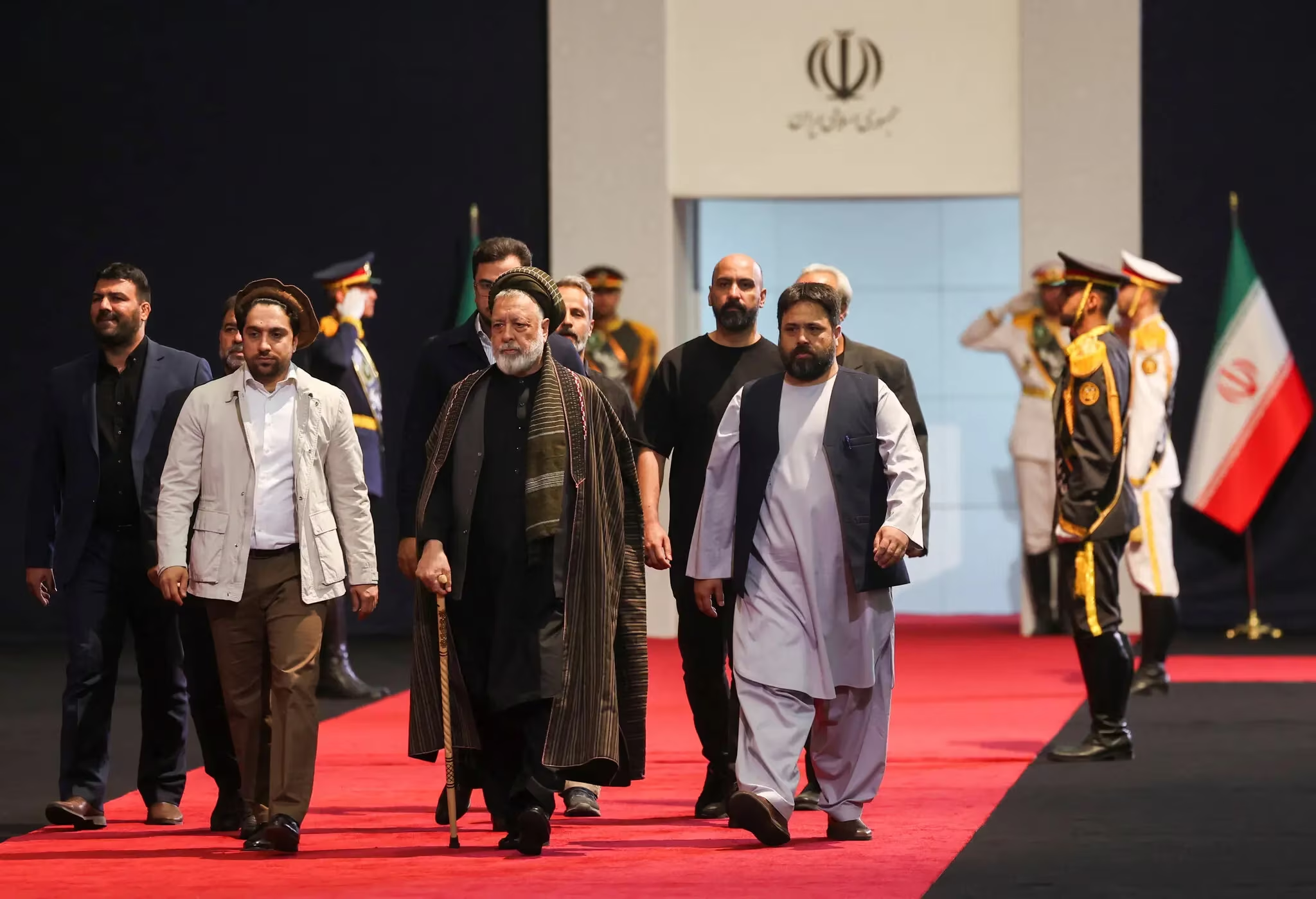
Ahmad Massoud (left) came to bid farewell to Ayatollah Khamenei. He is the son of Ahmad Shah Massoud, the commander who fought the Taliban in the 1990s. July 3, 2026.
Afghanistan was expected to be represented by one of the Taliban’s most senior figures, Mullah Abdul Ghani Baradar, and Foreign Minister Amir Khan Muttaqi. On Friday, Ahmad Massoud—the son of Ahmad Shah Massoud, the commander who fought the Taliban in the 1990s—came to honor Khamenei’s memory. The younger Massoud now leads from abroad one of the main opposition groups opposed to Taliban rule.
Pakistan’s Prime Minister Shehbaz Sharif and army chief Field Marshal Syed Asim Munir are also expected. Pakistan is in conflict with Afghanistan, in which hundreds of people have been killed since late February: Islamabad accuses the Taliban of supporting militants who have killed thousands of Pakistani security personnel in recent years.
Relations between Pakistan and Iran have also been tense in recent years. But the war with the United States and Israel, and Islamabad’s mediating role in efforts to end the conflict, have brought the two countries’ leaderships closer. Khamenei’s death prompted a strong reaction among Pakistan’s Shiite minority, estimated at about 35 million people, which is often targeted by militant attacks.
Tehran, meanwhile, is preparing for mass public ceremonies. Authorities announced traffic restrictions and heightened security measures ahead of the procession. Police and security forces are visibly present in the city center, many shops have closed, and usually busy streets have emptied. Roads are being blocked ahead of an event the authorities describe as one of the largest public gatherings in the history of the Islamic Republic.
Israel and the United States Killed Iran’s Supreme Leader
Khamenei’s Son Became Iran’s New Supreme Leader
After Khamenei’s Death, Power in Iran Passed to Harder-Line Radicals
Despite a Harsh Crackdown, Iranians Took to the Streets Again