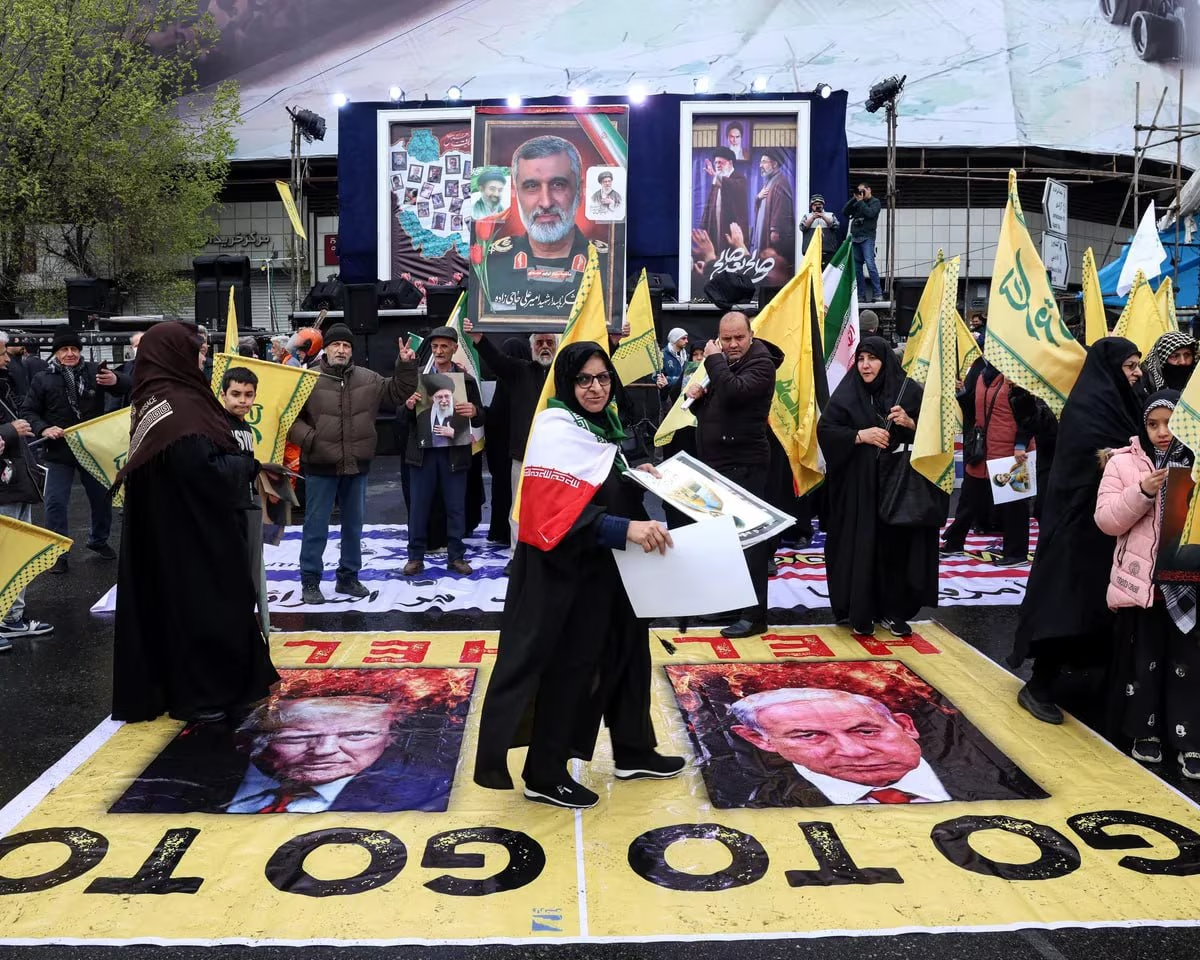
According to The Wall Street Journal, the war against Iran, launched by Donald Trump’s administration with the aim of weakening and replacing the regime in Tehran, produced the opposite result: after the death of Ali Khamenei, power shifted not toward more pragmatic figures but to even harder-line radicals.
Decisive influence in a system where the Islamic Revolutionary Guard Corps has strengthened its position has passed to Khamenei’s son, Mojtaba. According to the WSJ, IRGC veterans have secured key posts, while the internal balance is moving in favor of the most uncompromising factions.
“The war changed the regime—and not for the better. We created a reality worse than the one Iranians faced before the war,” said Citrinowicz, a former head of the Iran desk in Israeli military intelligence.
The new leadership, the newspaper writes, is acting more repressively at home—crushing any dissent—and taking a harder line abroad, showing little interest in diplomacy. Among the central figures in this configuration are Ahmad Vahidi and Mohammad Bagher Zolghadr, both known for their fiercely anti-Israel and anti-Western rhetoric.
“A more extreme group within the IRGC is gaining the upper hand. That makes a protracted conflict more likely,” said Saeid Golkar, an expert on Iran’s intelligence services.
As a result, the WSJ concludes, America’s strategy has failed to achieve its aims: instead of making concessions, Tehran has crushed the domestic opposition, empowered the most radical factions and strengthened its position, including through control of the Strait of Hormuz.