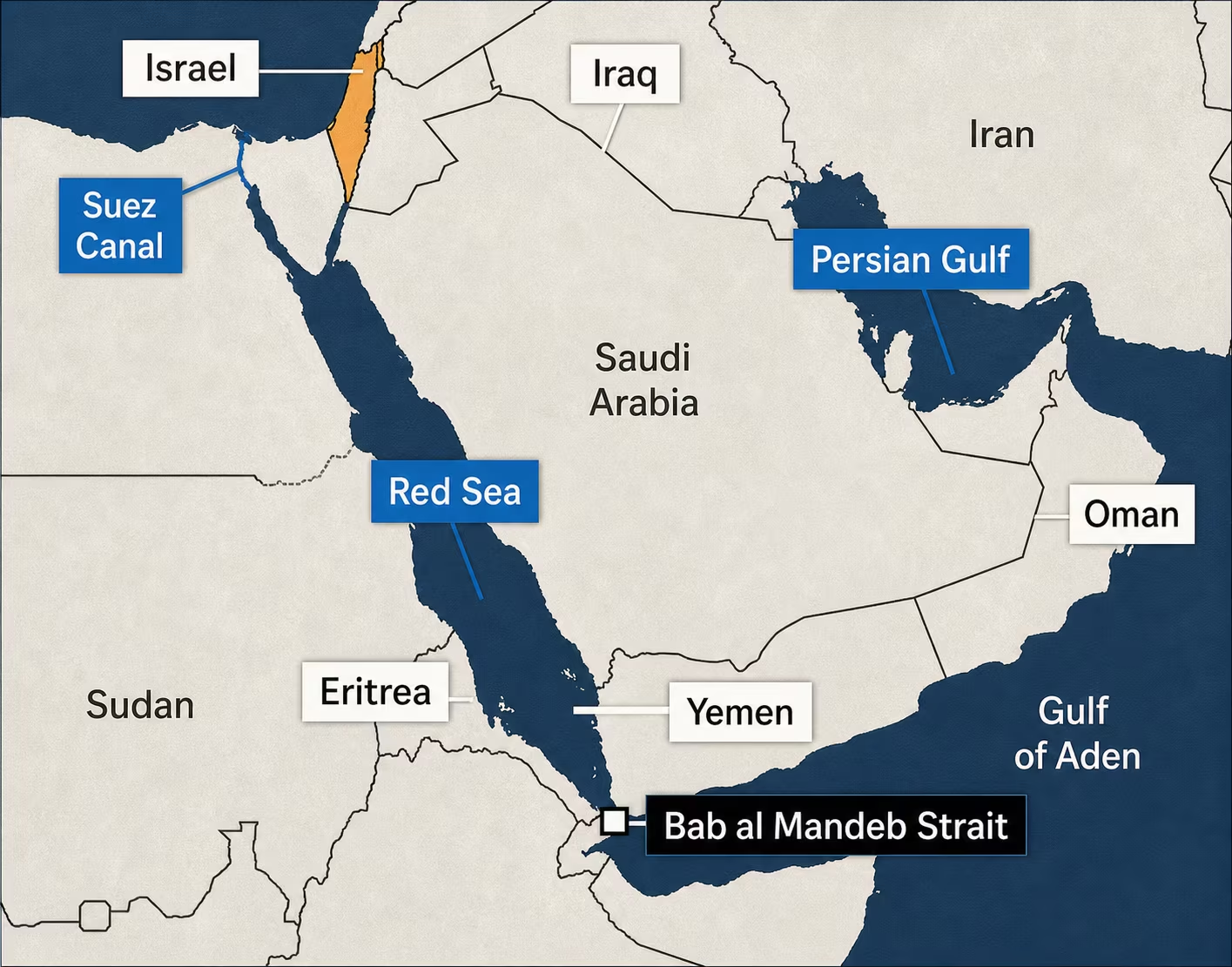
Yemen’s Ansar Allah movement, known as the Houthis, has declared a “ban on maritime navigation” for Saudi Arabia. The movement simultaneously called on its supporters to mobilize: “We call on the sons of our great nation to continue the general mobilization and universal call to arms, remain fully prepared for every scenario and reinforce the fronts with fighters.” The Houthis promised to answer “any reckless act by the Saudi enemy” with “comprehensive and severe escalation.” Major news agencies had not confirmed the statement at the time of publication.
On July 3, a direct flight from Tehran landed in Sanaa for the first time in more than a decade, breaking the Saudi air blockade. On July 13, a strike on Sanaa airport prevented an Iranian aircraft from landing as it returned a Houthi delegation from the funeral of Iran’s supreme leader, Ali Khamenei. Yemen’s internationally recognized government claimed responsibility for the strike, but the Houthis blamed Riyadh and declared the end of the “de-escalation phase”—a truce had been in place since 2022. The movement responded by firing ballistic missiles at Saudi Arabia’s Abha airport and warning airlines not to use the kingdom’s airspace.
After Iran closed the Strait of Hormuz, Saudi Arabia redirected more than 70% of its daily oil exports through the Red Sea port of Yanbu, which receives crude through the Trans-Arabian Pipeline, capable of carrying up to 7 million barrels a day. Tankers departing Yanbu pass through the Bab el-Mandeb Strait, the southern gateway to the Red Sea, whose coastline is controlled by the Houthis. Around 7% of the world’s oil passed through the strait in June, according to the analytics firm Kpler.
On July 16, Reuters, citing three sources, reported that Iran had instructed the Houthis to close the Red Sea to shipping if the United States struck Iran’s power grid. The movement’s missiles and drones have been deployed near Bab el-Mandeb, according to the news agency. The Houthis announced a ban on Israeli shipping in the Red Sea on June 8; the restrictions now extend to Saudi Arabia for the first time.
A Strike on Yemen’s Main Airport Has Put the Truce Between the Houthis and Riyadh at Risk
Iran Ends Talks With the U.S. and Announces a Full Blockade of the Strait of Hormuz Amid Israeli Strikes on Lebanon
The Houthis Have Officially Entered the War—They Struck Israel With Missiles and Pledged to Continue Attacks
Iran Struck the SAMREF Refinery in the Saudi Port of Yanbu