Hezbollah’s leader rejected the new ceasefire agreement between the governments of Israel and Lebanon, even as Israel continues military operations against the group in southern and eastern Lebanon.
The U.S.-brokered agreement was announced in a joint statement on Wednesday—after Israeli forces made their deepest advance into Lebanese territory in decades. The document, however, sets no timetable for the withdrawal of Israeli troops.
In a written statement on Thursday, Hezbollah leader Naim Qassem said the group demands Israel’s full withdrawal from Lebanon and will not stop attacking Israel “while our villages are not safe, while they are being bombed and destroyed and our people are being killed.”
“We are interested only in a comprehensive end to the aggression through a ceasefire and Israel’s withdrawal,” he said. “We have not committed to any party to stop the resistance while there is occupation.”
Qassem also said the agreement’s demand that Hezbollah fighters withdraw from southern Lebanon under fire would amount to “surrender, defeat and the achievement of the enemy’s goals.”
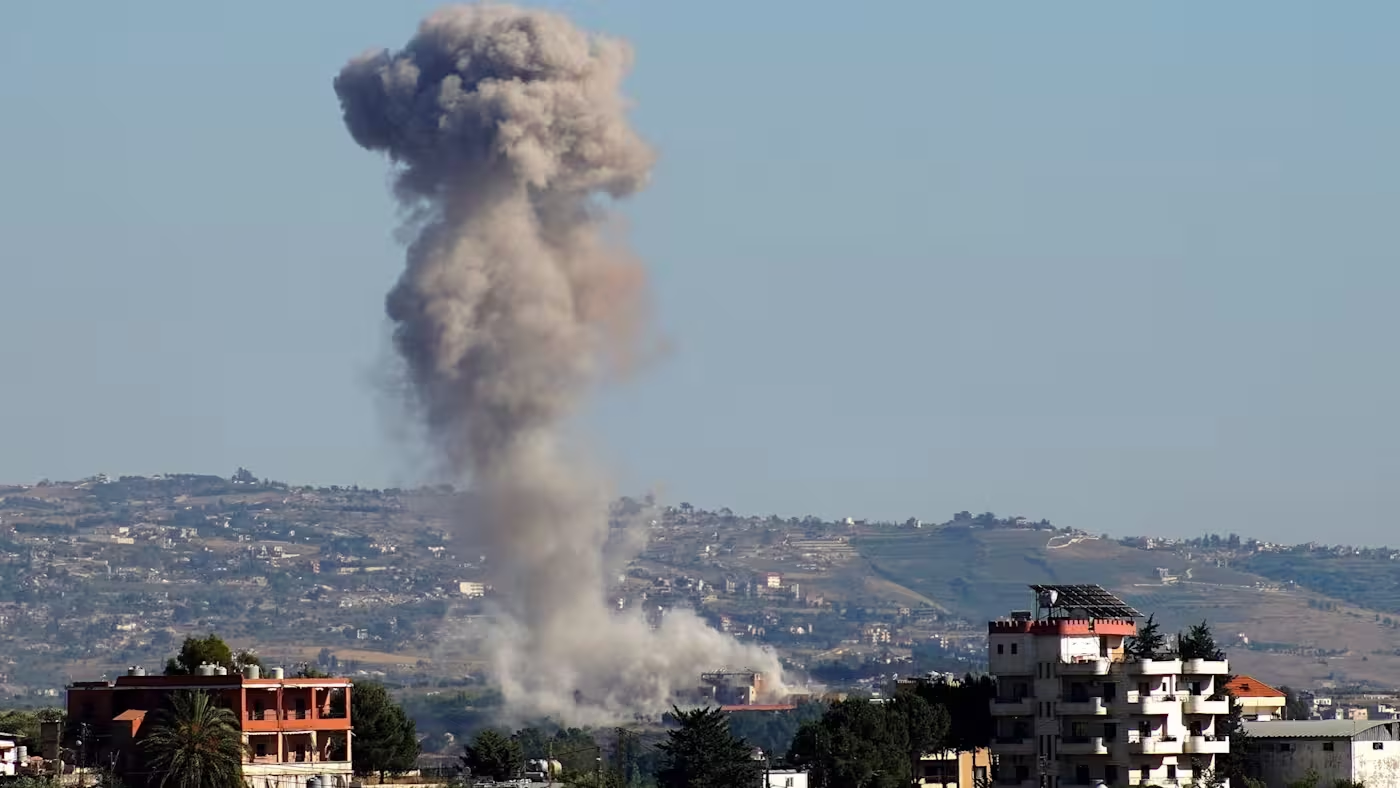
Hezbollah’s statement came as Israel launched new strikes in southern Lebanon. According to local authorities, at least 4 people were killed. A UN peacekeeper was also killed in crossfire.
The Israeli military said Hezbollah had fired several rockets at Israeli troops operating in southern Lebanon. Israel blamed Hezbollah for the peacekeeper’s death.
Earlier on Thursday, Israeli Defense Minister Israel Katz said the country would continue operations in southern Lebanon and that Lebanese residents would not yet be allowed to return to their homes in the area.
He also claimed that Israel had “freedom of action, backed by the United States, to strike Beirut in response to attacks against Israeli communities and Israeli territory.”
The new conflict between Israel and Hezbollah began after the group fired rockets across the border following the start of the U.S. and Israeli war against Iran on February 28.
Since then, Israel has pushed deeper into southern Lebanon, occupied hundreds of square kilometers of territory and forced more than 1 million people from their homes. At least 3,526 people have been killed in the fighting, including hundreds of women, children and medical workers. On the Israeli side, 27 soldiers and 3 civilians have been killed.
The conflict in Lebanon, now in its fourth month, is complicating efforts to reach a long-term agreement to end the war with Iran and resume shipping through the Strait of Hormuz.
Iran is demanding that any durable agreement include a complete end to the fighting in Lebanon. On Thursday, the head of the elite Quds Force of the Islamic Revolutionary Guard Corps repeated that demand, calling on Israel to return its troops to the positions they held at the start of the wider war. At that point, Israel held about 5 positions along the border.
But Israeli Prime Minister Benjamin Netanyahu, facing domestic pressure and approaching elections, is instead seeking to press ahead with the offensive.
On Monday, June 1, U.S. President Donald Trump said Israel and Hezbollah had agreed to limit the fighting in Lebanon. In a social-media post, he wrote that Netanyahu had agreed that Israeli forces “heading toward Beirut, and any troops that were on the way, have already turned back.”
According to Trump, Hezbollah agreed not to continue attacks on Israel. Lebanon’s embassy in Washington said on Monday that Hezbollah had agreed to a “mutual cessation of attacks.” It also said Israel would not strike Hezbollah strongholds in southern Beirut.
The joint statement by Lebanon, Israel and the United States, published on Wednesday, followed an April 16 ceasefire agreement that failed to stop the fighting. The new document describes Hezbollah as an “enemy” of Israel, the United States and Lebanon, and calls for the group to be dismantled.
Beirut has previously tried to weaken the group, but in practice any attempt to eliminate Hezbollah by force could lead to internal conflict.
The joint statement underscores the growing divide in Lebanon over Hezbollah’s role and its ties to Iran. At the same time, it risks further alienating the group itself and its supporters.
The document also provides for the Lebanese Armed Forces to take control of so-called pilot zones from which Hezbollah fighters are to be excluded. How this provision will be enforced remains unclear, but such a plan would place an additional burden on the Lebanese army, which is short of resources.
Lebanese President Joseph Aoun on Thursday called the new agreement “the last chance to enter into a final and comprehensive ceasefire.” He said Lebanon was ready to implement the arrangements reached on Wednesday after the relevant forces inside the country, above all Hezbollah, agree to them.
At the same time, Aoun told journalists that Trump would ultimately determine how and when the agreement is implemented.