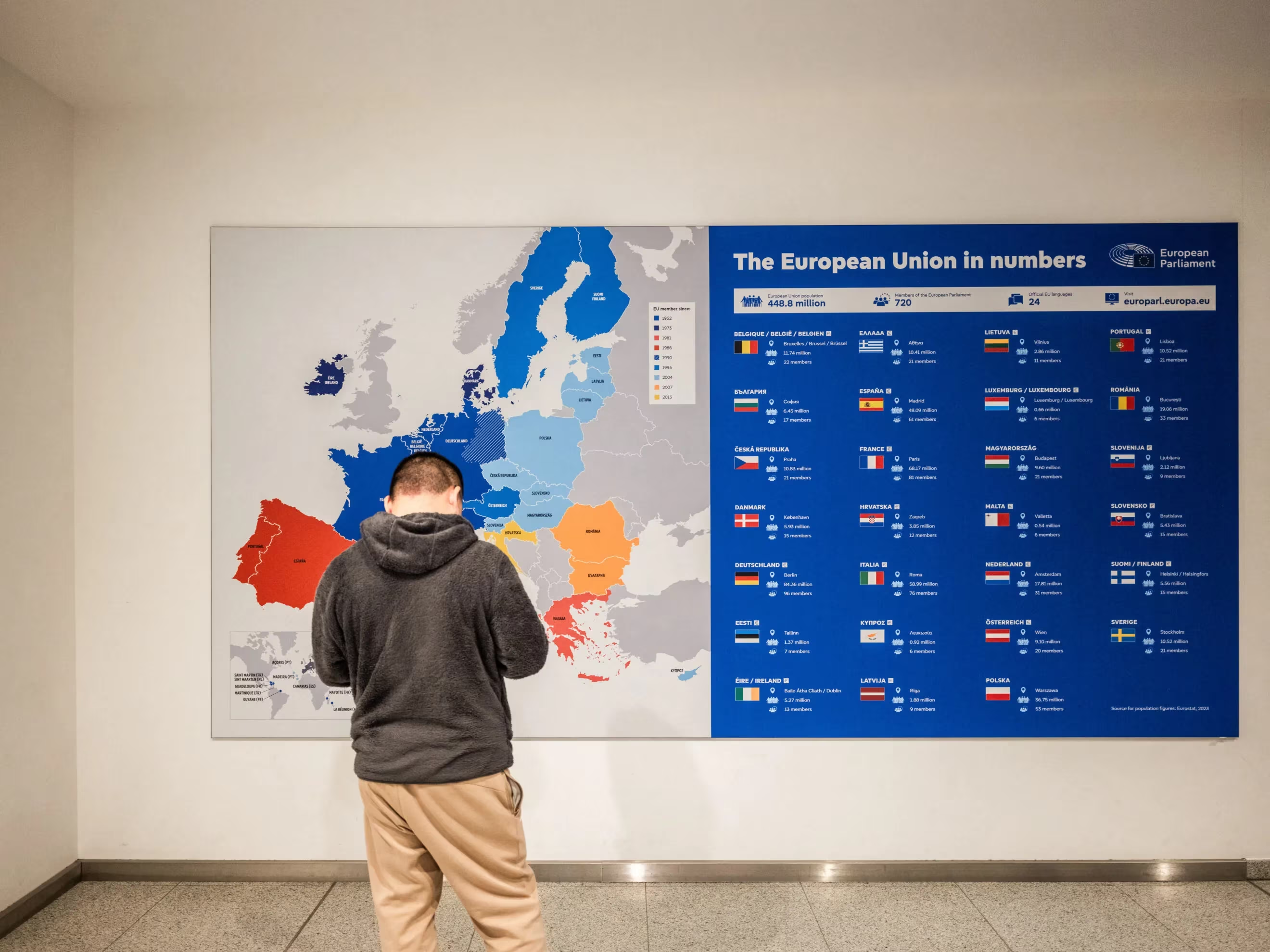
Ursula von der Leyen’s plans to expand the European Union—including admitting Ukraine—have run into stiff resistance داخل the bloc, with many current members refusing even to discuss the issue. That is according to Politico, citing nine EU diplomats and officials.
The question of enlargement had been expected to appear on the agenda for the summit in Nicosia, due to take place at the end of April. According to the publication, however, it is now unlikely to appear there at all.
France, Germany, the Netherlands, and Italy insist on following the standard accession procedure, grounded in genuine reforms, with no exceptions made for geopolitical reasons. “Enlargement must remain demanding and merit-based,” French Minister for Europe Benjamin Haddad told Politico.
“Of course, we do not want to weaken Zelensky… But the overwhelming majority of member states currently have no desire to discuss this issue,” a senior diplomat from one of Europe’s larger countries said.
According to Politico, the main reason for the caution is fear of the political cost. Three diplomats and one senior EU official said that any leader who raises the issue of enlargement in domestic political debate risks a backlash from populists. This is especially true in France, which is legally required to hold a referendum on every new member: a vote on Ukraine could strengthen the position of National Rally leader Jordan Bardella, who, according to polling, is leading in the first round of the 2027 presidential election.
An additional factor is the “Hungarian trauma”: the experience of dealing with Budapest after its accession in 2004 has left a number of capitals wary of new members with veto rights. The European Commission is considering a form of “Hungary-proofing”—stripping new members of veto rights for several years after accession. On Monday, von der Leyen said she supports abolishing the principle of unanimity in the bloc.
Peter Magyar’s election victory in Hungary, which ended Orban’s 16-year rule, initially raised hopes that Budapest’s position might soften. But at a press conference on Monday, Magyar said he does not support Ukraine’s fast-tracked accession.
Even Montenegro, which has fulfilled almost all the conditions for membership, has been unable to secure a mandate to prepare an accession treaty. The most active supporters of Ukrainian membership—Sweden and Denmark—are pushing to conclude negotiations by the end of next year, but launching treaty talks first requires the consent of the bloc’s larger member states.