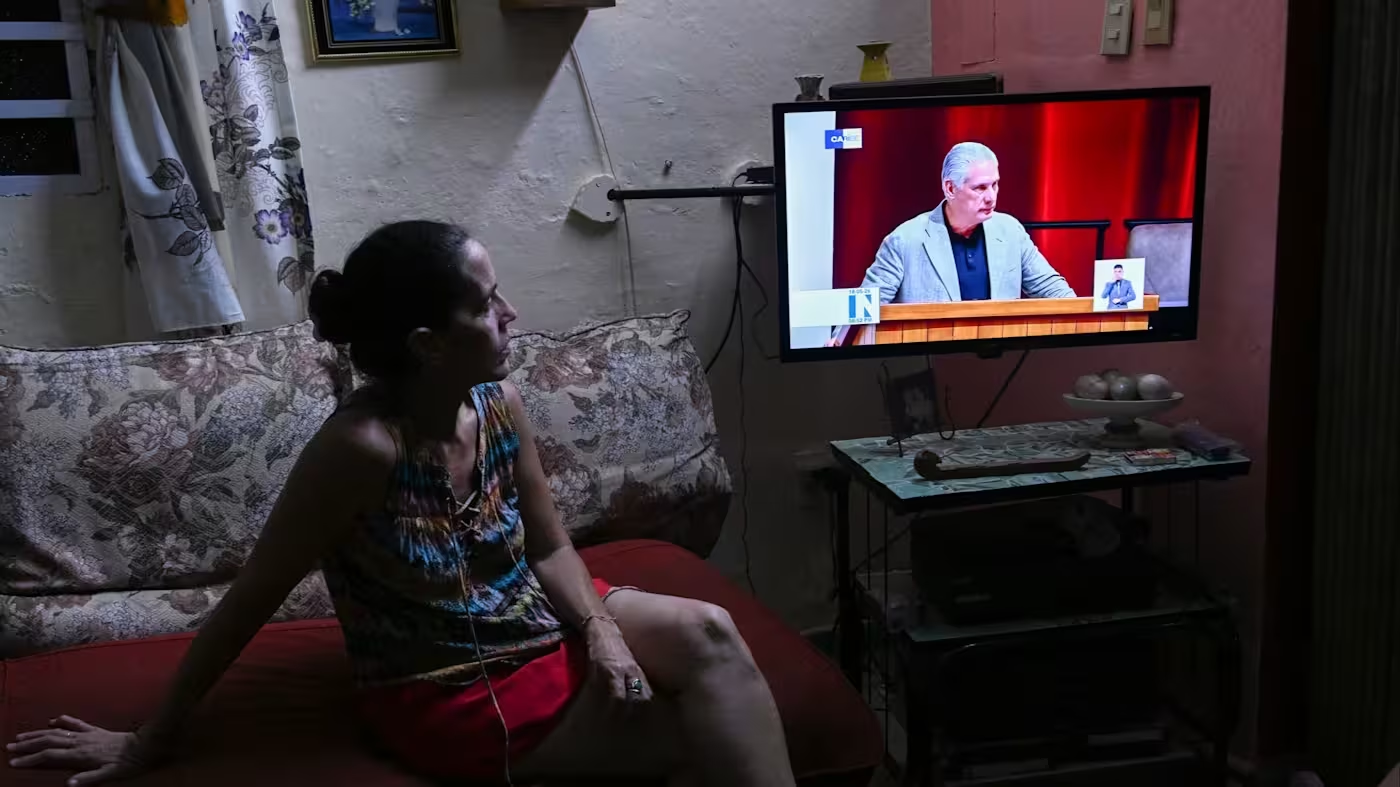
Cuba has promised to carry out “urgent” economic reforms amid a deepening social crisis and mounting pressure from the United States, including threats of possible military intervention, the Financial Times writes.
The new package of measures, aimed at developing the private sector and attracting foreign investment, could, if implemented, become the biggest revision of Cuba’s economic model since the early years of the 1960s revolution.
The reforms, unanimously approved by the government-controlled parliament, provide for allowing private developers into the real-estate market, permitting private banks to operate and selling stakes in state companies to private investors, including foreigners.
“To a Cuban living abroad who wants to invest, donate, import technology, open a market or build a project in their homeland, we will offer clear, stable and respectful rules,” President Miguel Díaz-Canel said in a televised address on Thursday.
Cuba is under heavy economic and political pressure from Donald Trump’s administration, which is demanding that Havana open up the economy and release political prisoners. Since the start of the year, the United States has effectively blocked energy supplies to the island and imposed tough sanctions on key sectors of the Cuban economy.
At the same time, Díaz-Canel effectively departed from the traditional rhetoric of Cuba’s leadership by acknowledging that not all of the country’s economic problems are caused by U.S. sanctions. Speaking before the Central Committee of the Communist Party, he said that some obstacles “do not come from outside and are not connected to the blockade,” while also speaking of “barbaric punishment” by Washington.
Referring to economic reforms carried out by the Communist parties of China and Vietnam, Díaz-Canel warned of “decisions we have postponed” and criticized “slowness, bureaucracy and rules that hinder those who want to produce.”
“The situation requires urgent and necessary changes,” he said.
Over the past month, the United States has also hinted at the possibility of military action against Cuba if Havana does not begin sweeping reforms. During a visit to the U.S. military base at Guantánamo, U.S. Defense Secretary Pete Hegseth warned Cuba not to try to obtain missiles or other weapons capable of reaching U.S. territory.
According to Hegseth, in that case the Cuban authorities would “provoke a confrontation they do not want and cannot withstand.”
U.S. pressure has intensified the economic crisis that began after the COVID-19 pandemic destroyed the island’s tourism industry. In many parts of Cuba, residents receive electricity at home for only a few hours a day, while hospitals and schools have been badly affected. Diplomats in the country warn of the risk of deep social disintegration.
Experts on Cuba, however, note that the communist regime has promised more than once to open up the economy but has never followed such plans through. Under Barack Obama’s administration, when Raúl Castro was Cuba’s president, Washington and Havana agreed on a rapprochement that included a significant expansion of opportunities for foreign investment.
But U.S. officials involved in that initiative say Fidel Castro, who still remained an influential figure at the time, blocked economic opening behind the scenes. According to them, many Cuban leaders feared that reforms would lead to a loss of political control.
Díaz-Canel succeeded Raúl Castro as president in 2019 and was then seen as a potential reformer, less ideologized than most of his associates. Analysts, however, believe he lacked the political weight to carry out anything beyond cosmetic changes.
Díaz-Canel himself acknowledged that some of the proposed reforms “will not receive full consensus,” but stressed that they “can no longer be postponed.”
Foreign Investors Are Leaving Cuba en Masse Under Pressure From the Trump Administration as the Island’s Economic Crisis Deepens
Cuba Suffers a Second Nationwide Blackout in a Week—The Country Has Not Received Oil Since January Because of the U.S. Blockade
Trump Said a “Friendly Takeover” of Cuba Was Possible
Rubio Is Holding Secret Contacts With Raul Castro’s Grandson