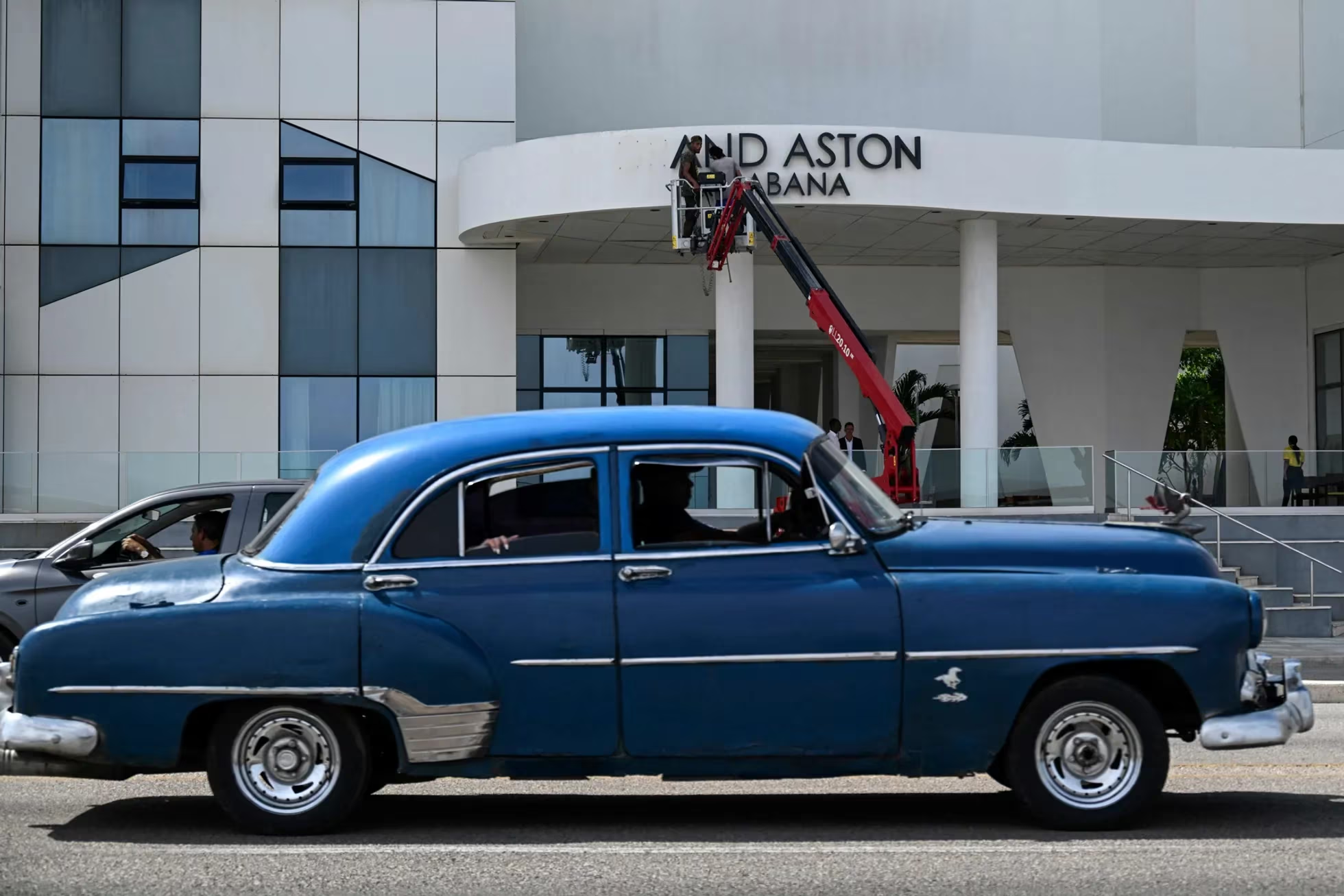
Foreign investors that had operated in Cuba for decades are now leaving the country en masse as pressure from Donald Trump’s administration intensifies. The exodus has affected the financial sector, tourism and mining. For Cuban authorities, the departure of major industrial companies may be especially painful: their presence provided the country with foreign-currency revenue and access to managerial and technological expertise. Here is the main takeaway from The Wall Street Journal’s major report.
International companies that until recently maintained a presence in Cuba are winding down operations on the island, The Wall Street Journal writes. This is deepening the crisis in Cuba’s economy and showing that the Trump administration’s pressure on Havana is becoming increasingly effective.
Cuba’s Central Bank said that from June 6, Visa and MasterCard transactions on the island will be suspended for all foreigners. Previously, such restrictions applied only to cards issued in the United States.
Spanish hotel chains Iberostar and Meliá have given up managing at least 12 Cuban hotels each.
Canada’s Royalton Hotels & Resorts has completely stopped operating in Cuba after a sharp drop in tourist flows.
Another Canadian company, the mining group Sherritt International, is also close to leaving the island. In May, it suspended operations in Cuba and evacuated all personnel. Sherritt International was one of the country’s key foreign investors. The Wall Street Journal notes that the company’s former chief executive was once called Fidel Castro’s “favorite capitalist.”
Many major foreign airlines had already stopped flying to Cuba because of aviation-fuel shortages, the newspaper notes.
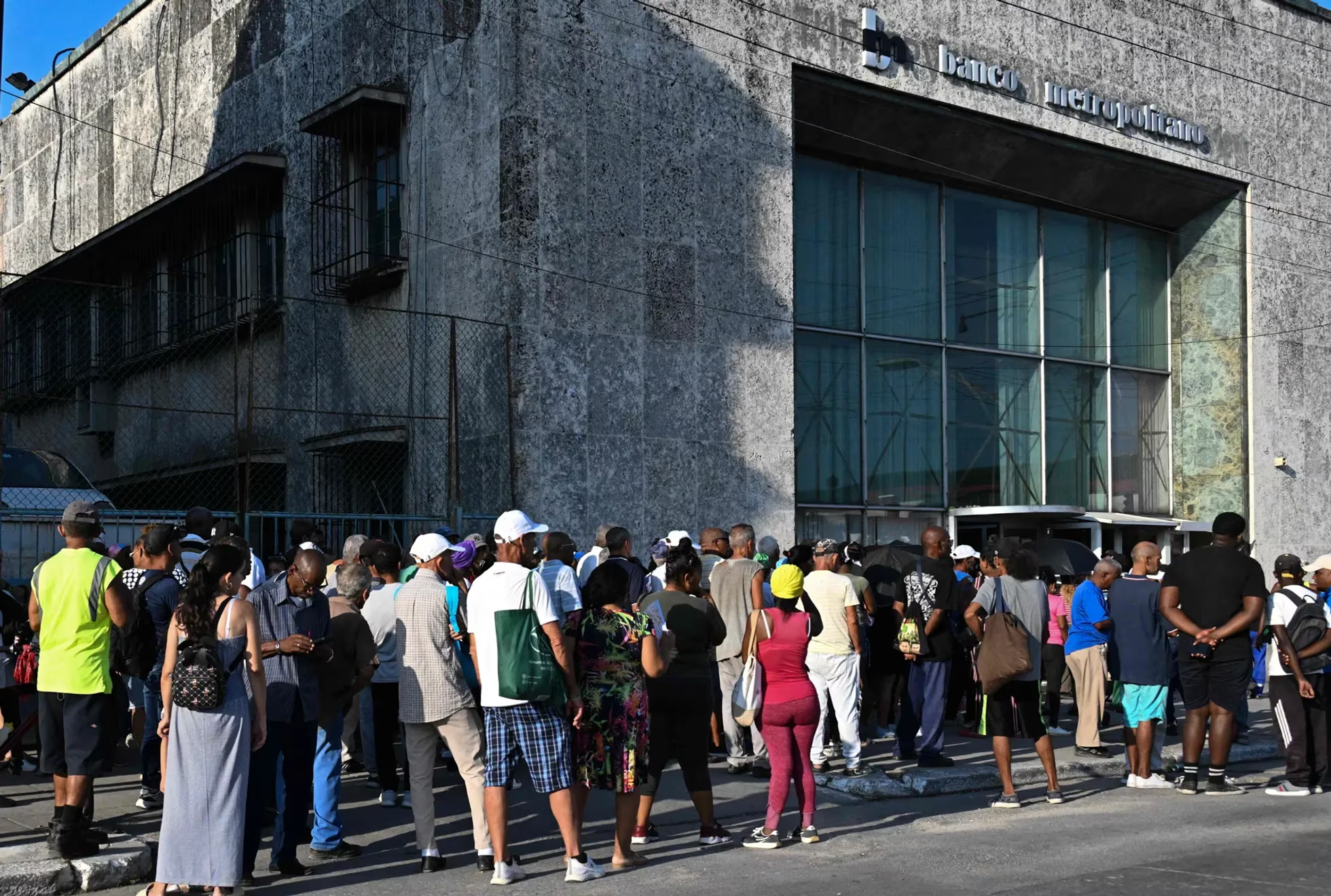
Havana residents queue outside a bank branch. The surge in demand is linked to the coming ban on Visa and MasterCard payments, which takes effect on June 7. June 3.
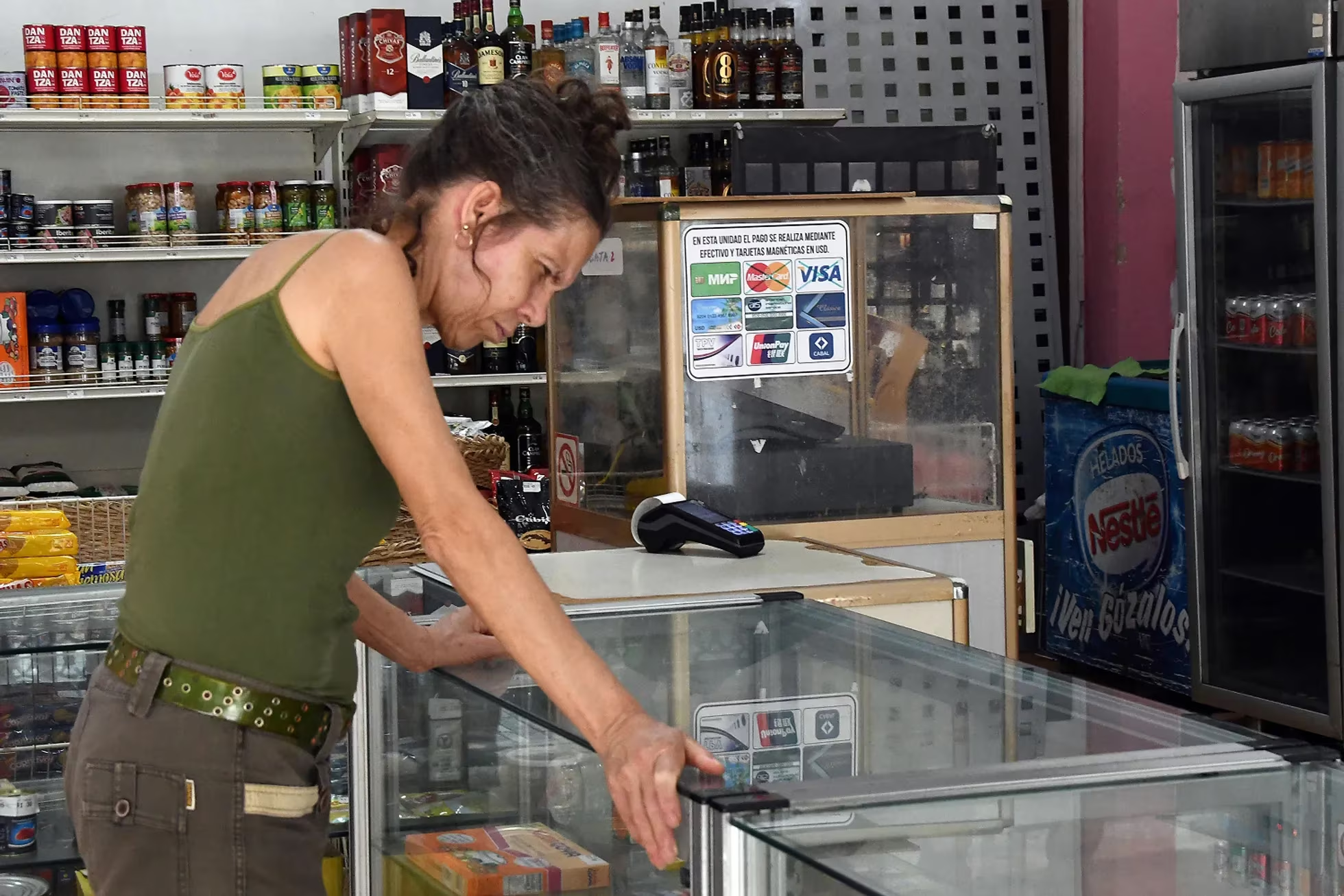
A shopper in a grocery store in Havana. A notice in the background announces the coming suspension of Visa and MasterCard operations on the island. June 4, 2026.
In recent years, foreign investors, above all in tourism and mining, continued to operate in Cuba despite the risk of a new escalation between Havana and Washington. For the island, they remained a source of foreign currency and business expertise. But the Trump administration’s intensifying pressure has made those risks too high for the companies themselves.
“This is a turning point—a serious blow to an already weakened economy,” Ricardo Torres, an economist at American University in Washington, told The Wall Street Journal.
The departure of Sherritt International could be especially sensitive for Cuba. For more than three decades, the Canadian company mined nickel and cobalt at the Moa mine in the island’s east. According to Mark Entwistle, a former Canadian ambassador to Cuba, it “essentially trained a whole group of Cuban entrepreneurs” in the principles of modern business.
Only a few months ago, Sherritt International was discussing expanding production, and its chief executive, Peter Hancock, said that working “in conditions of uncertainty is nothing new.” Now, however, the level of uncertainty has proved too high. Following the latest news, the company’s shares fell by more than 50%.
Spain’s Meliá explained the closure of 15 of its hotels by circumstances beyond the chain’s control. Most of these properties had recently already been out of operation “because of energy-supply problems and lower demand.” Iberostar said it was ending the operation of 12 hotels “as part of efforts to adapt to the international regulatory environment.”
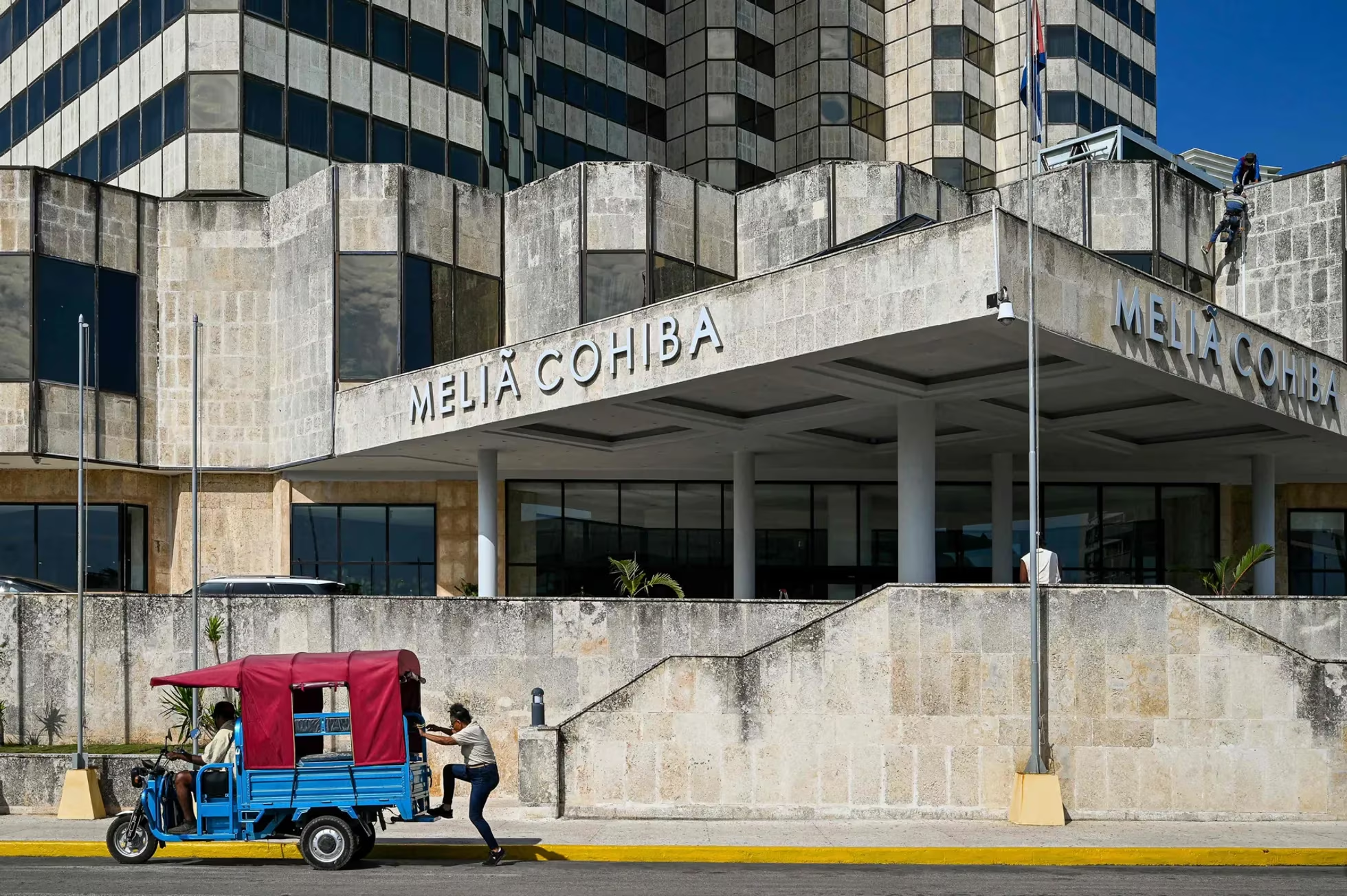
One of the Meliá hotels in Havana. June 4, 2026.
The key factor behind the investor exodus was likely Trump’s May order against GAESA, the conglomerate owned by Cuba’s military. Secretary of State Marco Rubio called it the “heart of the kleptocratic communist system.” According to the White House, GAESA controls at least 40% of Cuba’s economy, including hotels operated in partnership with foreign companies.
The order also covered the Moa Nickel project—a joint venture between Sherritt International and Cuba’s state nickel company. The United States says the venture also helps sustain the Cuban authorities.
In effect, the order forced investors to choose between continuing to work with structures tied to the Cuban state or risking secondary restrictions.
Washington is pursuing a broader pressure campaign against Havana. In May, the United States charged former Cuban president Raúl Castro with murder in connection with civilian aircraft shot down by the Cuban military in the 1990s.
On June 4, Washington also imposed sanctions on the current president, Miguel Díaz-Canel, members of his family, Castro’s son and grandson, and several Cuban organizations.
Cuba’s economy had already been stagnating. The situation worsened after the Trump administration imposed an oil blockade following the capture in January of Venezuelan leader Nicolás Maduro, whose government had long subsidized oil supplies to Cuba.
After the loss of that source, public transport on the island began suffering disruptions, farmers found it harder to deliver produce to markets, and residents faced more frequent power outages. The Cuban peso also continued to fall sharply.
Against this backdrop, the departure of foreign investors has dealt the country an additional blow. “You could call it a double hit,” said Ted Henken, a Cuba expert at Baruch College. “It has been a gradual but relentless strangulation by the Trump administration.”