Anthropic is releasing a new tool, Claude Science, intended to help scientists automate part of their research work.
The company said the service will begin rolling out on Tuesday and will be able to perform a range of tasks in biology and chemistry, including predicting protein structures.
According to Anthropic, Claude Science brings together tools often used by scientists, including more than 60 scientific databases. The idea behind the service is to simplify the automation of multi-step tasks, allow researchers to ask questions in ordinary language and receive answers without having to consult multiple sources separately.
Claude Science will be available in beta for paying Anthropic users.
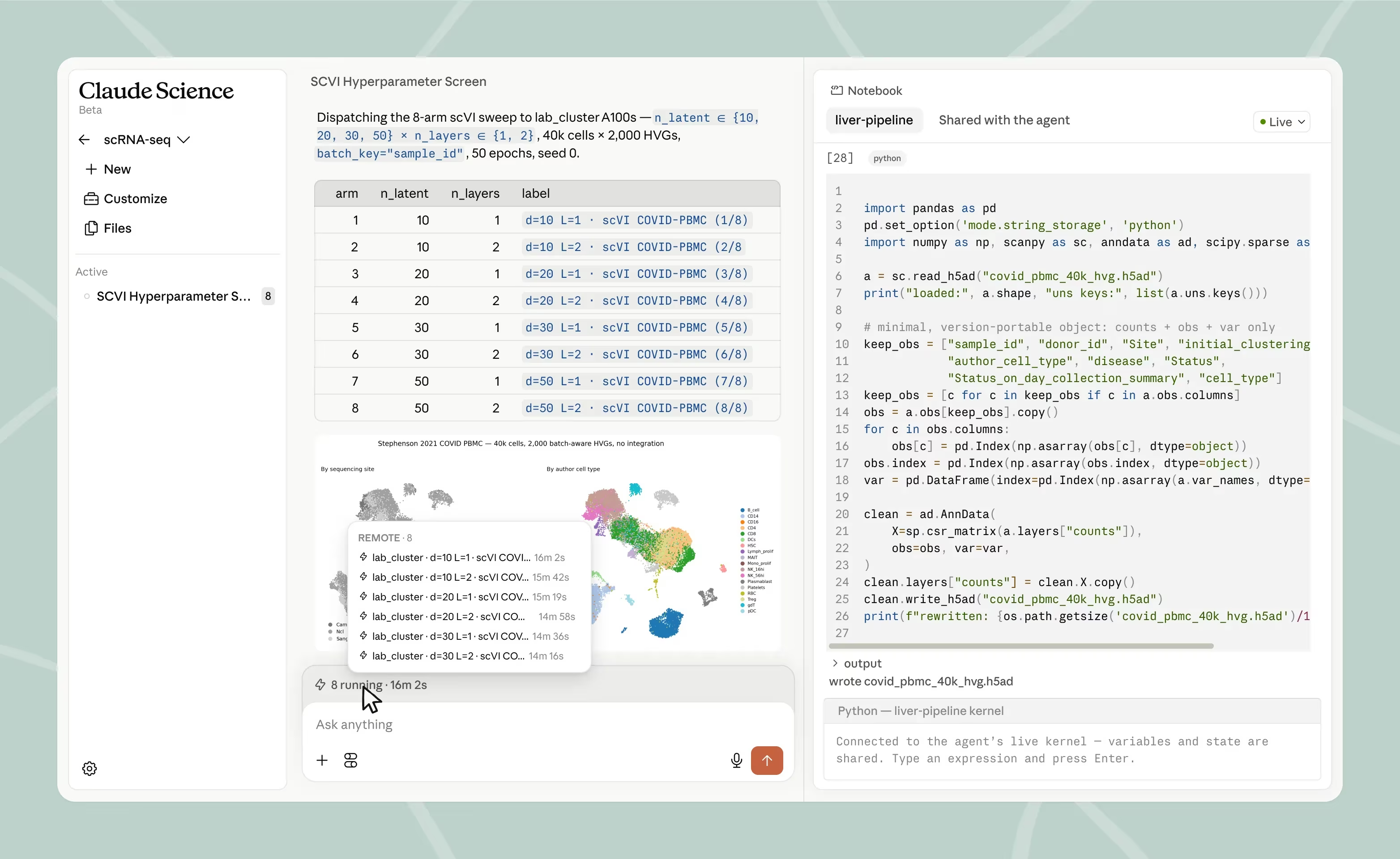
According to Anthropic, the Claude Science service, which the company plans to launch on Tuesday, will make it possible to automate a wide range of tasks in biology and chemistry.
Anthropic and its rival OpenAI have spent the past year actively developing AI tools for professional tasks—from financial services to science and health care. The companies hope to attract more corporate clients and justify their high valuations. Anthropic, now valued at $965 billion, is seeking to go public as early as this fall.
Anthropic’s actions in recent months have had a noticeable effect on markets amid fears that artificial intelligence could make some companies and services unnecessary. In February, the company introduced Claude Cowork, a tool for automating legal work, including contract review and the preparation of legal memos. That, the outlet notes, helped trigger a $1 trillion stock-market selloff.
Anthropic is expected to present Claude Science at an event in San Francisco. Speakers will include the company’s CEO, Dario Amodei, as well as executives from pharmaceutical companies, including Bristol-Myers Squibb chief Chris Boerner and Novartis CEO Vas Narasimhan, who is also a member of Anthropic’s board.
Claude Science uses already available Claude models, including Opus 4.8, released in May. Anthropic says the service’s answers will contain verifiable details that allow scientists to confirm the accuracy of the information. Images created by the application will also be accompanied by information on how they were generated.
The launch comes less than two weeks after Anthropic cut off access to its most advanced models, Fable 5 and Mythos 5, because of a Trump administration order aimed at restricting foreign nationals’ access to the technology.
On Friday, Anthropic received U.S. permission to partially restore access to Mythos 5 after addressing the Trump administration’s concerns about potential national-security threats. No changes to restrictions on use of the Fable 5 model have been reported.
Trump Administration Is Close to Restoring Access to Anthropic’s Fable 5 Model
Trump Administration Partly Lifts Restrictions on Anthropic Model
U.S. Authorities Demand Foreigners Be Blocked From Claude Fable 5—Anthropic Disables the Model for Everyone
Anthropic Surpassed OpenAI in Valuation After a New Funding Round