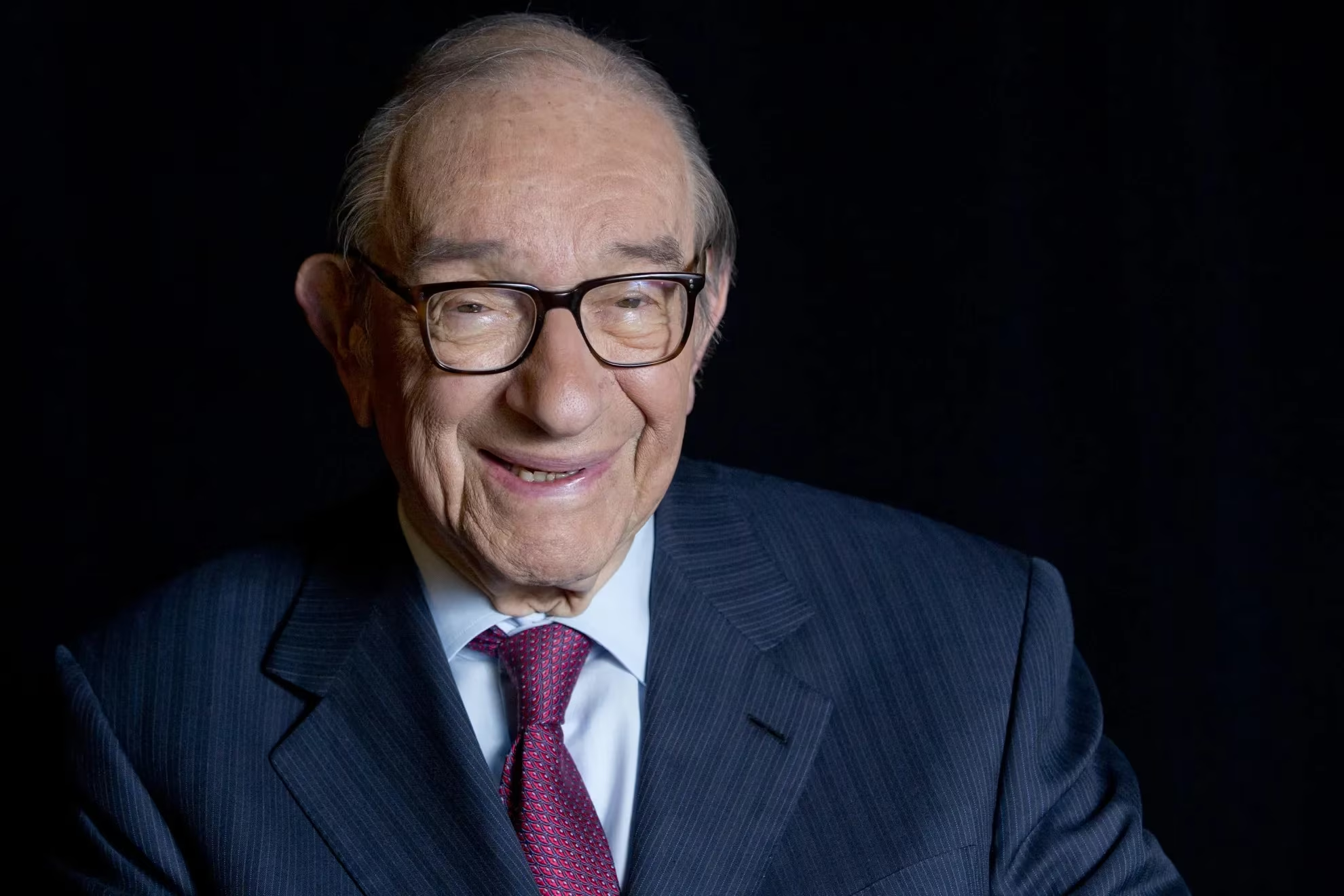
Alan Greenspan, one of the most influential central bankers of the late 20th century, died at home on Monday at the age of 100. NBC News reported his death, citing his wife, Andrea Mitchell, the network’s chief Washington correspondent. The cause was complications from Parkinson’s disease. Greenspan led the U.S. Federal Reserve for 18 years—from 1987 until his retirement in early 2006—and during that period was seen as the man who kept the American economy in balance.
An Era of Growth and the Cult of the Chairman
Greenspan’s time at the helm of the central bank coincided with a stock-market boom, low unemployment and one of the longest periods of economic growth in U.S. history. More than presidents or treasury secretaries, he was often described as the person keeping the economy under control. His tenure became the second-longest in the Fed’s history: from March 1991 to March 2001, the economy grew for 10 consecutive years, the S&P 500 nearly quadrupled, and unemployment fell to 3.8% in April 2000—the lowest level since 1969.
Greenspan became a symbol of global finance through television appearances and congressional hearings that could move markets. His language was extremely cautious and opaque, but traders and journalists parsed every formulation. The most famous was the 1996 phrase about “irrational exuberance”—after the collapse of internet stocks, it entered the American financial lexicon. Over time, investors became accustomed to the idea that in moments of sharp market declines Greenspan would support the market with interest rates; this approach was called the “Greenspan put,” and critics argued that it created moral hazard.
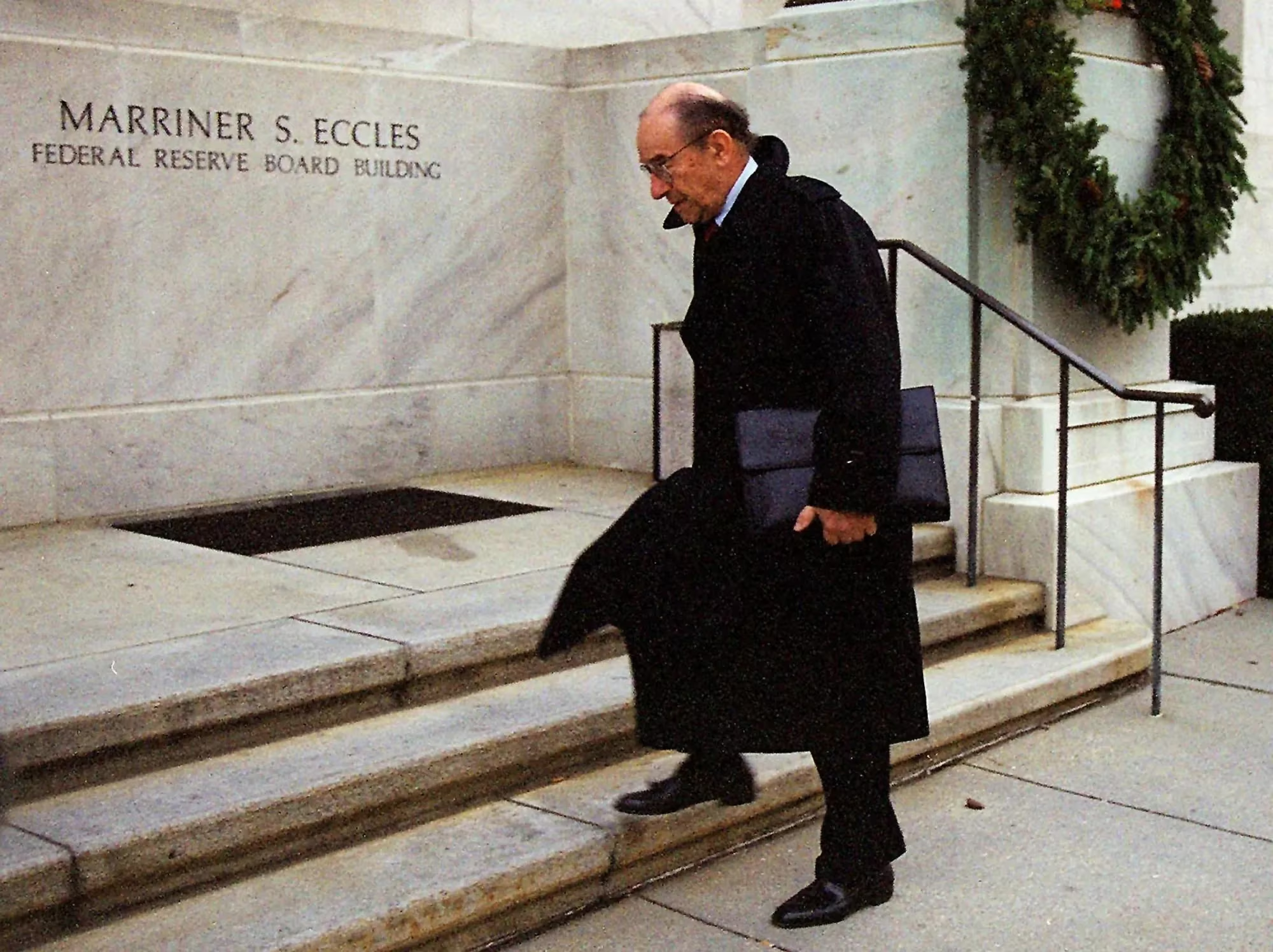
The successes of the mid-1990s reinforced his almost unquestioned influence. At the time, many economists were demanding rate increases, fearing inflation, but Greenspan allowed the boom to continue, believing that technological progress was raising productivity and letting the economy grow faster without overheating. When the economy did begin to overheat, the Fed doubled rates to 6% and then cut them three times in 1995, avoiding a recession—a scenario known as a “soft landing.” Biographer Sebastian Mallaby wrote that this marked the beginning of the era of the “imperial Fed chairman,” whom other members of the board rarely challenged.
The 2008 Crisis and a Reassessment of His Legacy
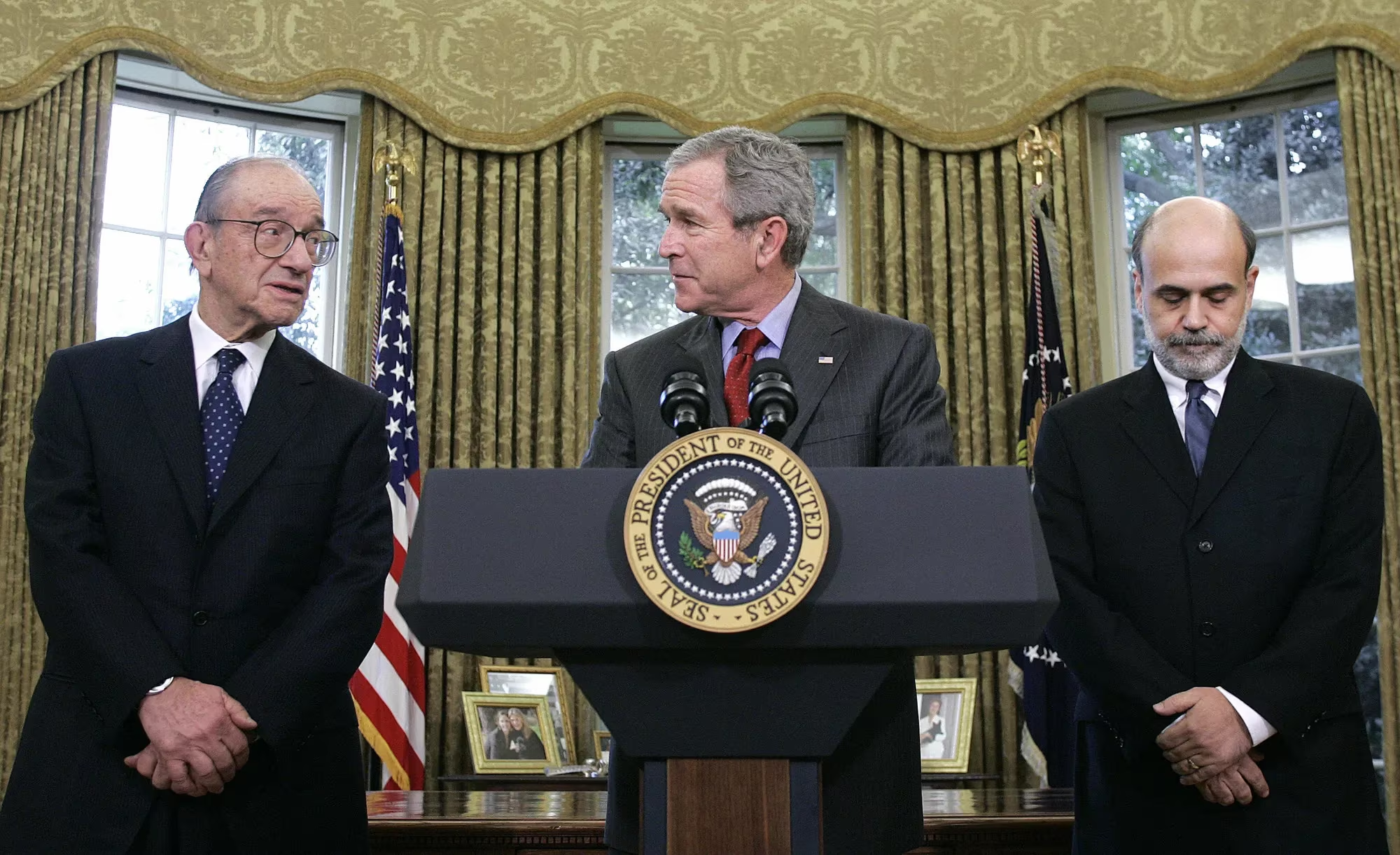
U.S. President George W. Bush announces the nomination of Ben Bernanke as the new chairman of the Federal Reserve as Alan Greenspan watches the ceremony. 2005.
In the final years of his tenure, risks accumulated in the system. Banks were actively issuing subprime mortgages to borrowers who could not service them, investment banks were packaging mortgages into complex securities, and financial companies were selling protection against defaults on those debts. The structure worked as long as housing prices rose. Transcripts of Fed meetings from 2005 show that the central bank already saw signs of a bubble, but Greenspan himself believed the “froth” in the housing market would be localized. In mid-2007, interbank lending began to freeze—leading to the bankruptcy of Lehman Brothers in September 2008 and the largest crisis since the Great Depression. By then, the Fed was already led by Ben Bernanke.
After the crisis, Greenspan’s reputation changed sharply: from the architect of long-term growth, he became, for critics, a man who had been too lenient toward markets, deregulation and bubbles. He acknowledged that regulators had “failed,” and that the “once-in-a-century credit tsunami” had exposed the flaw in his faith in self-regulation. “Those of us who have looked to the self-interest of lending institutions to protect shareholders’ equity, myself included, are in a state of shocked disbelief,” he told Congress in 2008. Later, he acknowledged that he had been “right 70% of the time, but wrong 30%.” At the same time, in The Crisis (2010), he rejected the argument that the Fed should have stopped the bubble by raising rates: monetary policy can “crush any bubble,” but at the cost of damage to the economy.
From Jazz to Ayn Rand
Alan Greenspan was born on March 6, 1926, in the Washington Heights neighborhood of New York. A love of baseball and statistics led him to mathematics, but he first pursued music and enrolled at the Juilliard School, then played clarinet and tenor saxophone in Henry Jerome’s swing orchestra, performing alongside Stan Getz for $6 a week. Between performances, he began reading books on finance, left music and enrolled at New York University, where he received a bachelor’s degree in economics in 1948. In doctoral studies at Columbia University, his adviser was Arthur Burns, the future Fed chairman.
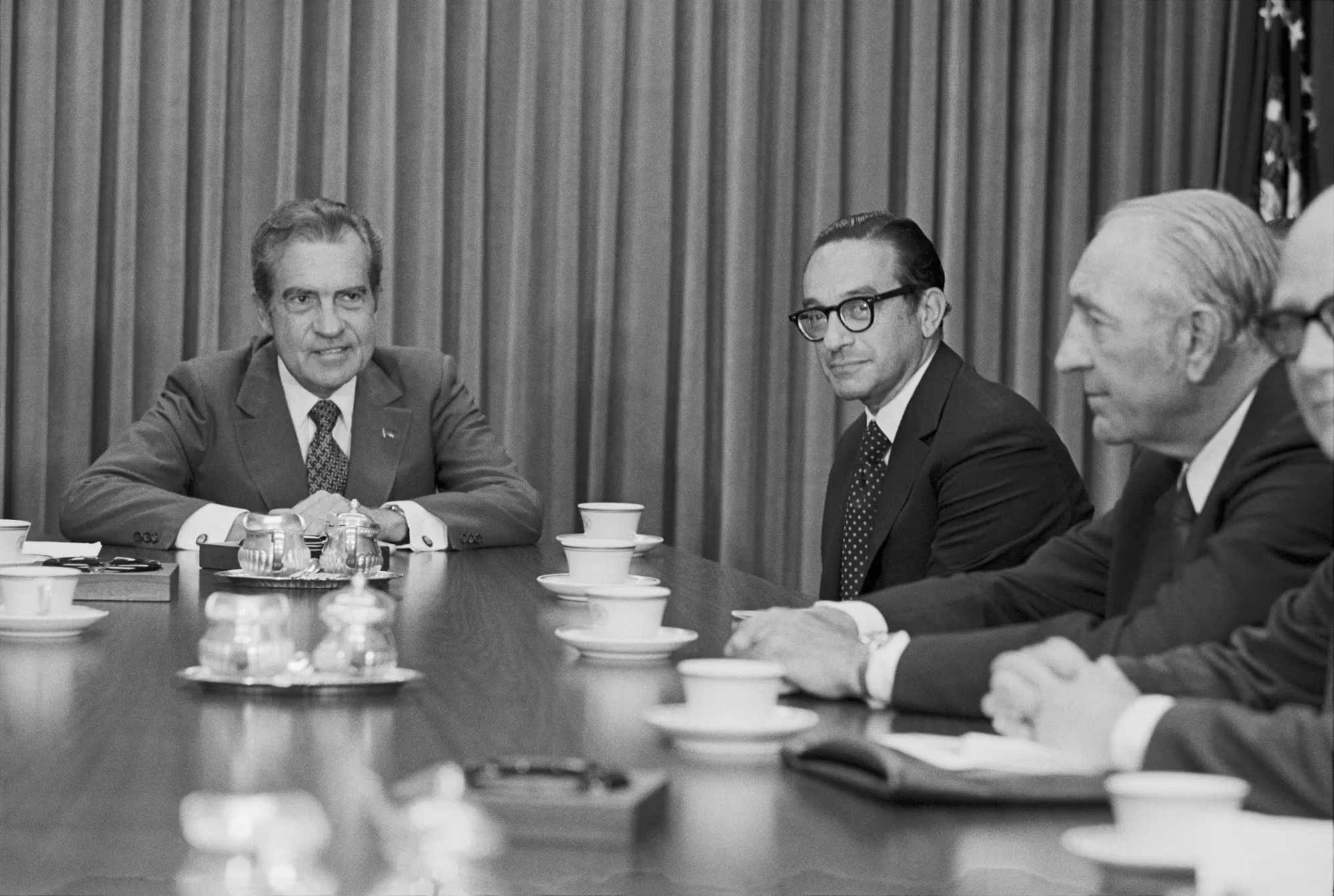
U.S. President Richard Nixon and Alan Greenspan. 1974.
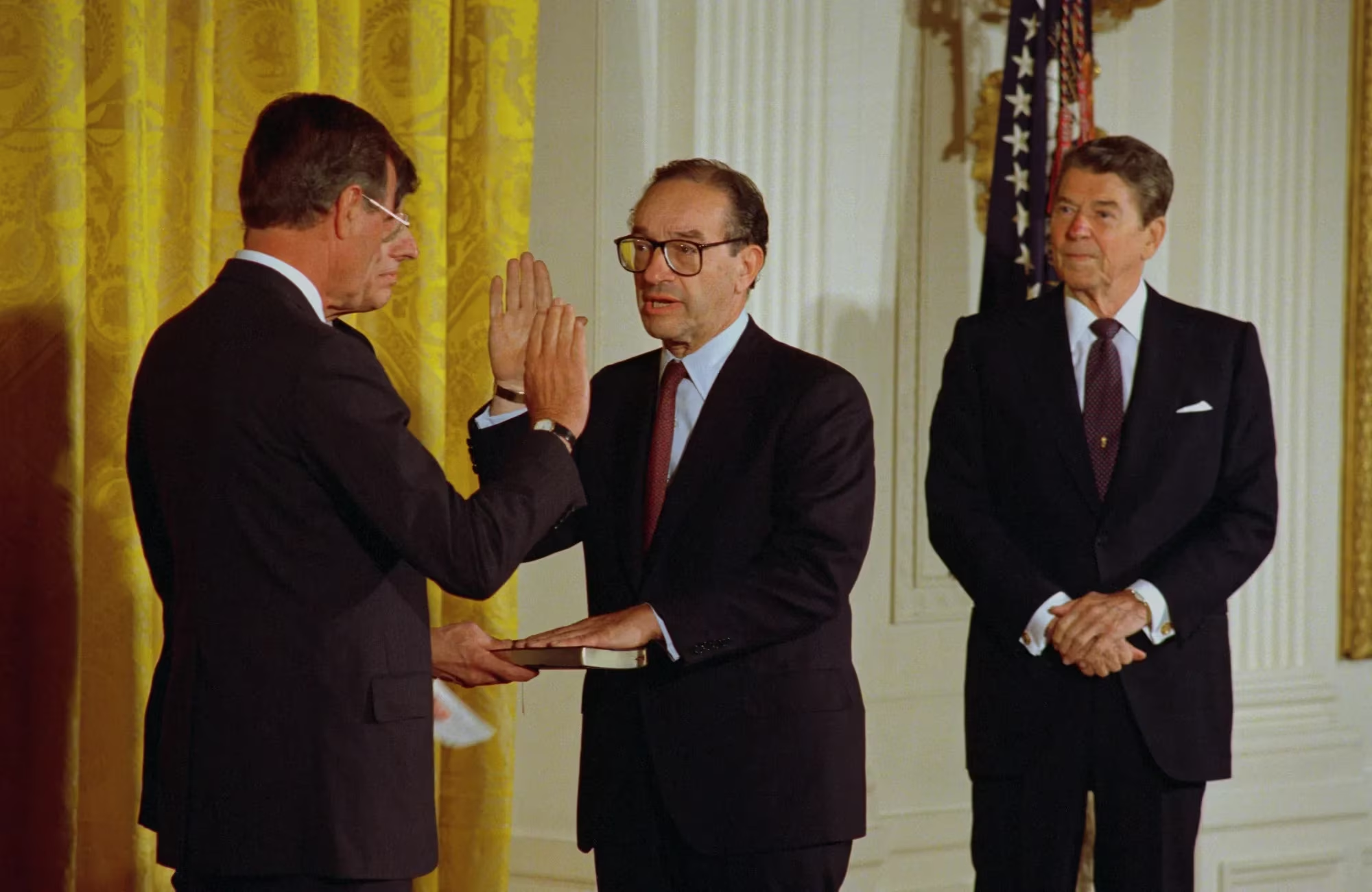
Alan Greenspan takes office as chairman of the Board of Governors of the Federal Reserve System. 1987.
Through his first wife, the art historian Joan Mitchell, Greenspan met the writer and philosopher Ayn Rand, who defended laissez-faire capitalism, and quickly entered her circle; later he said her influence helped make him interested in how fear, euphoria and herd behavior affect the economy. In 1953, he founded the consulting firm Townsend-Greenspan, which earned a reputation for accurate forecasts based on microdata that others ignored—from railcar loadings to the production of transport packaging. In 1997, he married NBC journalist Andrea Mitchell.
The Path to the Top of the Fed
Greenspan entered national politics in 1968 during Richard Nixon’s campaign, and in 1974 headed Nixon’s Council of Economic Advisers before continuing to serve under Gerald Ford. In Washington, he learned political caution: once, responding to the claim that welfare mothers had suffered most during the recession of the 1970s, he noted that in percentage terms stockbrokers had lost the most—statistically correct, but politically disastrous. In 1981, Reagan put him in charge of a commission on Social Security reform, and in 1987 appointed him Fed chairman, calling him an “economist’s economist.”
Greenspan inherited inflation of 4.4% and, during his time in office, kept average annual price growth around 3%, guiding the economy through several shocks: the crash of October 1987, the Asian crisis of 1997, Russia’s default in 1998 and the $3.5 billion rescue of the hedge fund Long-Term Capital Management. He was reappointed by George H.W. Bush, Clinton and George W. Bush—the last term coming in 2004. Under him, the Fed became noticeably more open: from 1994, rate decisions were announced on the day of meetings with an explanation of the reasons. His successor, Ben Bernanke, later moved away from the personalized style, introducing an explicit inflation target and the publication of forecasts, which he said made Fed policy significantly more transparent.
Fed Plans to Raise Rates Despite Trump’s Calls for Cuts
Senate Confirms Kevin Warsh as Fed Chair After the Most Politicized Vote in History
US Prosecutors Launched a Criminal Investigation Into Fed Chair Jerome Powell Over a $2.5 Billion Headquarters Renovation
Trump Launches a Direct Attack on the Fed’s Independence