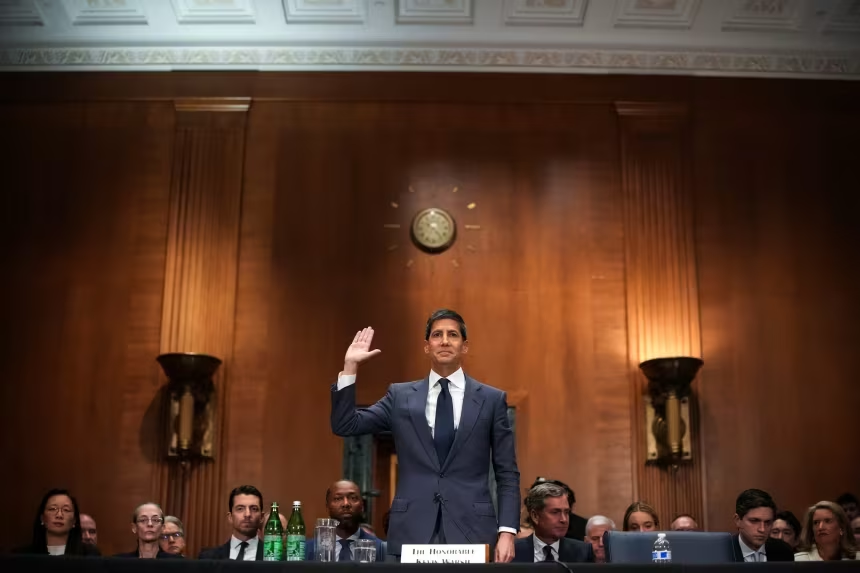
The U.S. Senate has confirmed Kevin Warsh as the 17th chair of the Federal Reserve. His nomination was approved by 54 senators, while 45 voted against.
The only Democrat to support the appointment was Pennsylvania Senator John Fetterman. CNN described the vote as “the most politicized confirmation of a Federal Reserve chair in history.”
The term of current Fed Chair Jerome Powell expires on May 15, 2026. Donald Trump formally nominated Warsh in March. He had previously served as an economic policy adviser to the president.
One of Trump’s main demands of Federal Reserve leadership has been lower interest rates. During his conflict with Powell, the president repeatedly criticized the Fed for refusing to ease monetary policy. In Washington, Warsh is widely viewed as a candidate more aligned with the White House.
However, he takes office amid mounting inflationary pressure linked to the conflict surrounding Iran and rising energy prices. Financial markets expect the Federal Reserve to keep benchmark rates unchanged through the end of the year and, if inflation accelerates further, potentially raise them—a scenario likely to provoke Trump’s dissatisfaction.
Jerome Powell, whom Warsh will replace, first became Fed chair after being nominated by Trump himself in 2017 during his first presidential term. Following Joe Biden’s election victory, Powell’s tenure was extended in 2021.
After returning to the White House in 2025, Trump once again began publicly criticizing Powell and calling for his dismissal over the policy of high interest rates.
In January 2026, an investigation was launched against Powell over the $2.5 billion renovation of the Federal Reserve headquarters in Washington. A federal judge later stated that the investigation had been used as a tool of pressure against the central bank chief. The Justice Department subsequently dropped the case, though the U.S. attorney in Washington later said the investigation could be reopened.