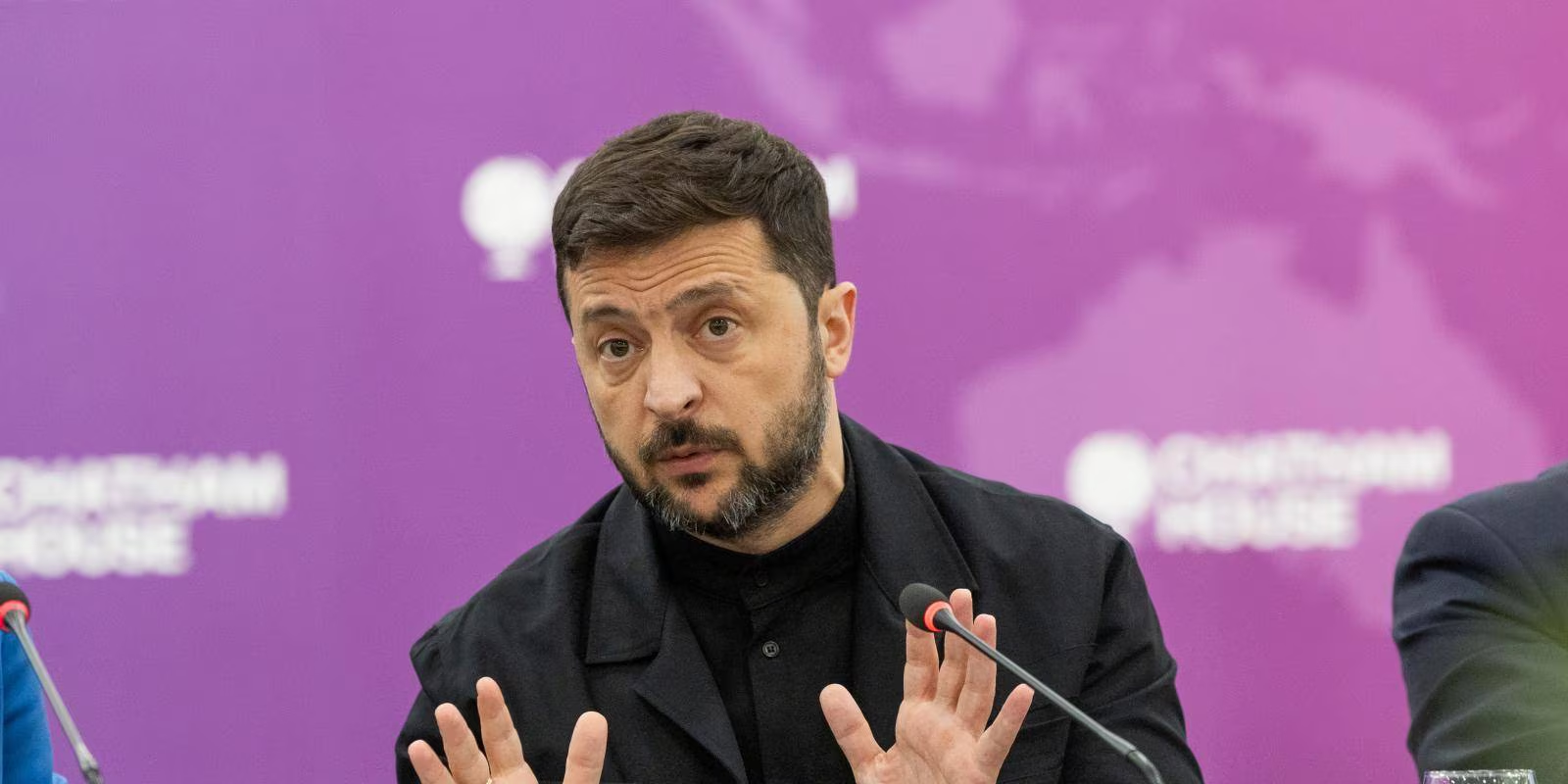
According to Axios, Volodymyr Zelensky expects to agree as early as Sunday, December 28, on a framework plan to end the war with Donald Trump. The talks are expected to focus on locking in the core parameters of a possible settlement.
Zelensky allows that such a plan could be put to a referendum, provided Russia agrees to a ceasefire lasting at least 60 days. He says significant progress has been made in recent weeks, but proposals from Trump’s team would require painful territorial concessions in eastern Ukraine. The Ukrainian president hopes to improve these terms and stresses that, without a “strong” position on the territorial issue, he would need explicit public approval.
In Washington, Zelensky’s willingness to consider a referendum is seen as a meaningful step forward, and officials note that he no longer rules out territorial compromises. At the same time, the Ukrainian president points to the serious political, logistical, and security risks involved in holding such a vote during wartime. That is why he views a 60-day truce as the minimum period necessary to prepare for and conduct a referendum. One senior US official notes that Moscow understands the need for a ceasefire in the event of a referendum, but is pushing for a shorter timeframe.
Zelensky is also uncertain whether Russia is prepared, in principle, to accept Trump’s plan. “I have some intelligence, but at this stage I want to believe only the words of leaders,” he said.
The conversation took place two days before the planned meeting between Zelensky and Trump in Mar-a-Lago. Most elements of the bilateral arrangements between the United States and Ukraine have already been agreed and set out in five documents, with a sixth not ruled out. On security guarantees, Zelensky says the package is broadly ready, though some “technical issues” remain.
One of them concerns the duration of the agreement. The US side is proposing a 15-year deal with the option of extension, but Zelensky considers that term insufficient. “We need more than 15 years,” he stressed, adding that Trump’s consent to a longer framework would be “a major success.” The security guarantees are expected to be submitted for ratification by the parliaments of both countries.
Ukraine is still seeking to strengthen its position on the territorial question. However, if the final plan requires a “very difficult” decision, he believes the most rational course would be to submit the entire 20-point package to a nationwide vote. He likens a potential referendum to Brexit in the United Kingdom—with an intense campaign on both sides of an exceptionally complex issue, conducted under tight timelines and amid an ongoing war.
Witkoff and Kushner are prepared to visit Ukraine to explain the benefits of the agreement. Zelensky also allows that Trump himself could make such a trip. At the same time, he warns that if campaigning takes place against the backdrop of continued Russian strikes, it is doomed. “For all the talk of security guarantees and economic benefits, people will see missiles,” the president said.
Zelensky has repeatedly stressed the need for a ceasefire that is genuinely observed and lasts at least two months. He fears that security threats could deter voters from turning out, rendering the results illegitimate. “It is better not to hold a referendum at all than to hold one in conditions where people are unable to come and vote,” he said.
On Saturday, December 27, Zelensky, Trump, and a group of European leaders plan to hold a conference call to align their positions. The Ukrainian president hopes that European partners can also be brought into Sunday’s meeting with Trump.
The aim of the meeting is to leverage all the progress achieved so far to shape a framework for ending the war, including agreement on a timeline. “We are now at the next level, which is why negotiations need to take place between presidents. We want to end this as quickly as possible,” Zelensky said.