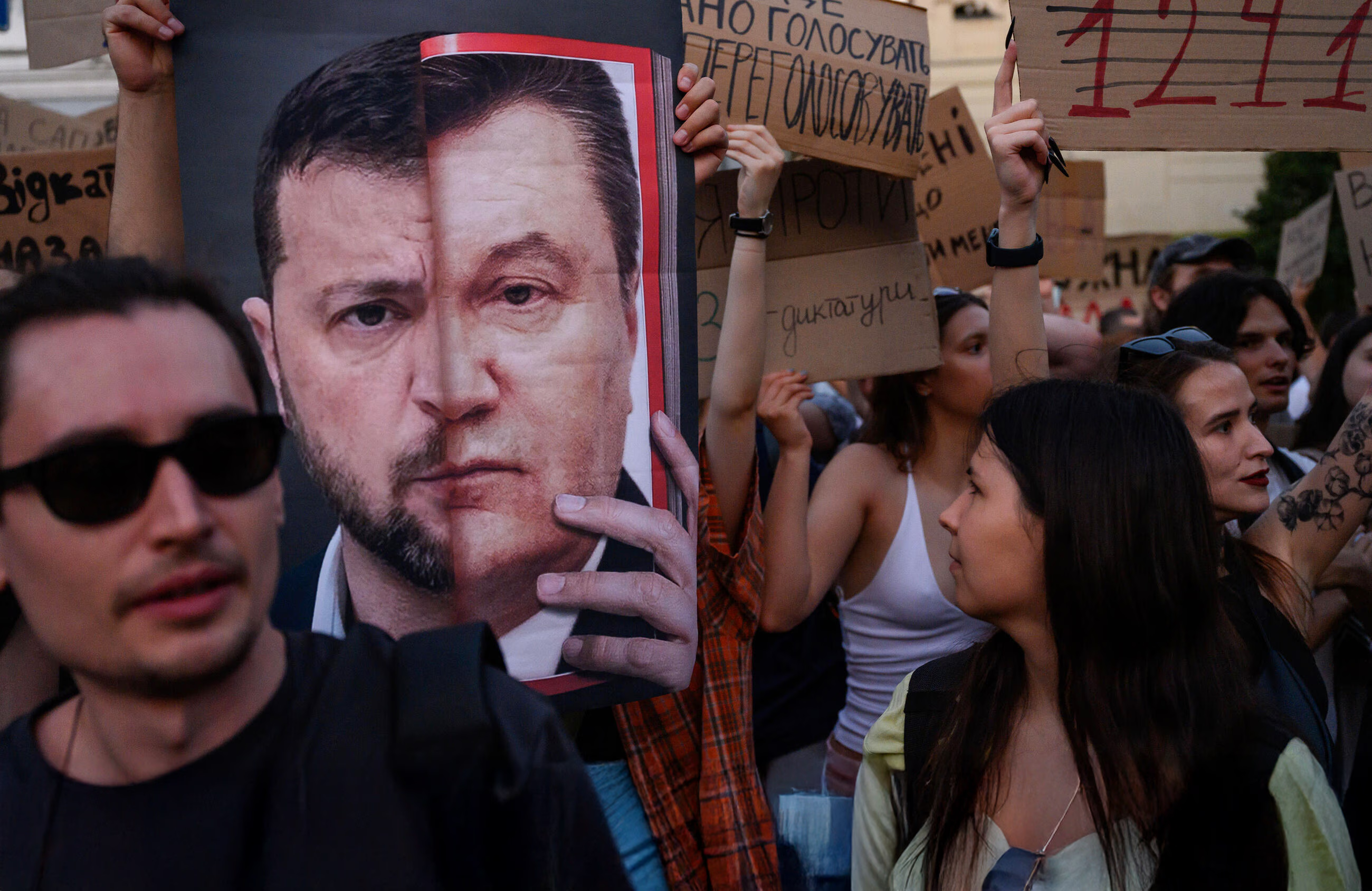
After six years in power, President Volodymyr Zelensky faces a new wave of anti-corruption investigations that threaten the credibility of his pledge to clean up the system. Although he came to office as an alternative to the old elites, Ukraine is gradually reverting to a vertical power structure, where key decisions are concentrated in the hands of a small circle led by Andriy Yermak.
Against this backdrop, anti-corruption agencies have uncovered what they describe as the largest kickback scheme within the state-owned company Energoatom—an investigation that brings prosecutors closer to the president’s inner circle and raises questions about his control over the fight against corruption.
Ukraine’s main anti-corruption bodies announced on Monday that they had uncovered a large-scale scheme in which contractors of the state nuclear energy enterprise were forced to pay substantial kickbacks.
The investigation is being conducted by the National Anti-Corruption Bureau (NABU) and the Specialized Anti-Corruption Prosecutor’s Office (SAPO)—institutions President Volodymyr Zelensky sought to weaken in July after they began probing his closest associates.
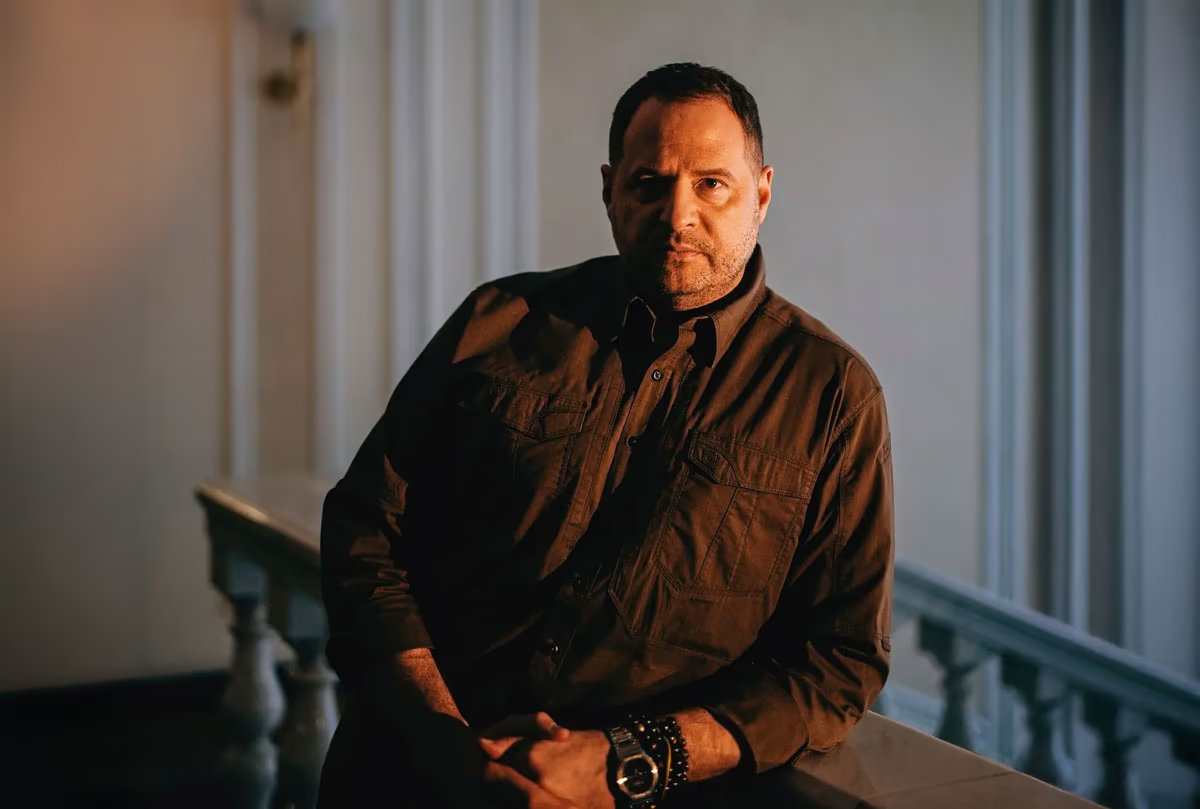
A Power Struggle at the Expense of Defense
At a Critical Moment in the War, the State Is Focused on Reallocating Authority
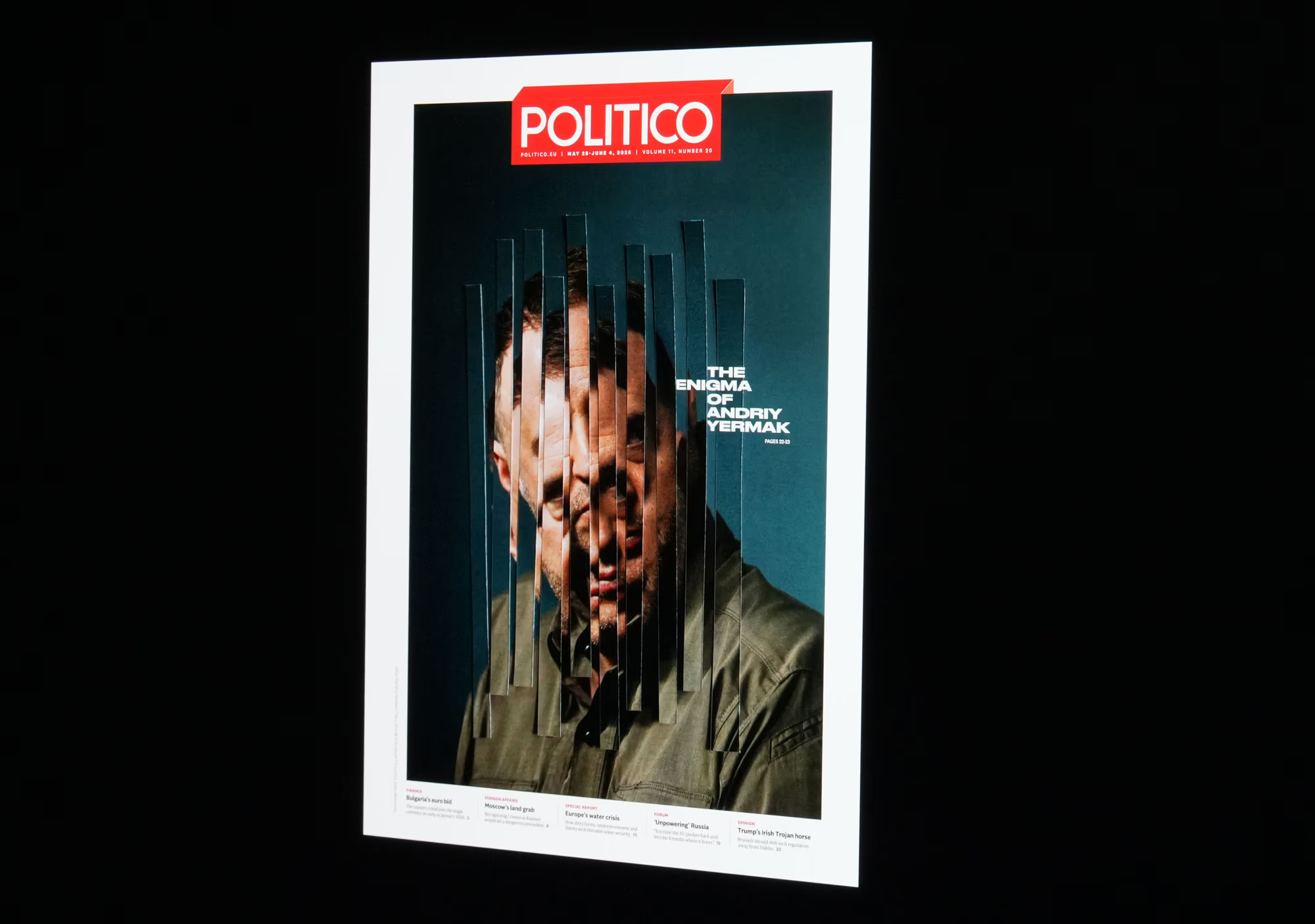
The Institution of Personal Loyalty
A Politico article explains how Andriy Yermak became Zelenskyy’s indispensable envoy—and the center of power in Ukrainian politics
Elected in 2019, Zelensky rose to power on promises to eradicate corruption that had eroded public trust in the state for decades. Yet suspicions of insider dealings and abuse of power continue to haunt his administration—especially in the energy sector.
Despite pressure from the president, the anti-corruption agencies appear to have only intensified their scrutiny of the country’s top officials. As part of the investigation into the state energy company’s activities, they reported having collected a thousand hours of audio recordings over a 15-month period and documented what they described as “the operations of a high-level criminal organization.”
The Prosecutor General Gets It All
How the Law Subordinating Anti-Corruption Agencies Became a Turning Point for Ukrainian Democracy
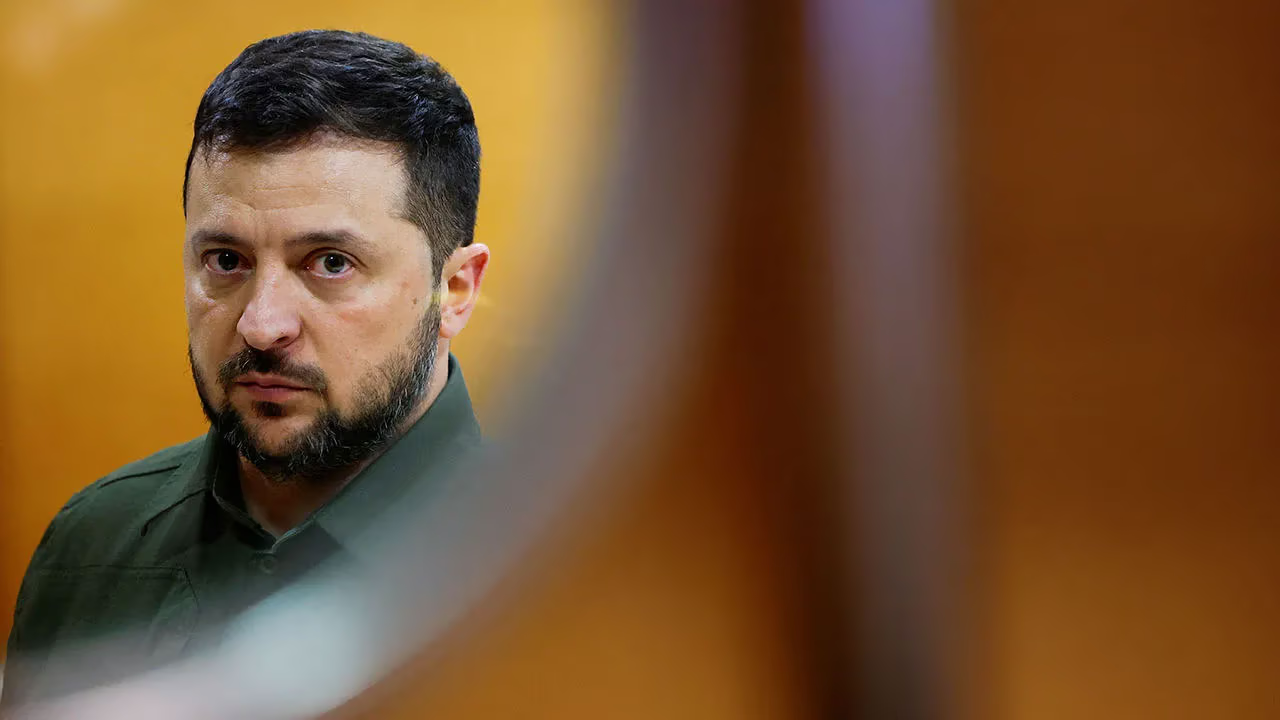
Zelensky Tries to Contain the NABU and SAP Scandal—But Public Trust in Ukraine Has Already Eroded
As Protests Enter Day Five, the Presidential Office Considers Sanctions Against the Owner of Ukrainska Pravda Over Corruption Reporting
The anti-corruption agencies did not disclose the names of those implicated. However, in a video posted on YouTube, they stated that the criminal group included a former adviser to the energy minister, Energoatom’s executive director for physical protection and security, four members of a money-laundering team, and a “well-known businessman,” identified by investigators as the head of the illegal network.
According to investigators, the members of the organization “created a large-scale corruption network aimed at influencing strategic state-owned enterprises,” particularly Energoatom.
Oleksandr Abakumov, head of the anti-corruption investigative division, said in a video statement that more than 70 searches had been carried out as part of the probe, code-named “Midas.” Investigators uncovered evidence of money laundering and illicit enrichment and determined that contractors had been forced to pay kickbacks amounting to up to 15 percent of their contract value.
The announcement came as Ukraine was trying to restore its energy system after a major attack. Early on Saturday morning, Russian missiles and drones struck energy and gas infrastructure across the country, damaging at least 25 facilities, including substations at nuclear power plants.
On Monday, November 10, Volodymyr Zelensky announced the start of talks with Ukraine’s European partners on additional funding and equipment supplies to help restore the country’s energy system. In his evening address, he said that everyone involved in corruption must be held accountable and that the government must work together with anti-corruption and law enforcement bodies “in a way that produces real results.”
Energoatom stated that it is fully cooperating with investigators. Energy Minister Svitlana Hrynchuk stressed that the ministry maintains a “zero-tolerance policy toward corruption” and added: “If guilt is proven, everyone must be held responsible.”
The statement released by anti-corruption agencies, along with the carefully edited videos that followed, showed that investigations into suspicious schemes continue despite Zelensky’s attempt in July to limit the powers of these institutions. The president backed down after young Ukrainians took to the streets to demand the protection of democracy.
Anti-corruption agencies reported on Monday that an audio recording dated July 9 had been released, capturing officials and businessmen allegedly discussing the embezzlement of funds intended to strengthen the energy sector’s protection against shelling. The authenticity of the recording—and the identities and context of those speaking—cannot yet be verified.
The head of Energoatom resigned in August under unclear circumstances. Last week, anti-corruption bodies detained a senior official at one of Energoatom’s subsidiaries on bribery charges.
A recent report by an independent Ukrainian think tank specializing in energy policy stated that after Russia’s full-scale invasion in 2022, the government rapidly tightened its control over the energy sector.
“These changes did not reduce corruption; in many cases, corrupt practices persisted or even worsened,” the report noted. The study was prepared by the Ukraine Facility Platform at the request of the European Union in July.
According to anti-corruption activists, by the time Volodymyr Zelensky attempted to curtail the powers of anti-corruption bodies, they were already investigating his closest associates. In June, Deputy Prime Minister Oleksii Chernyshov was charged with corruption. The newspaper Ukrainska Pravda reported that businessman Tymur Mindich, a co-owner of the television studio founded by Zelensky, is also under investigation in a large-scale corruption case.
Opposition lawmaker Yaroslav Zheleznyak said that an anti-corruption investigator arrested in July—whom his supporters consider the target of a politically motivated prosecution—had been involved in the Mindich case. Zheleznyak added that he personally handed over to anti-corruption bodies materials indicating corruption within Energoatom, some of which formed the basis of the case announced on Monday. He called it likely one of the largest corruption investigations in Ukraine’s history.
According to Ukrainska Pravda, the National Anti-Corruption Bureau conducted a search at Mindich’s residence on Monday, but he had left the country shortly beforehand. This information has not been independently verified.
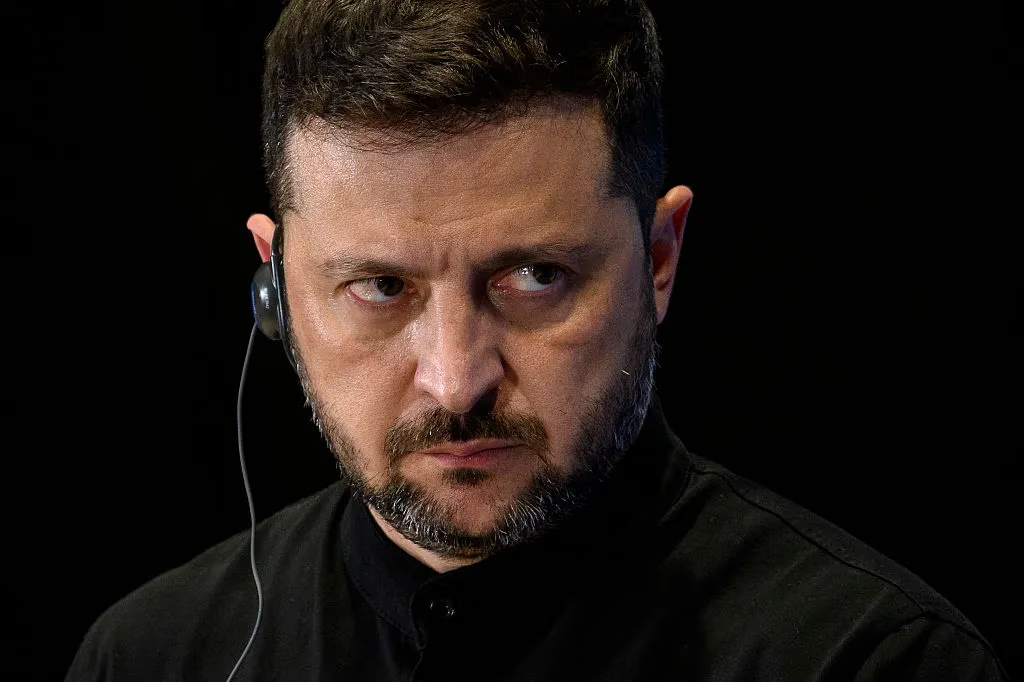
Why Has the NABU Investigation Become a Threat to Zelensky?
The Raid on His Ally Turns the Fight Against Corruption into a Test of Kyiv’s Relations with Brussels
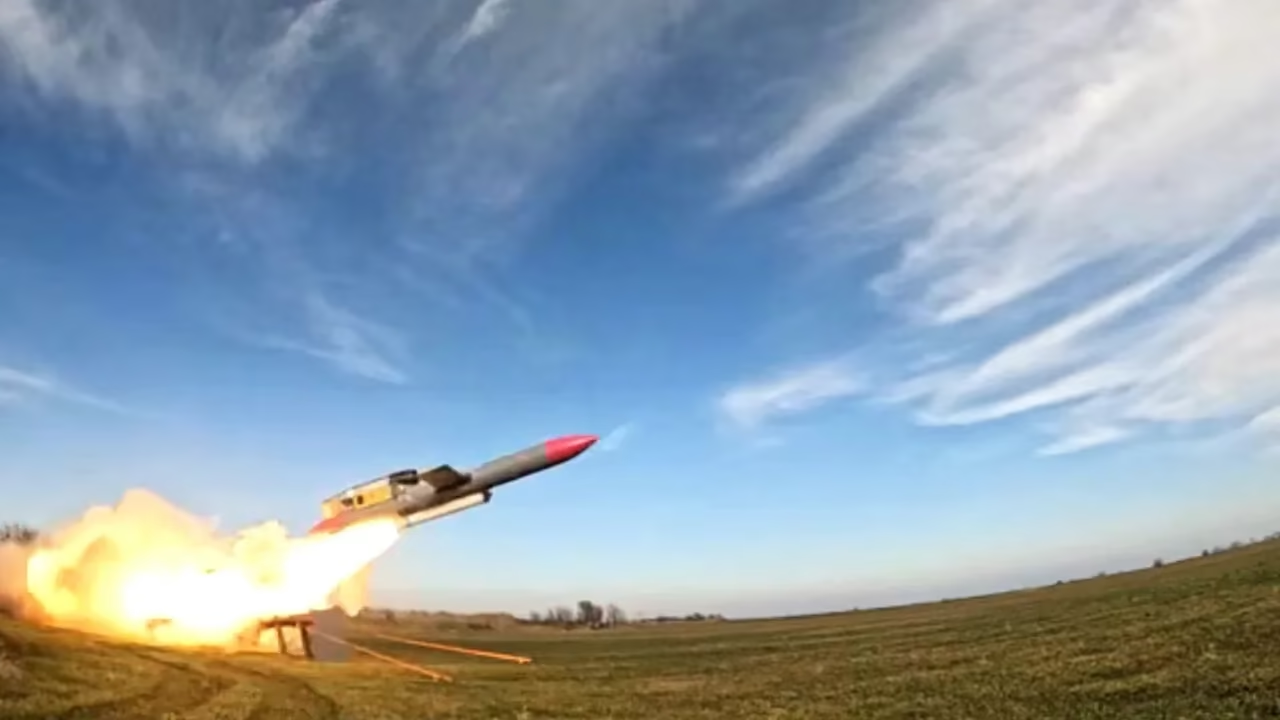
Ukraine Unveils the “Flamingo” Cruise Missile With a Claimed Range of 3,000 km, but Its Capabilities Raise Doubts
The Developer Is Under NABU Investigation Over Contracts for “Barely Functional” Drones
The newspaper The Kyiv Independent reported in August that anti-corruption authorities were examining Mindich’s ties to the weapons manufacturer Fire Point. The company denies having any business relationship with him.