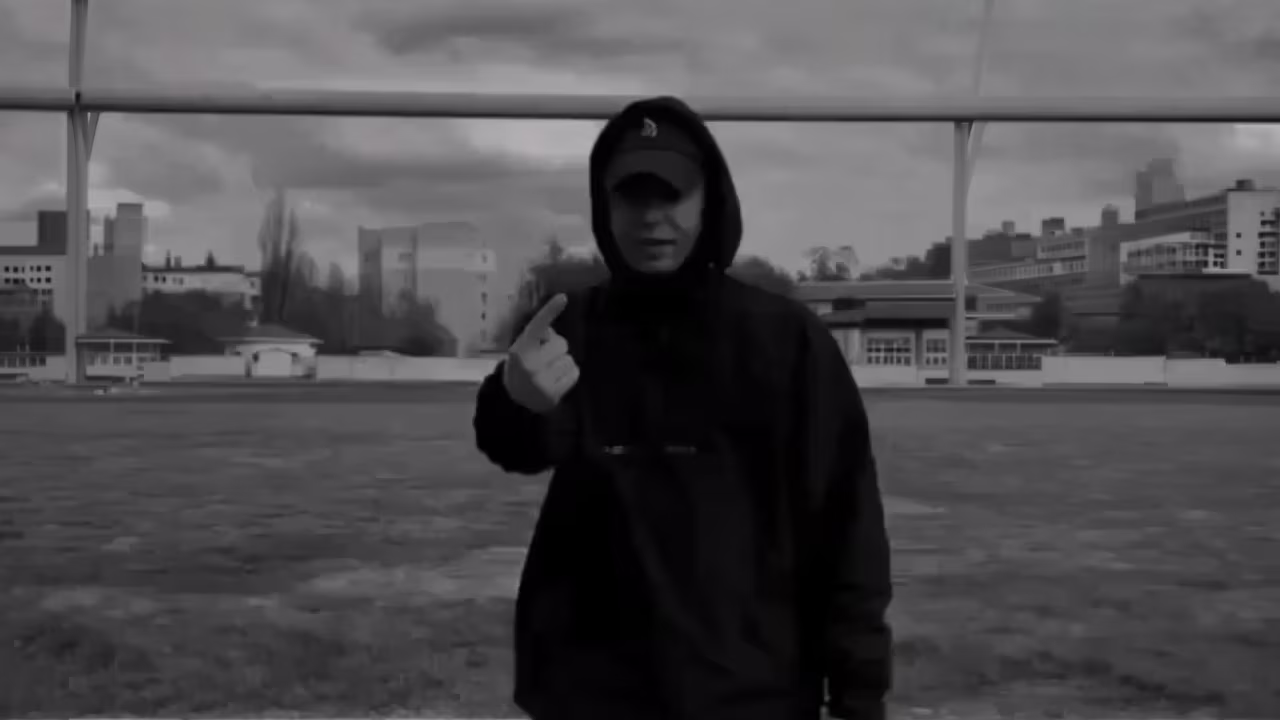
A musician from Kremenchuk released a track about alleged abuses by TCC officers involved in Ukraine’s forced mobilization campaign. The video quickly gained millions of views online.
During one of his performances at a local club, media-facing serviceman and C14 ultranationalist leader Yevhen Karas arrived at the venue together with a man in military uniform. According to some reports, they were accompanied by a large group of people. The rapper was told to delete the video and issue a public apology.
A fragment of the Kremenchuk musician’s track.
An unidentified man shouting obscenities in Russian at the musician over his track.
One detail drew particular attention: the man in uniform—who appeared at a concert in the rear rather than at the front—began speaking in Ukrainian, apparently for the camera. But he switched to Russian after only a few phrases, which, judging by his speech, appears to be the language he normally uses when cameras are not present.
This case is not isolated but part of a broader trend in which Ukraine is increasingly drawing comparisons with Russia. There, musicians who fall out of favor have long faced pressure over their words and songs. One recent example was St. Petersburg street singer Naoko (Diana Loginova) of the band Stoptime, who was repeatedly jailed last autumn for performing songs by “foreign agents” and for allegedly “discrediting” the army before eventually leaving the country.
In Ukraine, those speaking openly about the TCC—about abuses, extortion, and violence linked to mobilization—are increasingly met not with substantive responses but with pressure. The Kremenchuk rapper is far from the only such voice; he may simply have been the easiest target. At the same time, questions remain about how supposed servicemen find time to attend concerts and engage in such activities instead of serving at the front.
Ukrainian officials themselves have increasingly spoken publicly about the kinds of “inconvenient” issues being raised. Ombudsman Dmytro Lubinets stated outright that TCC offices had effectively turned into places of detention for civilians and said authorities often respond to human-rights violations only after public outrage. He cited the Bila Tserkva TCC, where abuses were addressed only after media attention, and the Uzhhorod RTCC, where police on site initially refused to register complaints in the pre-trial investigation system. Lawmaker Heorhiy Mazurashu estimated that TCC-related “schemes” built around abuses against civilians generate at least $1 million a day and argued that the actions of men in uniform are pushing Ukrainians to leave the country and discouraging men abroad from returning home.
Dmytro Lubinets saying that TCC offices have turned into places of detention for civilians.
Heorhiy Mazurashu speaking about TCC “schemes.”