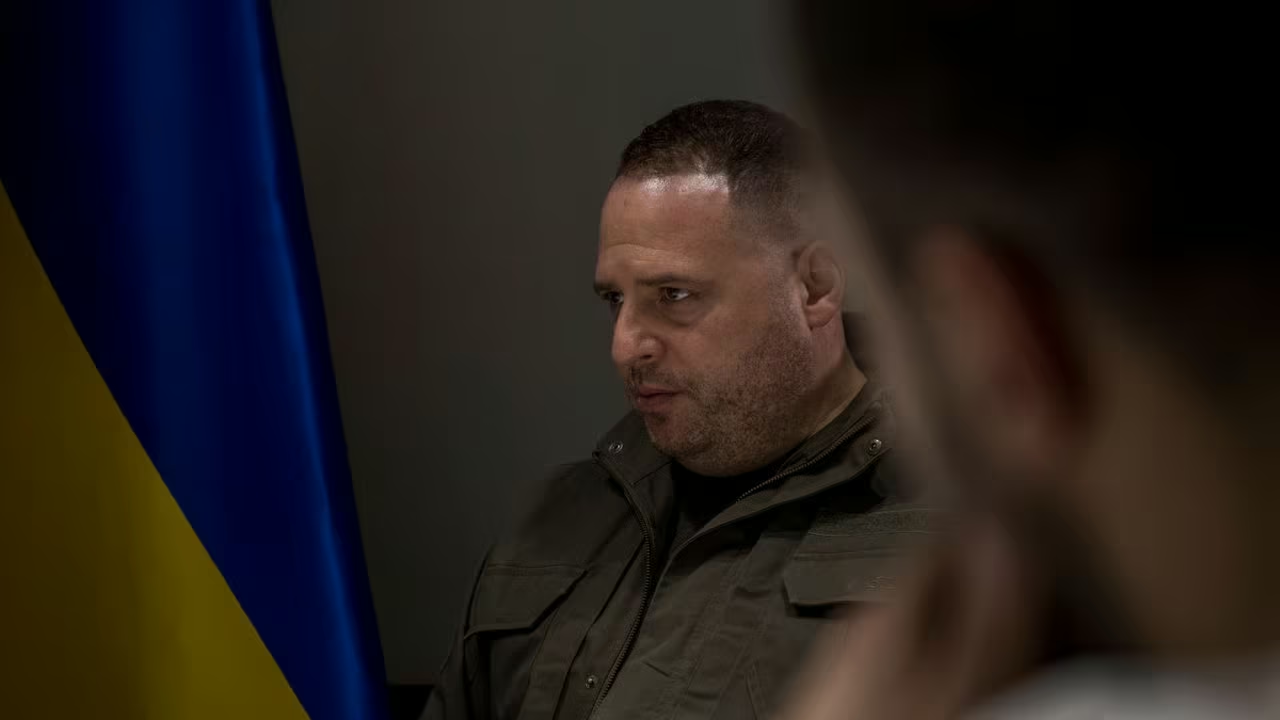
On November 28, 2025, the head of Ukraine’s Presidential Office, Andriy Yermak, submitted his resignation from the post he had held since February 2020. The move marked the culmination of a chain of events linked to the most significant corruption scandal of the war years, in which Ukraine’s National Anti-Corruption Bureau (NABU) carried out searches at his home and among people close to him. It was this episode—the search itself and the scale of the investigation—that became the decisive catalyst for the resignation Yermak announced in late November.
To an external observer, the resignation might have appeared as a step toward institutional renewal. Yet the first days after it made clear that a formal departure from office did not translate into any real change in the architecture of power Yermak had constructed over recent years. The extent of the influence he accumulated while in office is difficult to overstate: as Western and Ukrainian media note, under his leadership the Presidential Office evolved into a central hub for political, administrative, and diplomatic decision-making, effectively duplicating—and often subordinating—the powers of other branches of government.
Announcing the resignation, Volodymyr Zelensky explained that “now is not the time” to appoint a new head of the Presidential Office and that his primary task was to focus on ensuring security and supporting the state under wartime conditions. According to official representatives, the search for a successor has been delayed precisely because of the complex foreign-policy environment and ongoing negotiations with partners, including the United States.
This wording quickly became widespread in official statements and served as the central explanation for the delay in appointing a new head of the Presidential Office. Yet it was precisely the absence of a presidentially appointed deputy that emerged as one of the clearest signs that no change in the system of governance had taken place. For several weeks after the resignation, the position remained vacant, while discussions of potential candidates resembled a reshuffling of the same elites rather than any genuine reconfiguration of the governing structure.
The reason for this lies not only in the specifics of a кадровый deficit. Many experts emphasize that over years in office Yermak built a “vertical of power” around the president, in which decision-making was concentrated within a narrow circle of senior officials appointed by him or personally loyal to him. According to analysts, this system rested not merely on formal authority but on entrenched mechanisms within the Presidential Office that enabled personal influence over the executive branch, law-enforcement bodies, and other state institutions.
As early as the day of the resignation, media outlets emphasized that it was precisely this power vertical that had become the target of criticism both domestically and among foreign partners. Numerous reports noted that Yermak was far from an ordinary official: he was involved in coordinating key negotiations, effectively became the second most influential figure in the management of the state, and accumulated powers that extended well beyond the bounds of his formal position.
At the same time, discussion has intensified around the idea that the resignation itself does little to resolve the systemic problems that emerged from the concentration of power within a narrow circle. The Carnegie Politika analytical center has noted that Yermak’s departure removed one figure from the apex of power but did not dismantle the mechanisms and personal networks he created, which continue to shape the functioning of state institutions.
Leaving the post of head of the Presidential Office vacant for several weeks after the resignation has further intensified tensions around the power vertical. This not only preserves room for internal maneuvering but also fuels interpretations that Yermak’s formal departure was, at least in part, a tactical move to ease political pressure rather than a step toward deep institutional reform. A number of Ukrainian media analyses emphasize that the discredited figure of the head of the Presidential Office had itself become a source of political risk for Zelensky, and that his removal was carried out primarily to dampen negative public reaction, rather than to dismantle the power vertical in any substantive way.
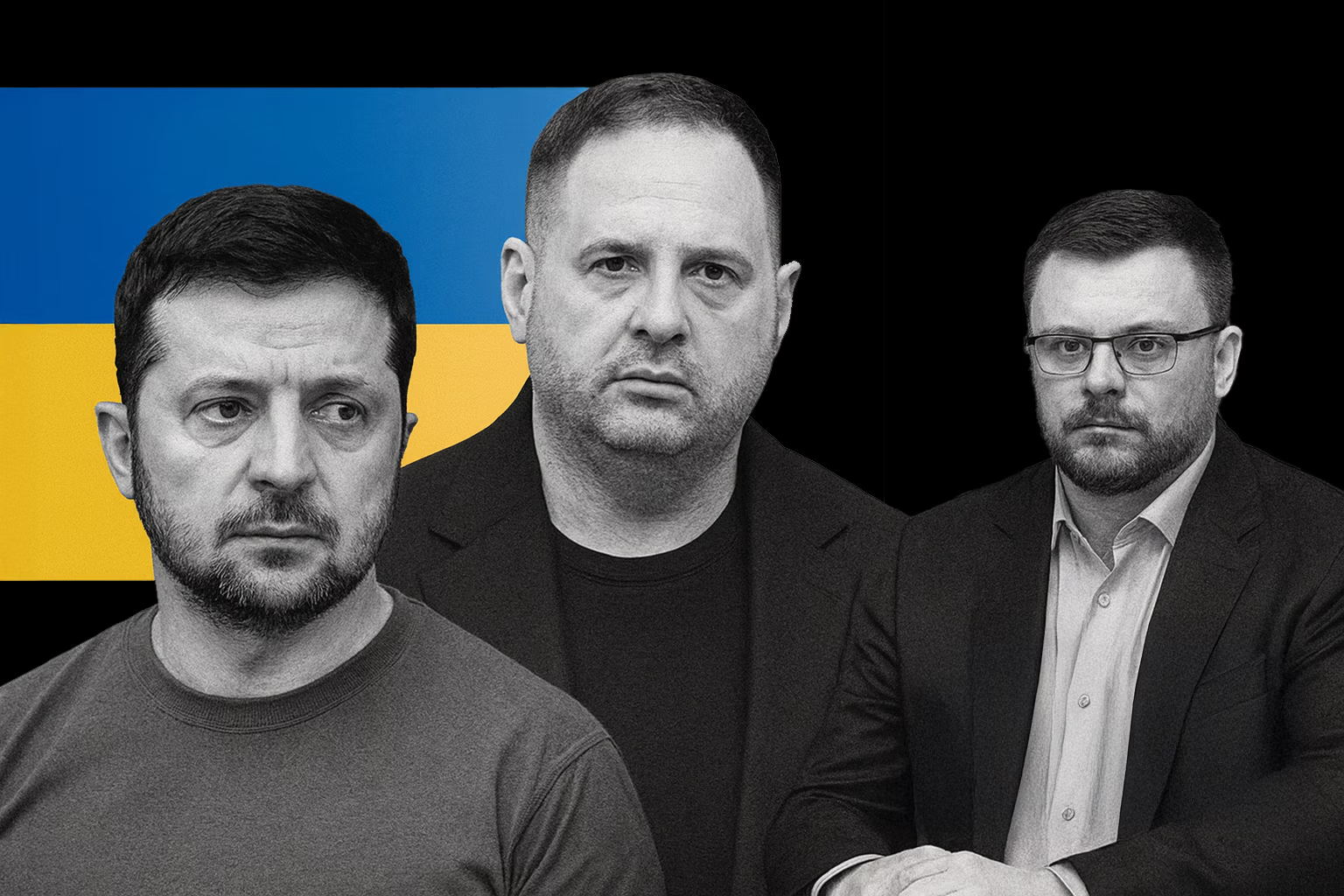
Yermak and Former Ministers Face No Suspicion in the Myndych Case
The Course of the Investigation Is Increasingly Seen as External Pressure on the Power Configuration Around Zelensky
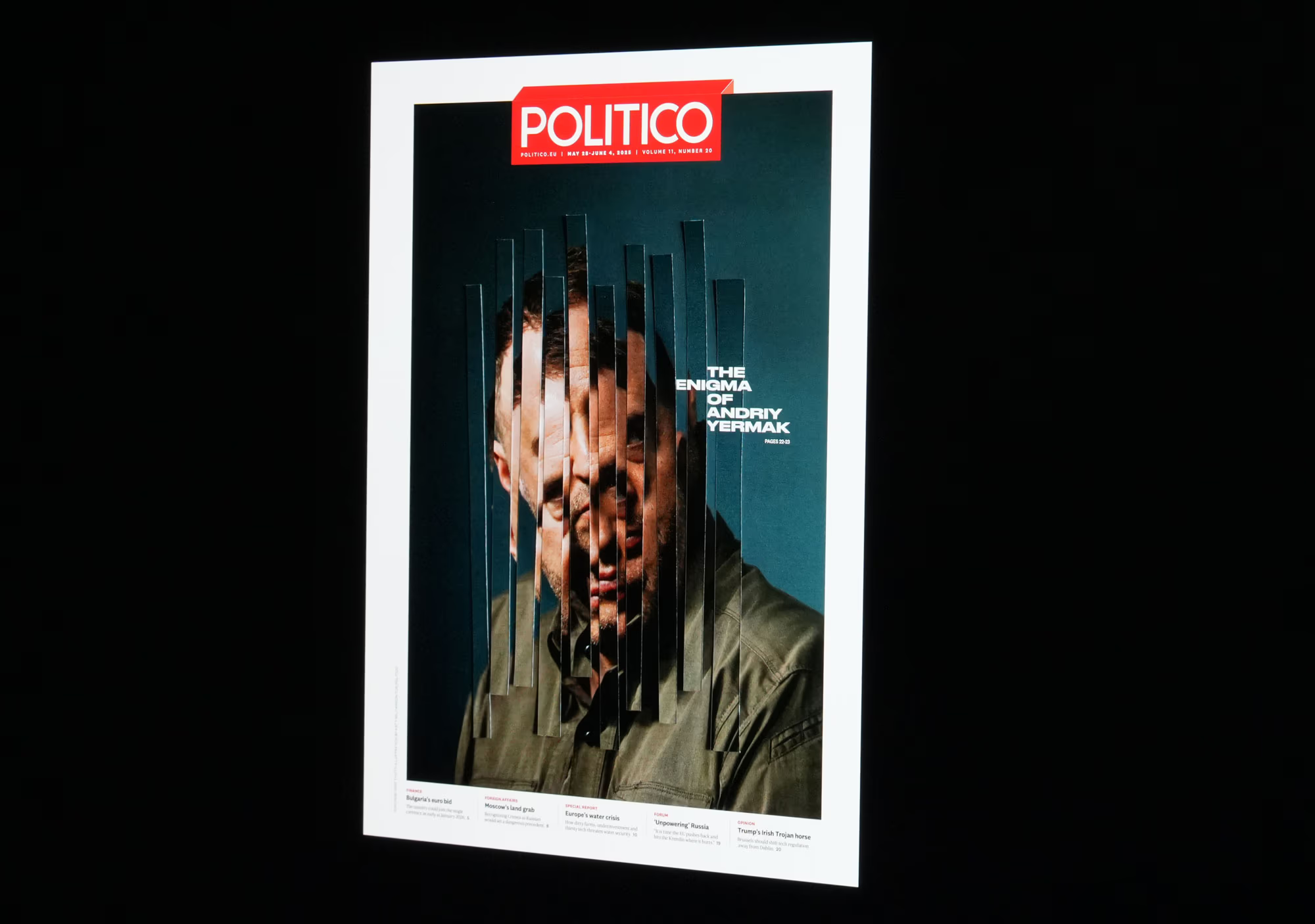
The Institution of Personal Loyalty
A Politico article explains how Andriy Yermak became Zelenskyy’s indispensable envoy—and the center of power in Ukrainian politics
Equally telling was Yermak’s own comment on his resignation and his plans going forward. In a statement issued amid coverage in foreign media, he said he intended to “go to the front” after leaving office. The phrasing, cited by a number of international outlets, was interpreted in part as an attempt to recast his image—from a political operator to a participant in the war effort. However, in the assessment of observers, such statements were largely received by the public as a rhetorical device, one that had little bearing on the actual processes of governance or on broader perceptions of the seriousness of the fight against corrupt practices.
Yermak’s resignation came against the backdrop of one of the most high-profile corruption cases in recent years and under pressure not only from domestic critics but also from international partners, who had long voiced concern over the concentration of power and the opacity of decision-making channels.
The weeks that followed his departure have shown that this formal кадровый move did not become a catalyst for institutional renewal. In the absence of a clear policy of rotation and a systemic restructuring of the power vertical that shaped the distribution of authority, the resignation appears more as an effort to defuse public and international tensions than as the beginning of genuine reforms in state governance. It is precisely this duality—between official rhetoric that places the war first and insists that it is “not the time” to appoint a new head, and the de facto preservation of existing structures of influence—that has come to define Kyiv’s political landscape in recent weeks.