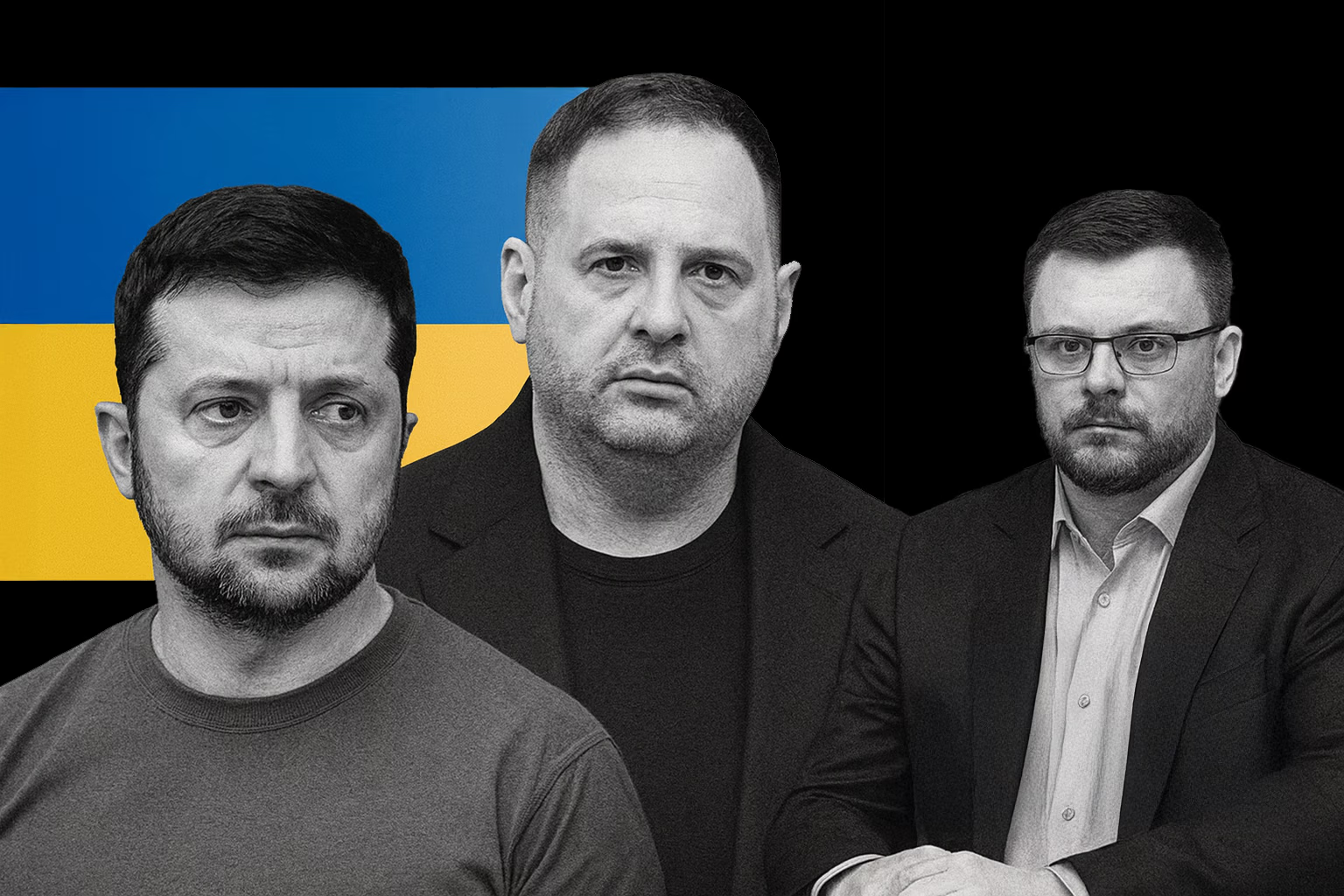
A week has passed since the NABU and SAP searches targeting Andriy Yermak and his subsequent dismissal as head of the Presidential Office. In that time, he has not been served a notice of suspicion for any wrongdoing.
The same applies to former energy and justice ministers Svitlana Hrynchuk and Herman Halushchenko. Just a month ago, they were portrayed as central figures in the Myndych case involving Energoatom, yet no suspicions have been issued against them either. Once the two stepped down, interest in both faded almost instantly—much as it is now receding around Yermak, as though he had never held high office.
All this reinforces the impression that the actions of NABU and SAP in the Myndych investigation are driven less by a determination to uncover corruption and hold those responsible to account, and more by the aim of exerting pressure on Volodymyr Zelensky, steering him toward certain personnel and political decisions. In political circles, the prevailing theory is that the stakes may involve a reallocation of influence within the energy sector as well as adjustments inside the Presidential Office itself—from changes among deputies to revisions in how decisions are routed. Similar bursts of attention toward individual officials have occurred before, suggesting that the current lull is less a phase of methodical investigative work than part of an effort to shape Zelensky’s choices.
And should the issue of Yermak suddenly re-emerge and he is finally served a notice of suspicion, it would signal only one thing: new demands or grievances have been directed at Zelensky. In that case, the suspicion would function less as a step dictated by investigative logic and more as a political message—an indicator of shifting power around the president rather than a genuine development in the Myndych case.
And that inevitably raises a question: who is shaping these demands, and who governs the trajectory of the case—NABU and SAP, competing political factions, or those advancing their interests from behind the scenes?