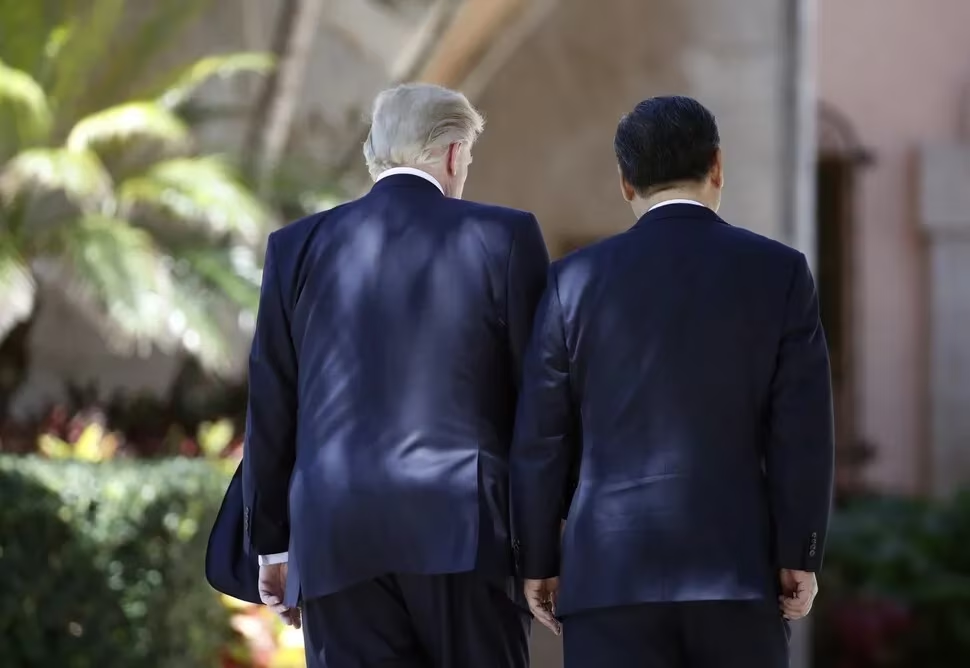
During their first phone call since November, Chinese President Xi Jinping urged US President Donald Trump to exercise “caution” on arms supplies to Taiwan. This was stated in a Chinese Foreign Ministry readout of the conversation. “President Xi stressed that the Taiwan issue is the most important matter in China-US relations,” the text said. “China is obliged to safeguard its sovereignty and territorial integrity and will never allow Taiwan to separate. The United States should approach the sale of weapons to Taiwan with caution.”
Several hours later, Lai Ching-te, the president of the self-governing island, said that Taiwan’s relations with the United States remain “unshakable”. “Taiwan-US relations are stronger than ever, and all co-operation projects will continue without interruption,” he told journalists during a visit to textile traders in the west of the island.
Taiwan is a self-governing democratic system that China regards as its territory and does not rule out taking by force. Beijing bars all countries that maintain diplomatic relations with it—including the United States—from keeping official ties with Taipei. Even so, despite the lack of formal recognition of Taiwan as a state, the United States remains its main unofficial ally and the largest supplier of arms.
In December, the US State Department announced the largest military-assistance package for Taiwan on record, worth more than $11.1bn and including missiles, artillery systems and drones. The package has yet to win Congressional approval. China reacted sharply to the plans, staging two days of military drills around the island in late December involving aircraft, naval forces and missile units.
Arms deliveries are also meeting resistance within Taiwan. They are opposed by the Kuomintang, the main opposition party, as well as by a portion of the public, alongside criticism of a proposal to raise defence spending to 3.3% of GDP. The opposition-controlled parliament has blocked Lai’s budget plan, including a $40bn special defence budget, proposing a far smaller level of spending instead.
Late on Wednesday evening, Trump described his conversation with Xi—which covered, among other things, Taiwan’s future—as “excellent” and “substantive” in a post on Truth Social. He said the two leaders also touched on Russia’s war against Ukraine, “the current situation with Iran”, and possible Chinese purchases of American oil and gas.
Trump added that he expects to visit China in April—his first trip to the country during his current presidential term. He also said Beijing is considering buying 20m tons of American soybeans this season, up from 12m tons in the previous one.