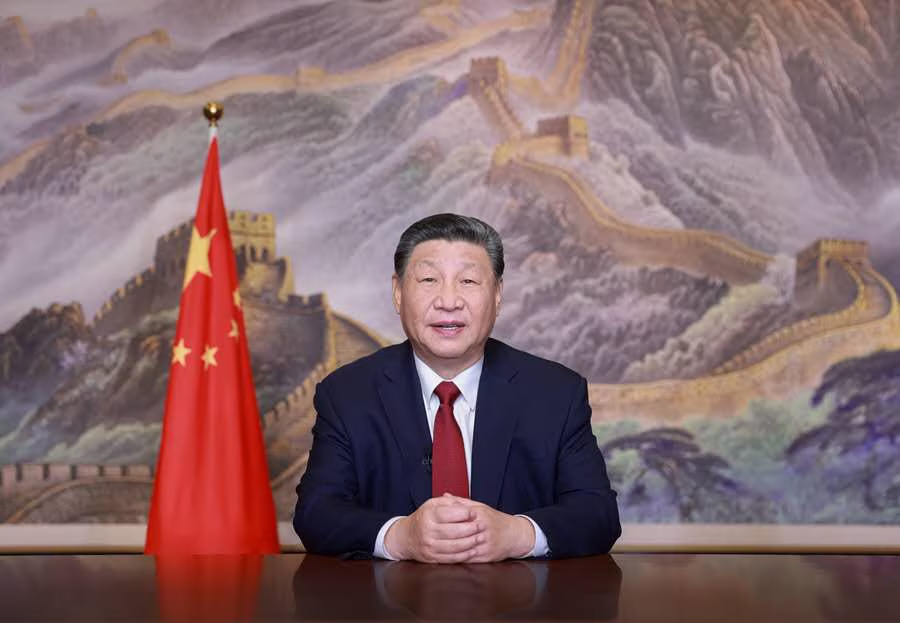
Xi Jinping said China would meet its 5 per cent economic growth target for 2025, striking a confident tone about the state of the economy at a political gathering in Beijing.
According to the Chinese leader, 2025 has been an “extraordinary” year: despite external pressure, the economy has maintained resilience and made advances in science and technology.
“China’s economy has advanced under pressure, shifting towards new and higher-quality growth, demonstrating strong resilience and vitality,” Xi said on Wednesday in an address to the country’s top political advisory body, according to the Xinhua news agency.
He added that China’s economic, technological, defence and overall national strength had “reached new heights” as the country concluded its latest five-year plan.
While this year’s growth has been driven largely by strong export performance, the world’s second-largest economy continues to grapple with a prolonged property sector crisis that is weighing on consumer spending and investment.
Beijing has pledged to step up efforts to revive consumption—a long-standing weak spot in the economy of 1.4bn people—including through expanded fiscal support. This week, authorities announced additional funding for a consumer goods trade-in scheme aimed at boosting sales of household appliances and electronics.
Xi said full-year growth in 2025 was expected to come in at “around 5 per cent”, in line with the official target and the pace of 2024, allowing China to remain among the world’s leading major economies. Total output, he said, would amount to roughly 140tn yuan ($20tn).
In the third quarter, China’s economy grew by 4.8 per cent—the slowest pace over the past year.
Xi also said China had injected “positive energy” into an international order marked by instability and divisions, pointing to Beijing’s initiatives in global governance and its push to strengthen the role of multilateral institutions.
The Chinese leader is expected to deliver another public address later on Wednesday.
In addition, Xi exchanged New Year messages with a close ally—Russian President Vladimir Putin. According to Xinhua, the two leaders agreed to deepen cooperation in the year ahead.
Xi said that two in-person meetings in Beijing and Moscow in 2025 had helped advance bilateral ties, leading to the introduction of a mutual visa-free regime and progress on cross-border energy infrastructure projects.
Looking ahead, Xi said that 2026 would mark the start of China’s next five-year plan, under which policy would focus on supporting growth while preserving macroeconomic stability.
Draft guidelines for the new plan, which is expected to be approved in March, underscore the importance of strengthening consumption but also show that Beijing continues to prioritise the development of high-tech manufacturing and the pursuit of scientific and industrial self-sufficiency amid long-term rivalry with the United States.