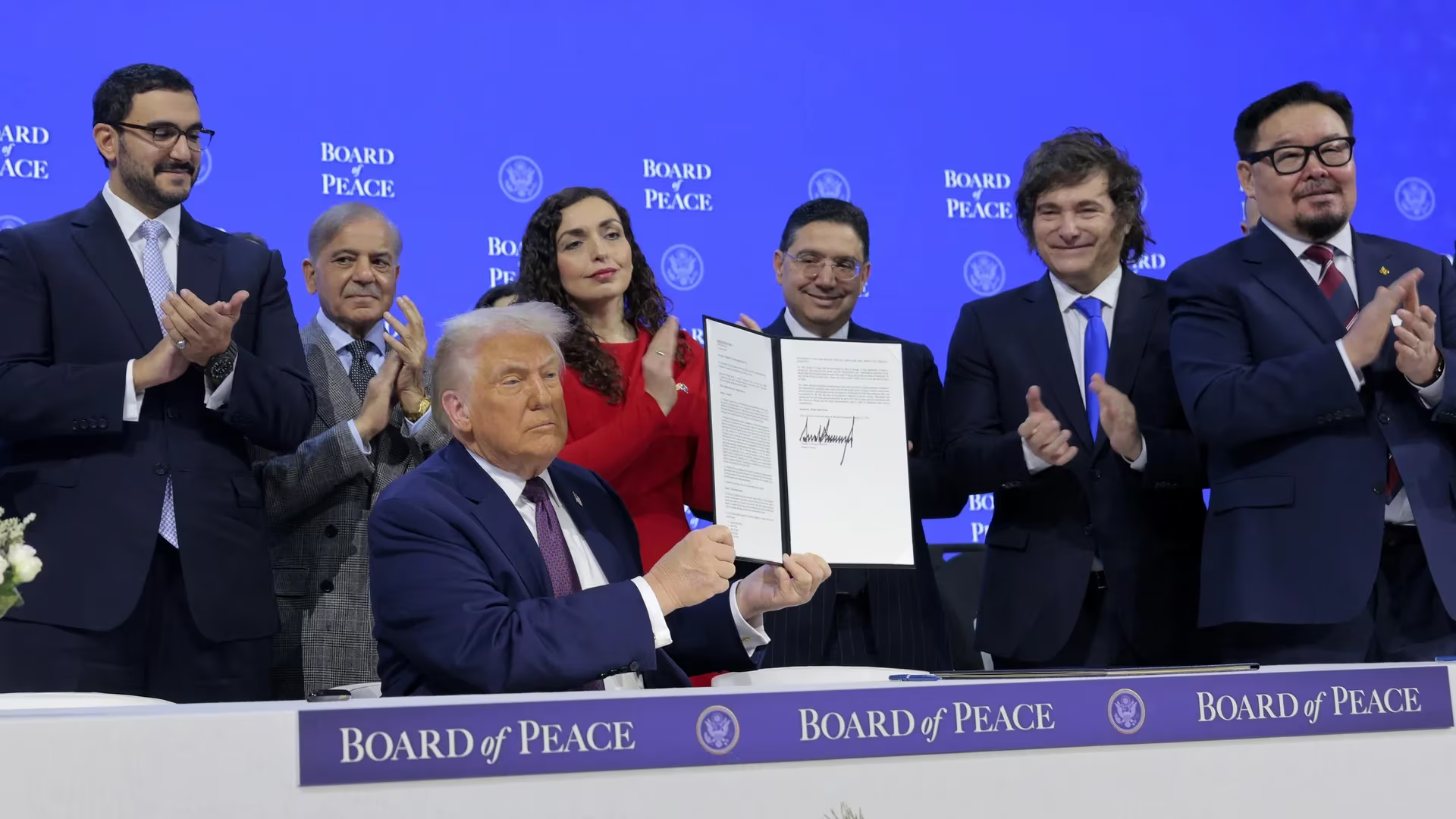
The White House, according to a U.S. official and diplomats from four countries, is planning to convene a leaders’ meeting on February 19 for the so-called Gaza “Peace Council”. Washington hopes to use it to advance the implementation of the second phase of the ceasefire agreement and to raise funds for rebuilding the enclave. “It will be the first Peace Council meeting and a donors’ conference for Gaza’s reconstruction,” a U.S. representative said. Preparations for the summit are still at an early stage, and the plans could yet change. The White House declined to comment.
The council’s creation, announced a month ago, was met with notable scepticism. Most Western allies did not join the initiative—in part because the charter grants the council extraordinarily broad powers and, in effect, leaves Mr Trump with the right to a unilateral veto. Some partners argued that he was attempting to build an alternative to the UN Security Council. The council currently has 27 members and is chaired by Mr Trump. Its mandate to oversee implementation of the ceasefire agreement, as well as to work on governance and Gaza’s reconstruction, was approved by the UN Security Council.
За кулисами администрация Трампа начала обращаться к десяткам стран, приглашая их лидеров и обсуждая организационные детали. Встречу планируют провести в Институте мира, который Трамп недавно переименовал в свою честь. «Пока ничего не подтверждено, но администрация действительно планирует мероприятие и уже выясняет, какие лидеры смогут приехать», — сказал один из источников.
Israeli officials say that Prime Minister Benjamin Netanyahu intends to meet Trump at the White House on February 18—one day before the council’s expected session. He has already accepted an invitation to join the “Peace Council”, though he has not yet signed its charter. If Netanyahu takes part in the meeting, it would be his first public contact with Arab and Muslim leaders since the period before the October 7 attack and the war in Gaza.
Implementation of the second phase of the ceasefire agreement has formally begun, but it is moving at a glacial pace. Israel has agreed to reopen the Rafah crossing on the Gaza-Egypt border, but only a very limited number of Palestinians are being allowed through. A temporary technocratic Palestinian government has been formed, yet it has not entered the territory itself and is operating out of Egypt. The Trump administration and other mediators—Egypt, Qatar and Turkey—are only at an early stage in efforts to reach an understanding with Hamas on demilitarisation. Israel insists that without this, it will not withdraw its forces from Gaza or allow reconstruction to begin.
Last week, at a Security Council meeting, U.S. ambassador to the UN Mike Waltz said Washington wants to launch a “co-ordinated process for the removal of weapons”. “All military, terrorist and offensive infrastructure, including tunnels and weapons-production facilities, will be destroyed and not rebuilt,” he said. The demilitarisation process, he added, would be overseen by “independent international observers”, and an international programme is also being planned to “buy back” weapons from Hamas militants. Some former members of the movement would be offered integration into the new security forces of the future government.
Netanyahu, who is sceptical of the American plan for Gaza, meanwhile claims that at their most recent meeting Trump promised him Hamas would be given only 60 days to disarm, after which Israel would be able to resume the war. U.S. officials deny this, insisting that demilitarisation will take significantly longer. Trump’s adviser and son-in-law, Jared Kushner, previously presented a 100-day plan in Davos that envisaged only an initial phase of disarmament.