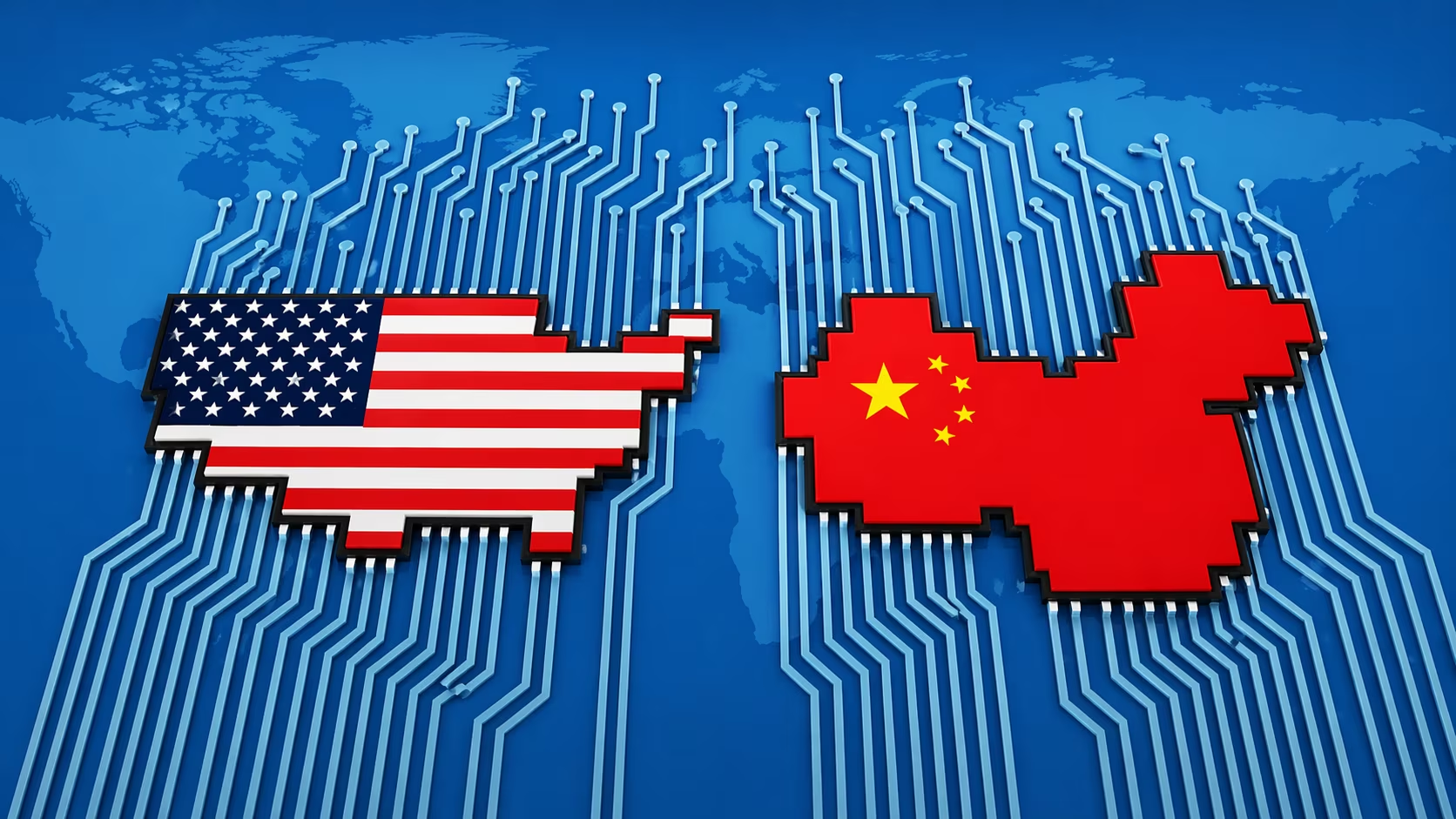
The White House has accused China of large-scale industrial appropriation of the intellectual property of American artificial-intelligence developers and warned that it intends to tighten measures against practices that exploit U.S. advances.
In a memo reviewed by the Financial Times, Michael Kratsios, director of the White House Office of Science and Technology Policy, said the government has information about “deliberate, industrial-scale campaigns to distill frontier U.S. AI systems” carried out by foreign entities “principally based in China.”
The accusations mark a further escalation in tensions over the alleged access of Chinese companies to advanced American research amid the race for leadership in AI. The issue is unfolding just weeks before Donald Trump’s expected meeting with Xi Jinping in Beijing.
Attention to the issue intensified after accusations against the Chinese company DeepSeek, which has been accused of using distillation—a method of training smaller models on the outputs of more powerful systems—to build a competitive product at lower cost.
In the document, Kratsios said the administration intends to share information with American companies about “attempts by foreign actors to carry out unauthorized industrial-scale distillation” and to help coordinate their response.
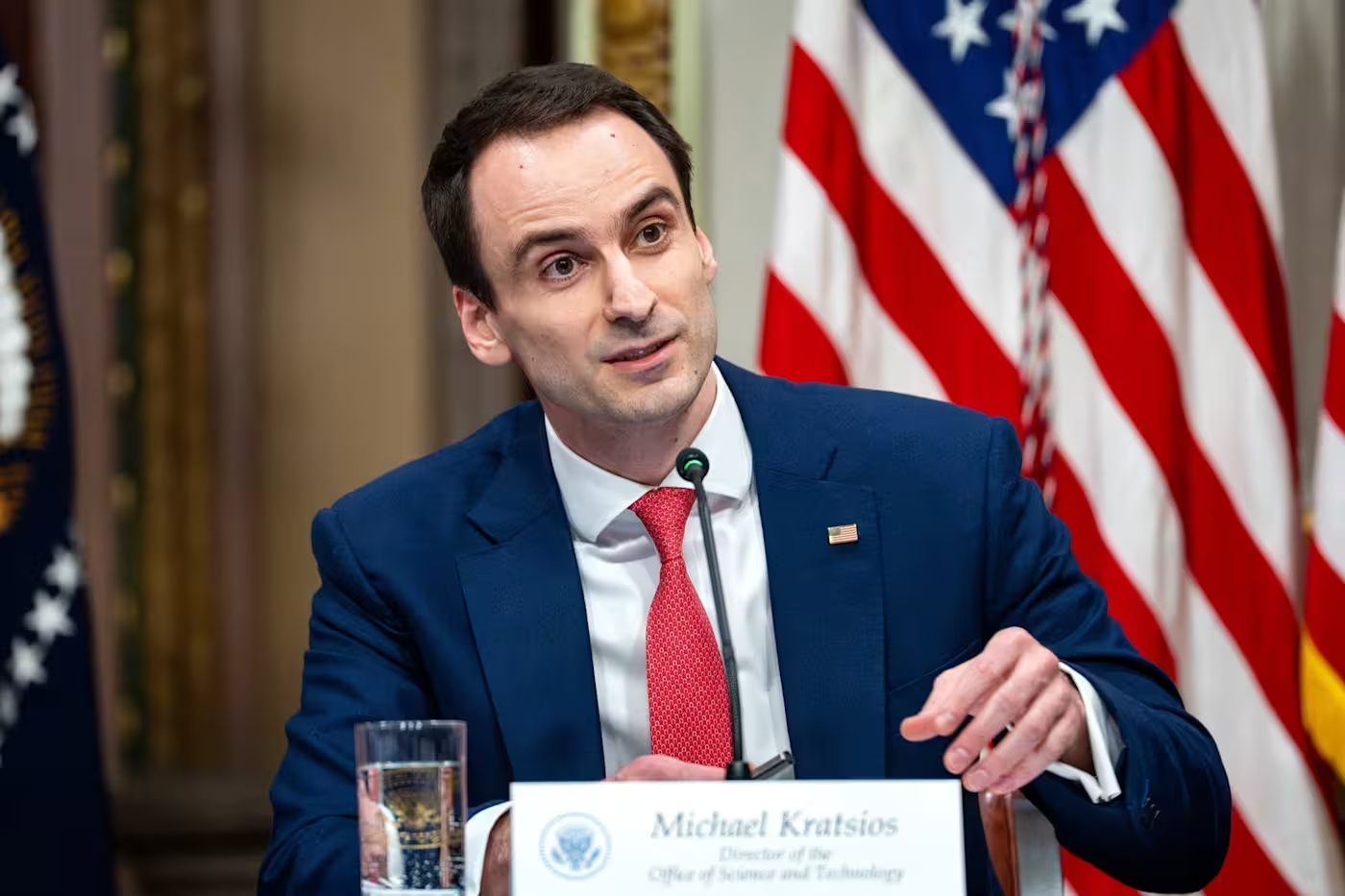
Michael Kratsios speaks at a White House roundtable on commitments to protect ratepayers. March 4, 2026.
He said such campaigns use “tens of thousands of proxy accounts to evade detection mechanisms” and rely on methods designed to break through restrictions in order to extract protected information.
He also said the United States is considering measures aimed at “holding foreign participants in such industrial distillation campaigns accountable.”
Chris McGuire, a technology-security expert at the Council on Foreign Relations, said: “Chinese AI companies are using distillation attacks to compensate for shortages in computing power and to illicitly replicate the core capabilities of American models.”
In his view, Washington should bar Chinese entities from access to American models, impose sanctions on organizations involved in such practices, and tighten export controls to prevent shipments of—or remote access to—U.S. chips.
American companies, including Anthropic and OpenAI, are increasingly voicing concern about distillation, arguing that it allows foreign labs to narrow the technological gap despite restrictions on exports of advanced chips.
Kratsios stressed that distillation is an important part of the AI ecosystem when used lawfully, for example to create lighter models, but that “industrial distillation” aimed at undermining American research and development is “unacceptable.”
He added that models created through “covert, unauthorized distillation campaigns” fall short of the originals in performance, but remain attractive to foreign developers because of their much lower cost.
In February, Anthropic accused three leading Chinese AI companies—DeepSeek, Moonshot, and MiniMax—of carrying out such attacks. Earlier, OpenAI said it had evidence that DeepSeek had used outputs from its GPT models to train its own system in violation of the terms of use.
American developers also warn that such models may pose national-security risks because they lack built-in safeguards preventing, for example, the development of biological weapons or the carrying out of malicious cyberattacks.
Against that backdrop, the U.S. House Foreign Affairs Committee has approved a package of bills aimed at making it harder for China to gain access to advanced AI technologies. One of them would make it possible to place companies that use distillation on an export-restrictions list, which would significantly complicate their ability to purchase American technology.