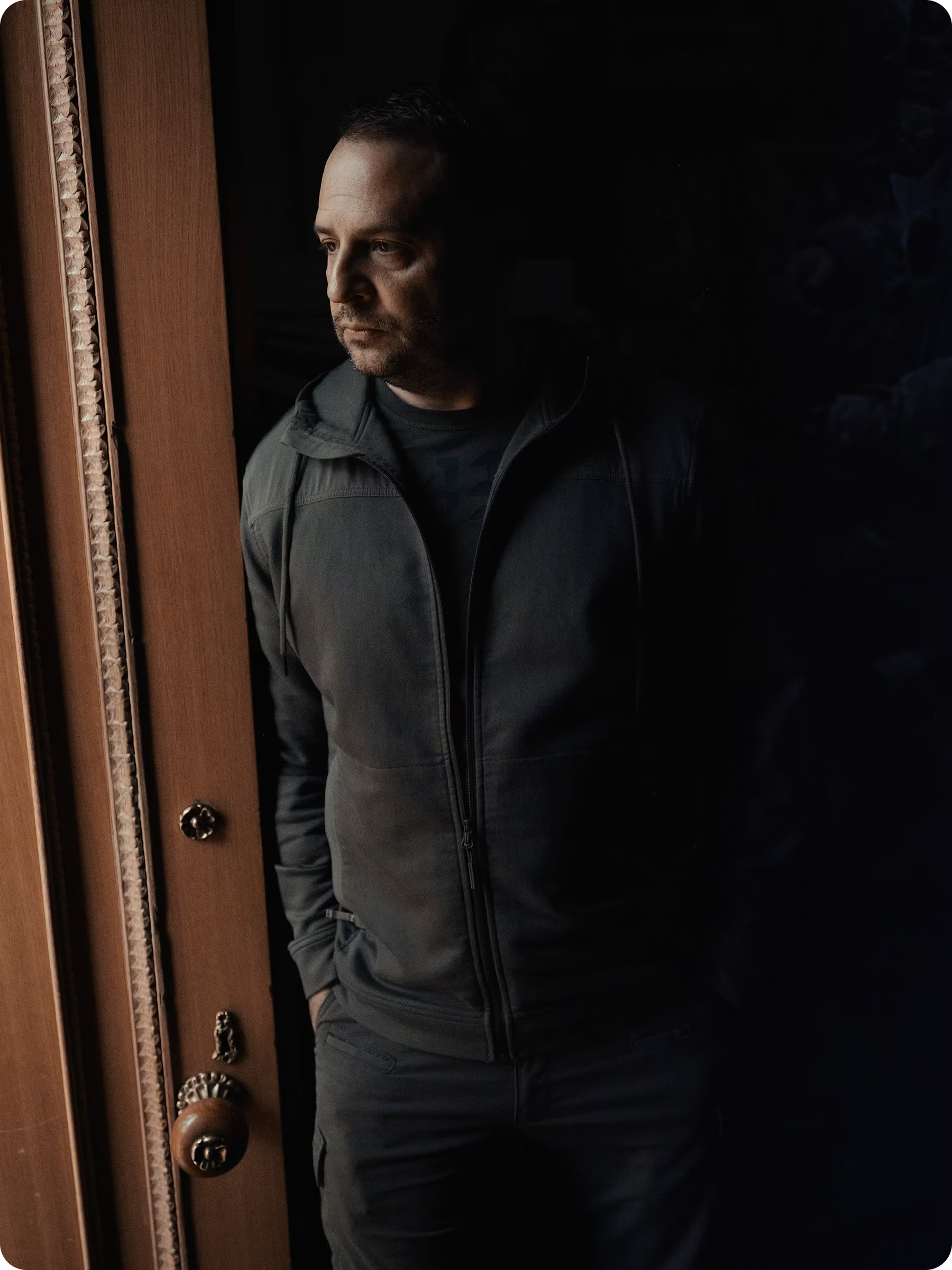
Ukrainian anti-corruption agencies have formally notified former presidential office chief Andriy Yermak that he is a suspect in a major corruption investigation involving figures from Volodymyr Zelensky’s inner circle. According to the Financial Times, the notice was delivered by officials from NABU and SAPO; the status does not yet amount to formal charges in court, but is a procedural step before possible criminal prosecution.
But the significance of this story goes beyond another episode of Ukrainian domestic politics. Since 2022, major Western outlets—The Times, Bloomberg, The Economist, The New York Times and others—have traveled to Ukraine to produce large features about the war, Zelensky, and the country’s leadership. And almost every time, Andriy Yermak appeared alongside the president in those stories: as the man through whom negotiations, appointments, diplomacy, and communication with the West flowed.
He was photographed, profiled, quoted, and presented as a central architect of Ukraine’s wartime politics. Sometimes almost as the second most powerful figure in the state. Ukrainian and Western officials, according to the FT, privately referred to Yermak as an “unelected vice president” because of his influence over peace initiatives, appointments, and wartime decision-making.
Examples of promotional, flattering, or visually complimentary Western media coverage of Yermak include:
⋅ an authored essay by Andriy Yermak on a new world order accompanied by a dedicated portrait photograph for TIME: “Ukraine’s presidential advisor Andriy Yermak photographed in Kyiv on April 19.” TIME, April 2022
⋅ Yermak’s inclusion on the TIME100 list, where he was presented not merely as Zelensky’s aide but as an independent leader and one of the world’s most influential figures. TIME, 2024
⋅ a major feature on Yermak’s expanding power accompanied by a staged portrait photo inside the presidential office. Even a critical story was framed through the aesthetics of a high-status political profile. Bloomberg, August 2024
⋅ a By Invitation essay by Yermak giving him a platform as an official voice of the Ukrainian government on ending the war. The Economist, December 2022
⋅ an exclusive Simon Shuster interview portraying Yermak as Ukraine’s chief negotiator. The article featured imagery of both Zelensky and Yermak, effectively cementing him as the second face of Ukrainian power. The Atlantic, November 2025
⋅ The New York Times repeatedly published stories about Yermak and his role inside Zelensky’s system, describing him as one of the key figures in Ukrainian power and a de facto center of decision-making.
That now raises a question Western editorial boards will struggle to avoid: did they become part of the public-relations machinery surrounding a man who has ended up at the center of the largest corruption case of Zelensky’s presidency?
Formally, journalists may simply have been doing their job: showing readers the real structure of power in Kyiv. Yermak genuinely was one of the most influential figures in Ukrainian politics. His role was difficult to ignore. But the problem lies elsewhere: many Western profiles did not merely document his influence—they aestheticized it.
Yermak became not only a source of information but a character. He was given photo shoots, placed into dramatic narratives of wartime leadership, portrayed as a manager, diplomat, negotiator, and indispensable interpreter of Zelensky himself. That format inevitably worked as legitimization. For Western audiences, it created the impression that they were looking not at a shadow power broker but at a responsible representative of a country at war.
Today, that image looks very different.
The investigation, according to the FT, centers on the state energy company Energoatom and has already become the largest corruption case of Zelensky’s seven years in power. Among those implicated are former senior officials considered close allies of the president. Investigators allege that members of the supposed “criminal group” directed around $10.4 million to Oleksiy Chernyshov for the construction of neighboring luxury houses near Kyiv, one of which, investigators claim, was intended for Yermak.
This is where the uncomfortable question for the Western press emerges. If a man with such vast informal power spent years as a central figure in major profiles, why was the nature of that power so rarely examined? Why was the concentration of influence inside an unelected office framed as managerial efficiency? Why did a figure whom officials themselves called an “unelected vice president” so often appear in Western coverage not as a democratic accountability problem, but as part of the heroic narrative of resistance?
That does not mean The Times, Bloomberg, The Economist, or The New York Times were “covering up corruption.” Such a claim would require evidence. But something else can be said: they helped construct the international reputation of a man whose power was immense, opaque, and never validated through elections. They turned him into a recognizable symbol of Ukraine’s wartime governance—and now that symbol has become tied to a case striking at Ukraine’s most painful vulnerability: corruption inside the ruling circle during war.
So the question for Western media is no longer simply: “Were they complicit in corruption?” A more precise formulation may be this: why did they spend so long helping transform an unelected official with enormous power into an acceptable—almost inevitable—face of the Ukrainian state, and why did that image prove so convenient for everyone except Ukrainian society?