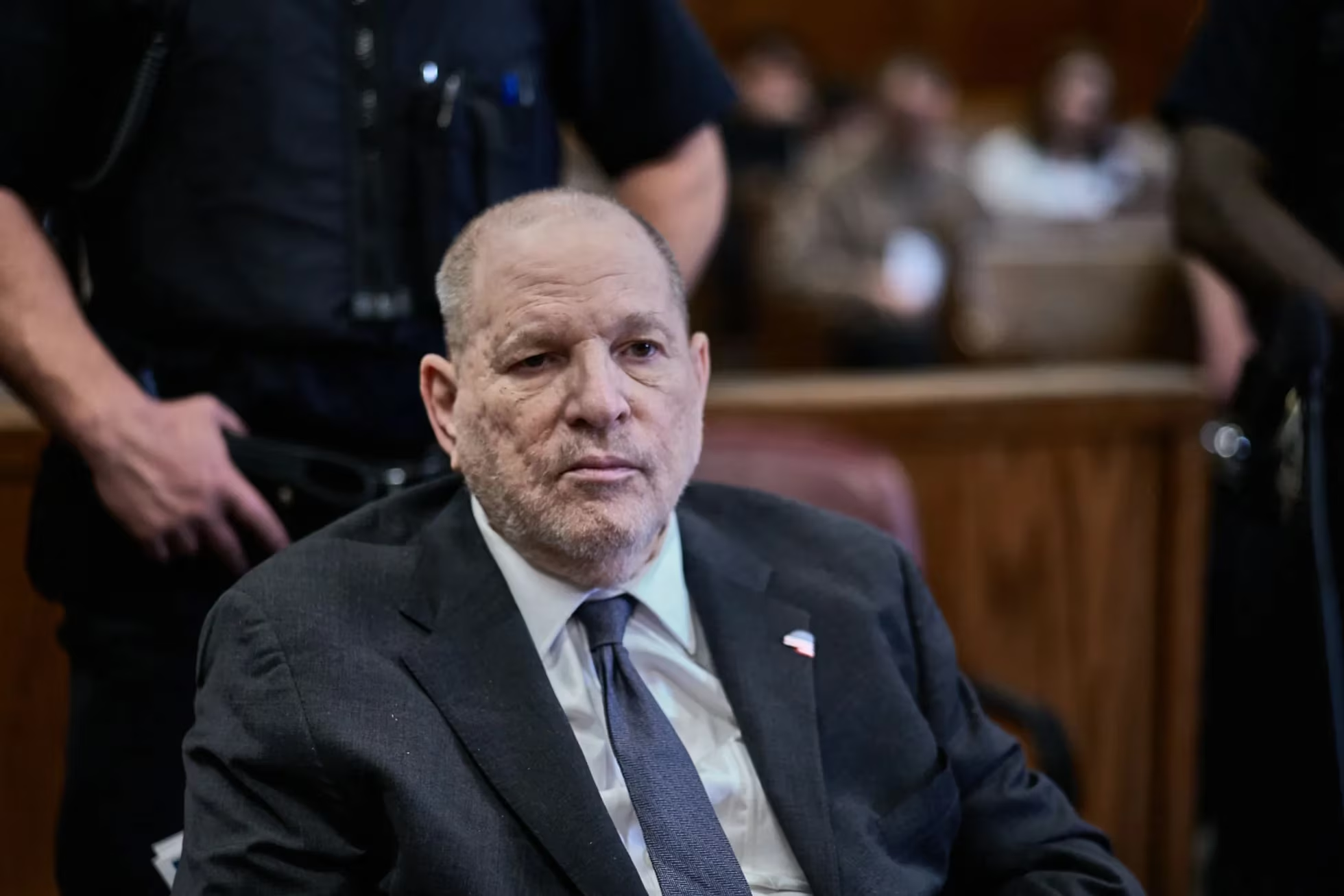
The magazine The Hollywood Reporter published the first extensive interview with Harvey Weinstein recorded after he was already imprisoned. In the conversation, the former film producer acknowledges that he behaved improperly in the past but firmly rejects accusations of rape and says he intends to prove his innocence in court.
Weinstein was convicted in rape cases in two states—New York and California. In the first case, the court sentenced him to 23 years in prison; in the second—to another 16 years. These sentences are to be served consecutively. Both verdicts are currently under appeal.
Weinstein is currently held at the Rikers prison in New York, where he is kept in a solitary cell. His contacts are limited to correctional staff and medical personnel. He regularly speaks by phone with his children and several friends, though he does not disclose their names.
The rest of his time he spends reading and watching films on a tablet.
Due to spinal stenosis—a pathological narrowing of the spinal canal—Weinstein rarely leaves his wheelchair. He has also been diagnosed with chronic myeloid leukemia, a form of bone marrow cancer.
SFG Media presents several excerpts from Weinstein’s interview.
On The Allegations And His Own Behavior
“Many women accused me—for different reasons. But most often it was about money. You know, one received half a million dollars. Another—$500,000 as well. A third—three million. To walk away with a check, all they had to do was fill out a form stating that I had raped them. They filled it out—and the insurance company paid tens of millions of dollars. And Disney did too—Disney did not want a public scandal, so it simply paid people to disappear. It creates a snowball effect. People can say anything about me, and it becomes public. But very few of these stories have ever actually been examined in court.”
“Did I try to clumsily flirt with some of these women? Did I cross boundaries? Yes, all of that happened. Frankly, I should never have entered into relationships with the people I did. I was married to a wonderful woman who had no idea what I was doing. I lied constantly. I used my employees to conceal what was going on. But did I ever commit sexual assault? No. That is something I never did.”
“Let me put it this way: when a man invites you to his hotel room in the middle of the night, you understand what it implies.”
“There were women who fully understood what was expected of them. Perhaps later they felt uncomfortable or began to regret it. Perhaps they saw an opportunity to obtain compensation. But far from all of them were as naive as they later tried to portray themselves.”
“Yes, a power imbalance existed. I understand that I can be an intimidating and difficult person. But that is still a long way from sexual assault. Excessive flirting, awkward situations. Bad and foolish behavior—yes. But I never physically coerced anyone. And to prove that, I even took polygraph tests.”
On Mistakes And Apologies
“I constantly think about what I would do differently if I were given another chance. I would treat women with greater respect. I would not enter into relationships with them at all. I would remain faithful to my marriage. I would tell myself: ‘I have a family. I will protect it.’ I was a fool—and I acknowledge that.”
“I apologized to everyone at once. You cannot call people when you are in a legal case with them to apologize personally. But I will say it now: I ask these women for forgiveness. I am sorry. I should never have entered into relationships with them at all. I misled them. I cheated on both of my wives. That is immoral.
But I did not rape them. That is the central lie of this entire story. I will not apologize for something I did not do. My innocence will be proven. I promise you.”
On The Reaction Of People From His Inner Circle
“Most of the people I knew turned away from me. Close friends. Relatives. People who, essentially, owe their careers to me. They disappeared instantly. I am even afraid to call acquaintances—I do not want them to be canceled simply for speaking with me. This is a mad culture. This is McCarthyism. I wish Jeffrey Katzenberg would pick up the phone. Ted Sarandos. Bradley Cooper. I miss these people—not just the professional relationships; there was something more between us. But because of me they could be canceled. I am toxic. All it takes is answering my call—and you might be canceled too. I understand that. I do not expect anyone to risk their career for me. Although some do take that risk. Who exactly—I will not say, of course.”
On The #MeToo Movement
“I think it was useful.”
“When Alyssa Milano said ‘Me too,’ she did not mean me. She simply said ‘Me too,’ and then everyone began saying #MeToo about me. Every woman I had ever been with. Every person I had known. Everyone reached for the money.”
On The Role Of Cinema In Weinstein’s Prison Life
“People here in prison mostly want to talk to me about Quentin Tarantino. The crowd here, let’s say, is not exactly the kind that discusses ‘Shakespeare in Love.’ But they still send me scripts—mostly students, by mail. They want to hear what I think about their films. Usually it’s not written very well, but I try to encourage them. I tell them they just need to work on it a little more.”
On The Fear Of Dying In Prison
“It scares the hell out of me. It’s unbelievable—to live such a life, to do what I did for society, and still not receive even a little leniency so that I might be treated humanely. Whatever they may think about what a bad person I am, I was never given a death sentence. In March I will turn 74. I do not want to die here.”