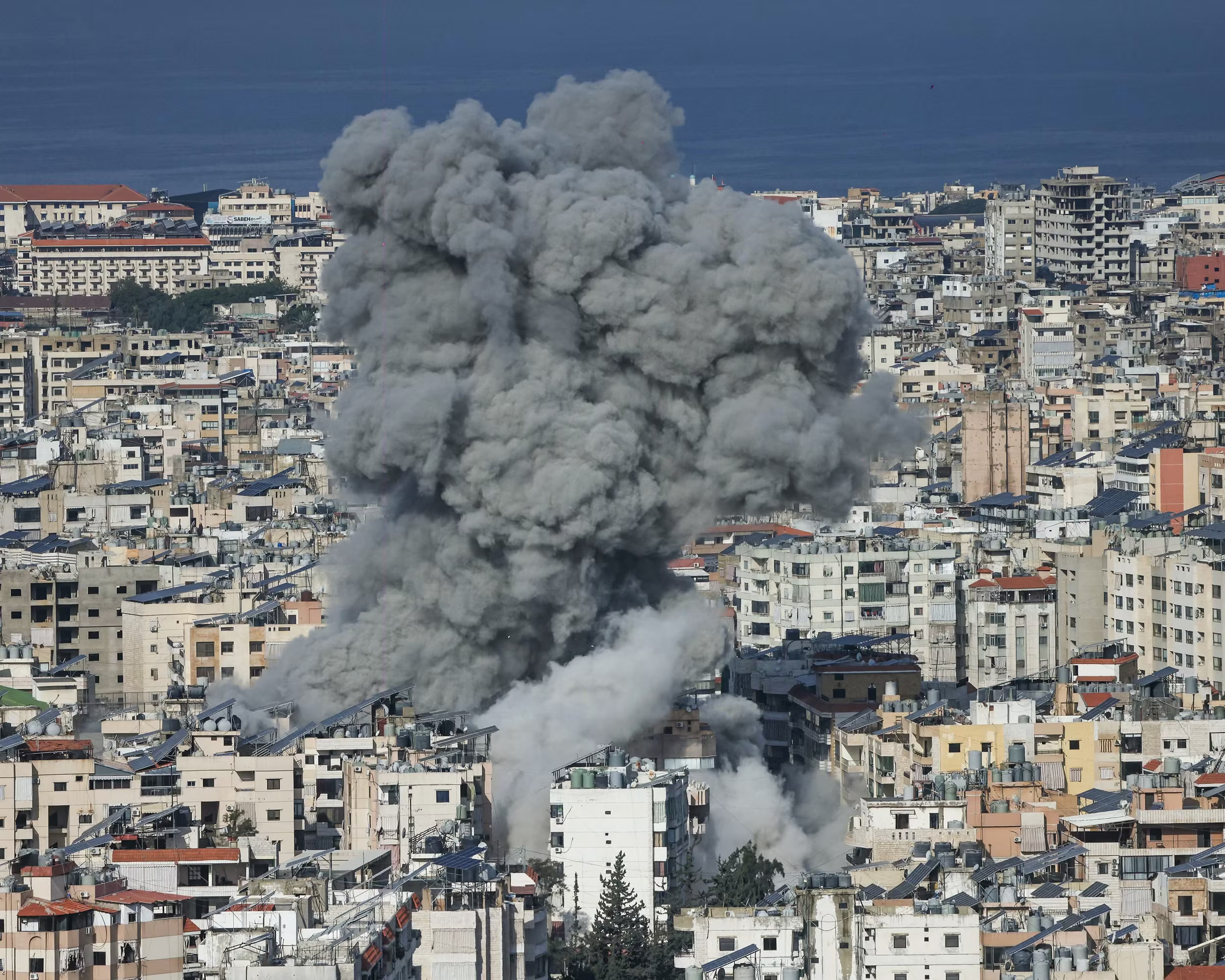
On Wednesday, March 4, Israel launched a new wave of strikes on Tehran and Beirut, as Iranian missiles continued flying toward Israel and the countries of the Persian Gulf—the war with Iran entered its fifth day.
Early in the morning, explosions were heard across different parts of Tehran. The Israeli military announced “large-scale strikes” on targets linked to the Iranian regime. According to Kurdish media, the strikes also destroyed police stations and headquarters of the Islamic Revolutionary Guard Corps in Kurdish areas in northwestern Iran.
The death toll in Iran has risen sharply: according to various estimates, between 800 and 1,500 people have been killed in strikes during the five days of war.
American and Israeli officials said the campaign has so far progressed more successfully than they had expected. Its ultimate objective, however, remains unclear, as the stated goals often contradict one another. At various times, the Trump administration has described its aims as regime change, the destruction of Iran’s ballistic-missile and naval capabilities, preventing Tehran from acquiring nuclear weapons, and ending its support for proxy groups across the region.
US President Donald Trump said that some of those he had considered as possible postwar leaders of Iran were killed in the first days of the war. Speaking about Reza Pahlavi, the exiled son of Iran’s late shah, Trump said he would prefer to see “someone from inside” Iran lead the country.
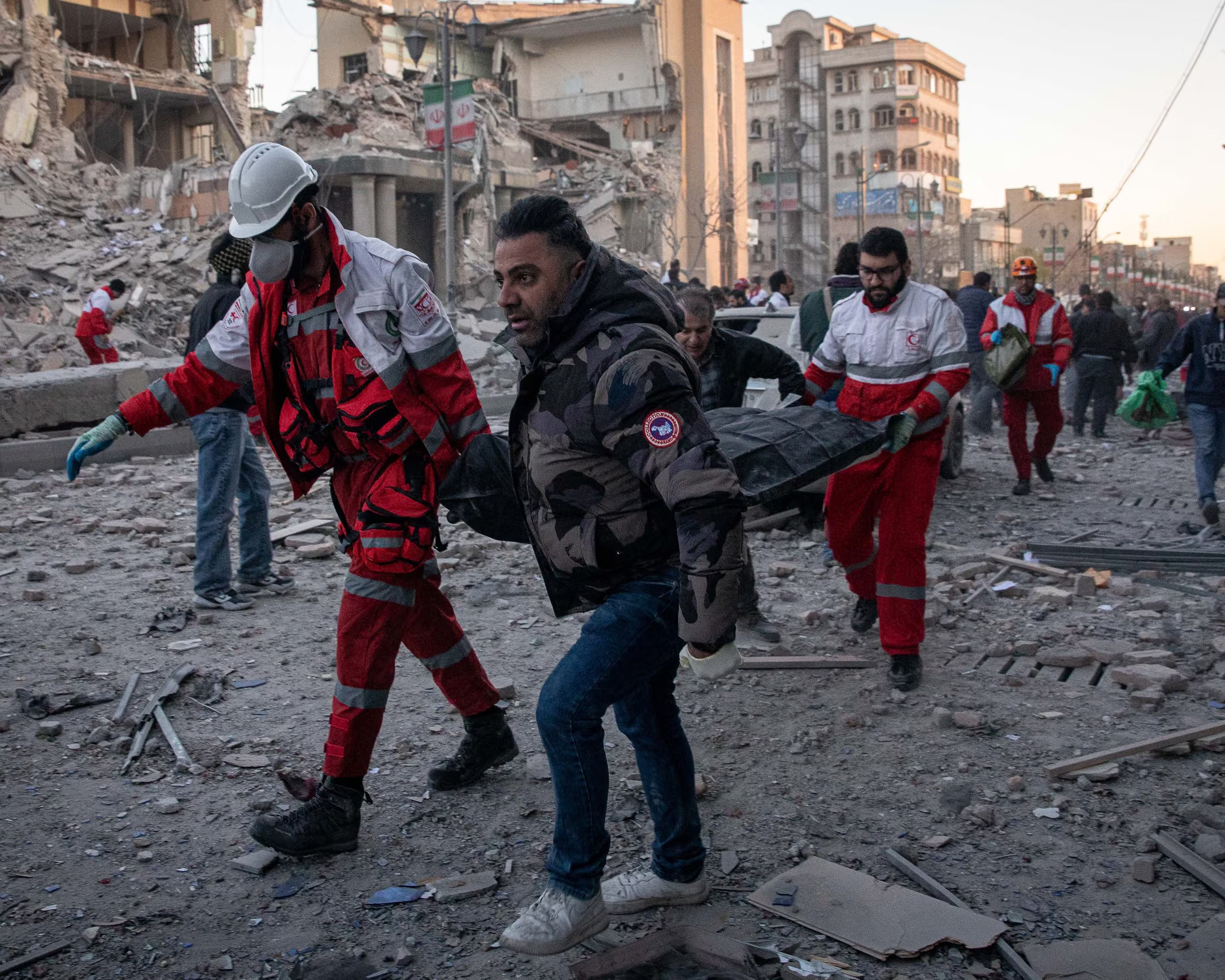
Rescue workers carry the body of a victim after a strike on a building in Tehran’s Enghelab Square.
In Iran, mourning ceremonies for Supreme Leader Ayatollah Ali Khamenei began in Tehran on Wednesday morning. The body of Khamenei, killed on Sunday in US-Israeli airstrikes, is expected to lie in state for three days at a large complex in central Tehran, where the public will be able to pay their respects.
The funeral is taking place as Iran’s senior clergy convene to appoint a new supreme leader—a figure who combines the roles of head of state and commander-in-chief of the country’s vast military apparatus. According to reports, the leading favorite among the clerical establishment is Mojtaba Khamenei, the 56-year-old son of Ali Khamenei and the preferred candidate of the Islamic Revolutionary Guard Corps.
Analysts note that Mojtaba Khamenei is known for his hardline views, and his ascent to power would signal a further expansion of the IRGC’s role in Iran’s political system. Such an appointment would indicate that the regime intends to respond even more forcefully to domestic demands for reform. Earlier this year, discontent with the authorities erupted into weeks of protests, which were crushed by a harsh government crackdown that left at least 7,000 people dead.
Iran continued striking American bases and facilities across the Persian Gulf, targeting the US embassy in Saudi Arabia and the consulate in the United Arab Emirates. Iranian drones and missiles also hit American radars and early-warning systems in Bahrain and Qatar—an unprecedented series of strikes on US bases in a region where Washington has maintained near-uncontested military dominance since the first Gulf War.
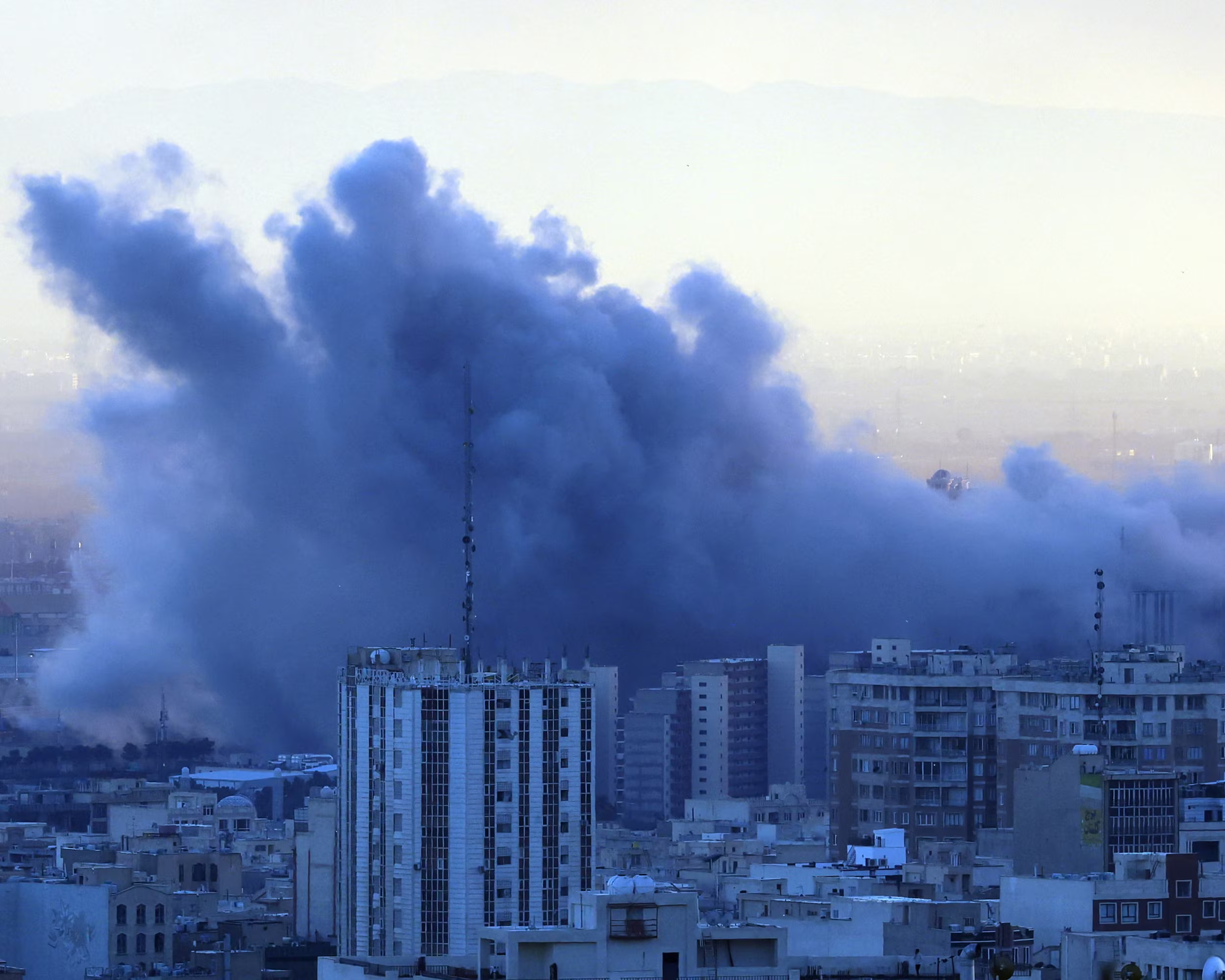
Smoke rises above Tehran.
According to Israeli authorities, Iran launched new barrages of missiles at Israel overnight and into the early morning, though most were intercepted and no casualties were reported.
Hezbollah also continued its attacks on Israel, firing rockets and suicide drones at military bases and troop concentrations in the north of the country. Media outlets affiliated with the group claimed its fighters had hit three Israeli Merkava tanks that had entered southern Lebanon and had also shot down an Israeli drone in Lebanese airspace.
In response, Israel launched large-scale airstrikes across Lebanese territory, primarily targeting the southern suburbs of Beirut. Explosions continued in the capital until Wednesday morning. A hotel in Hazmieh, southeast of Beirut and about 700 meters from the presidential palace, was also struck without prior warning.
Lebanon’s Health Ministry reported six people killed in the strikes. Since Monday, the total death toll has reached 46. Across the country, at least 58,000 people have been forced to leave their homes because of the bombardment. Panic has spread throughout Lebanon: rumors of evacuation orders have driven people to flee entire neighborhoods and buildings, often by mistake.
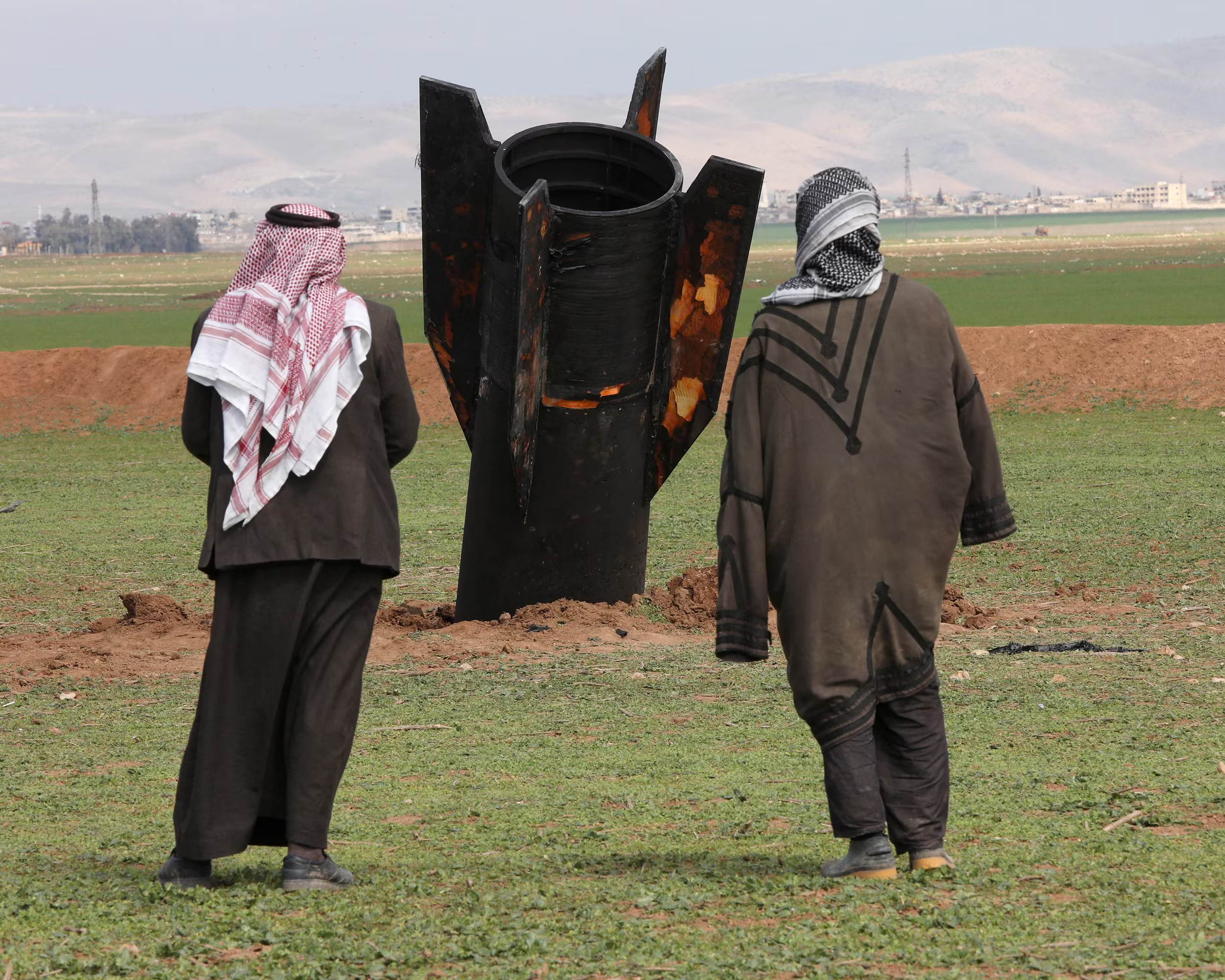
People stand next to an Iranian missile that fell near Qamishli International Airport in Syria.
The United States and Israel offered an optimistic assessment of the war’s progress. Adm. Brad Cooper, head of US Central Command, said American forces had struck about 2,000 targets over the past few days. According to him, the US has “severely degraded Iran’s air defenses” and destroyed large weapons depots as well as ballistic missile launchers.
Israeli military spokesperson Brig. Gen. Effie Defrin said a strike targeted a building in the Iranian city of Qom where religious authorities were reportedly holding a meeting to select a new supreme leader. Iranian media said the building was empty at the time of the strike, and Defrin added that Israel was checking reports of possible casualties.
The Israeli military also said it had struck sites in Iran used to store ballistic missiles and claimed it had destroyed a secret underground complex where “key components” for nuclear weapons were being developed.
Iran has long maintained that it is not seeking to build nuclear weapons and that its nuclear program is intended for civilian purposes.