Arrest of Andrew Mountbatten-Windsor on Thursday marked the most high-profile instance of criminal consequences for a public figure linked to the convicted sex offender Jeffrey Epstein.
Following the detention, police cited electronic correspondence between the former prince and Epstein, disclosed in the latest tranche of Justice Department materials. For supporters of the late Virginia Giuffre, this appears as a long-awaited vindication for a woman who previously sued Mountbatten-Windsor, accusing him of sexual assault. Authorities said he was detained on suspicion of abuse of official authority.
In the detention statement, police pointed to emails that allegedly show the former prince may have forwarded confidential commercial documents to Epstein. The latest tranche of Epstein-related materials also includes photographs depicting Mountbatten-Windsor kneeling over a woman lying on the floor. He has consistently denied any wrongdoing connected to his relationship with Epstein.
King Charles III, in a statement released on Thursday after the arrest, wrote: “Let me be clear: the law must take its course.” He added that the authorities could count on his “full and unconditional support and cooperation.”
Giuffre’s relatives said: “At last, today our broken hearts have thawed a little at the news that no one is above the law—not even members of the royal family. He was never a prince.”
Maria Farmer, the first known survivor to approach law enforcement with allegations against Epstein and Ghislaine Maxwell, said that “today is only the beginning of the accountability and justice secured by Virginia Roberts Giuffre.” “She did this for all our daughters,” Farmer said. “Now let us demand that every domino of power and corruption begin to fall.”
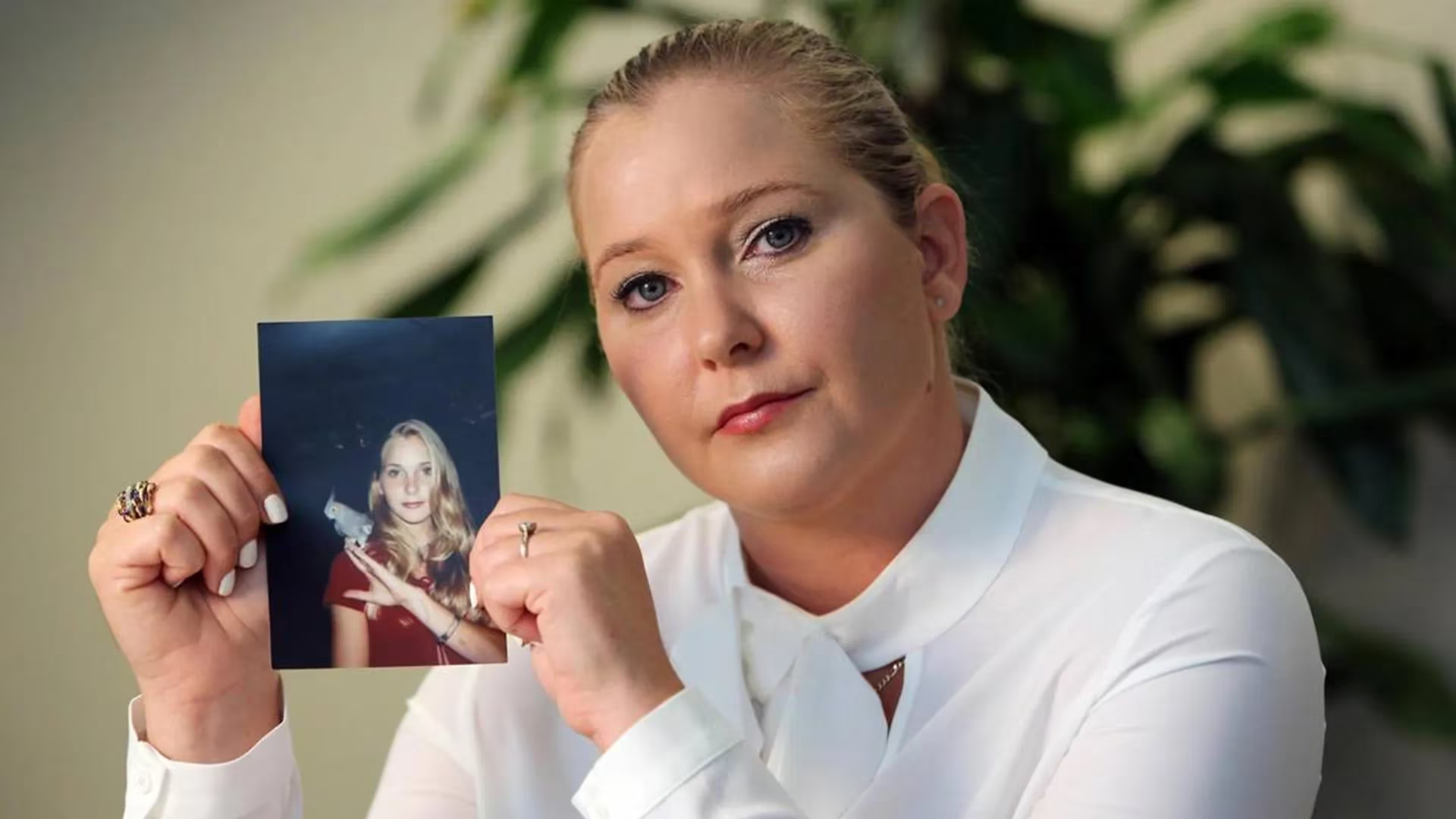
In 2009, Giuffre anonymously filed a lawsuit against Epstein, alleging that while she was a minor and working as his personal masseuse, she was subjected to “sexual exploitation by adult men within Epstein’s circle, including members of the royal family.” She reached a settlement with him for $500,000. Giuffre also accused Ghislaine Maxwell of recruiting her for Epstein. She went public in March 2011 in an interview with the British tabloid Mail on Sunday and was shortly thereafter questioned by FBI agents, as The Guardian reported in 2015. According to Giuffre, the birth of her daughter prompted her to speak out about Epstein’s abuse—a point she made to the Miami Herald in 2019. In 2015, she sued Maxwell for defamation after Maxwell called her a “liar.” The case was settled in 2017 on undisclosed terms, and in 2021 Maxwell was convicted on charges including sex trafficking and other crimes. That lawsuit became a central element of the Epstein investigation and led to criminal charges that culminated in Maxwell’s conviction for trafficking minors for sexual purposes.
Giuffre alleged that Epstein orchestrated her sexual abuse by Mountbatten-Windsor. In 2021, she filed a lawsuit against him in Manhattan federal court under the Child Victims Act, claiming that he sexually abused her on three occasions after Epstein “trafficked her for sexual purposes” to the British prince. In 2022, Mountbatten-Windsor settled the case without admitting wrongdoing. He stepped back from royal duties, was stripped of his military ranks and royal patronages, which were returned to Queen Elizabeth, and was evicted from a royal residence in Windsor. In a 2019 BBC interview, he said he did “not recall” ever meeting Giuffre and suggested that a widely circulated photograph showing him with his arm around the then-17-year-old girl may have been doctored.
Giuffre also accused the former Harvard law professor Alan Dershowitz of sexually assaulting her as a teenager, allegations he denied. After his public statements about her, she filed a defamation lawsuit against him in April 2019, and Dershowitz countersued. In 2022, the parties agreed to drop the litigation.
In March last year, Giuffre wrote on Instagram that she had suffered injuries in a crash involving a school bus and was days from death due to kidney failure. Nearly a month later, she died by suicide. She was 41. Giuffre’s family said at the time that she had been a “fierce fighter in the battle against sexual abuse and sex trafficking” and “a light that lifted so many survivors.”