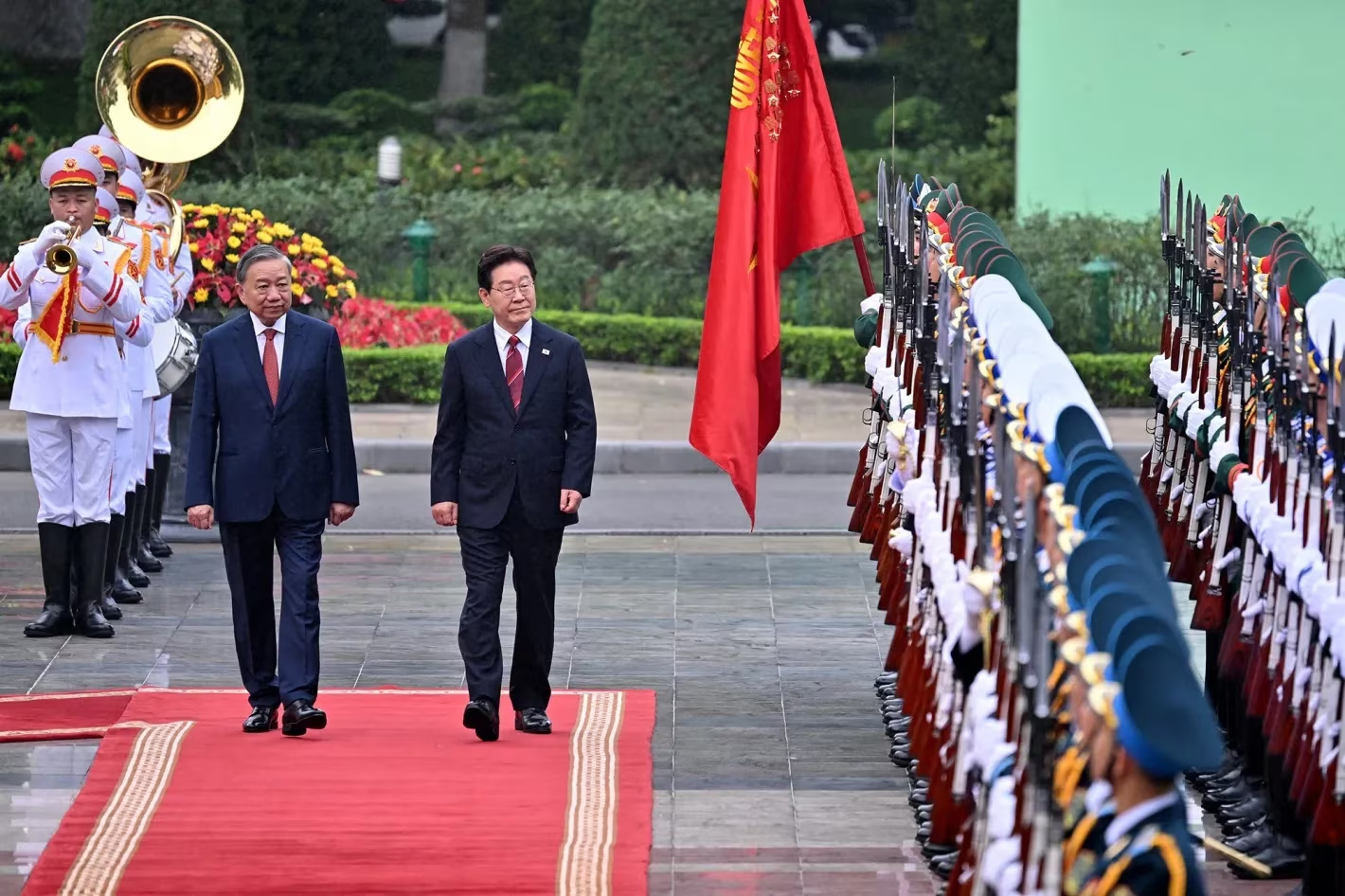
Vietnam and South Korea signed twelve agreements—covering security, energy infrastructure, and nuclear power. The documents were finalized following talks between the two countries’ leaders in Hanoi.
The sides agreed to support the participation of Vietnamese companies in South Korea’s manufacturing and logistics chains—with the aim of turning Vietnam into a more self-reliant and robust economy. Speaking at a briefing in the capital on Wednesday, General Secretary and President To Lam said: “Both countries commit to further facilitating trade and opening their markets to mutual imports and exports of goods, with the goal of raising bilateral trade to $150 billion by 2030.”
Among the memorandums signed was an agreement on cooperation in nuclear power plant construction between Vietnam’s Petrovietnam (Vietnam National Industry—Energy Group) and Korea Electric Power Cooperation, as well as a financing agreement for nuclear projects concluded by Petrovietnam with Korea Electric Power Corporation, the Export-Import Bank of Korea, and Korea Trade Insurance Corporation.
To Lam said Vietnam welcomes investment by South Korean companies in sectors the country sees as strategic priorities—from infrastructure development and “smart cities” to hyperscale AI data centers, semiconductor manufacturing, and nuclear projects.
According to Vietnam’s government portal, South Korea is now Vietnam’s number-one investor, its second-largest source of tourists, and its third-largest trading partner. Bilateral trade reached $89.5 billion last year.
The visit comes amid plans by Samsung Electronics Co. to invest $4 billion in building a chip-packaging plant in northern Vietnam—as the country’s largest foreign investor expands its footprint. According to Samsung Vietnam, the corporation’s revenue in Vietnam in 2024 was equivalent to 13% of the country’s GDP.
Samsung and its global rivals are accelerating their expansion amid rising demand for chips used in data centers and devices running artificial-intelligence services. The South Korean conglomerate was among the first to enter Vietnam—it built its first factory in the northern province of Bac Ninh back in 2008.
In recent years, Seoul has been steadily deepening trade ties with Southeast Asian countries as it seeks to diversify production bases and export markets—including to cushion the impact of the trade war between China and the United States.