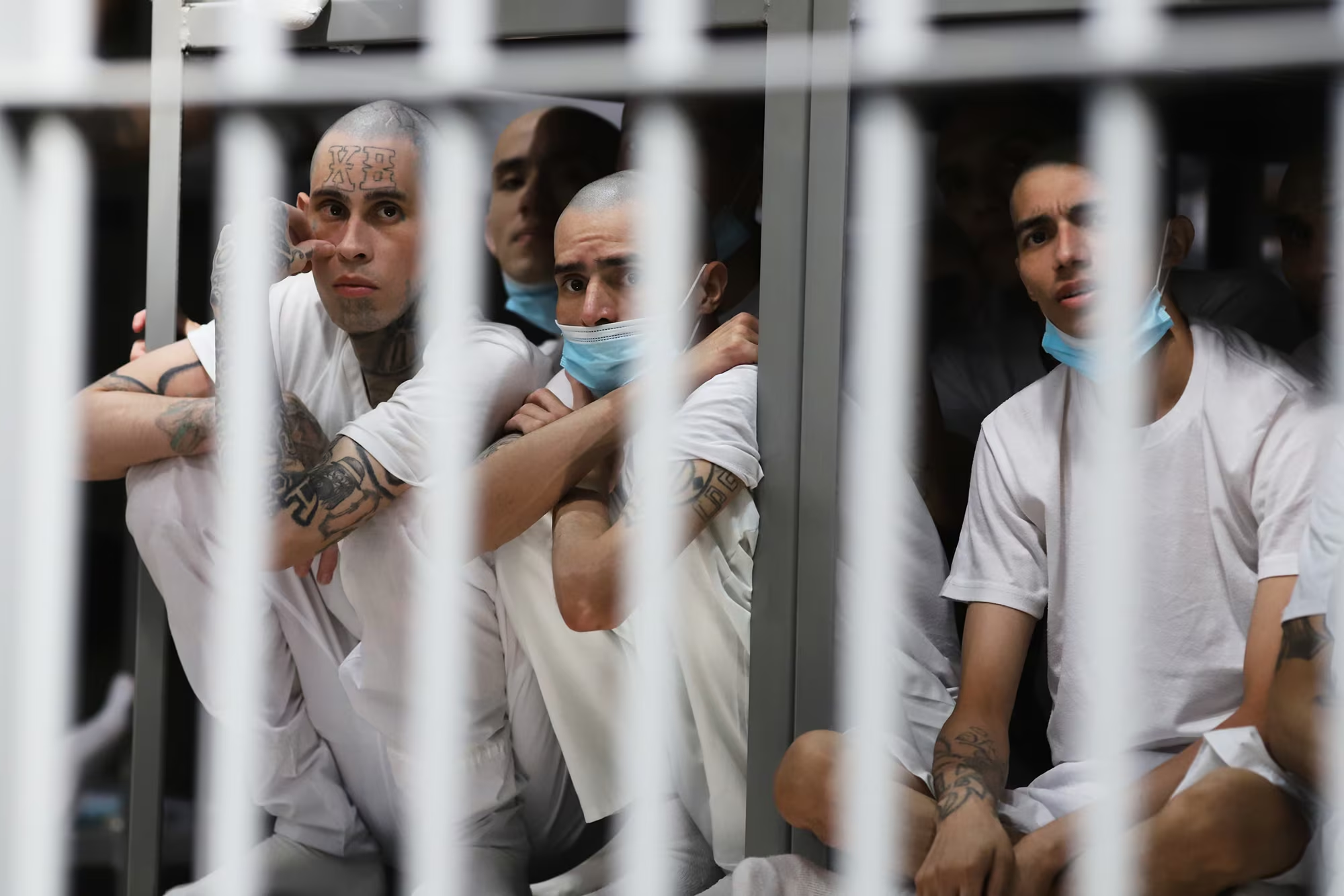
A group of 18 Venezuelan nationals deported by the United States to El Salvador’s notorious mega-prison is seeking to hold Salvadoran authorities internationally accountable for human rights violations. They present new allegations, including torture, sexual violence, and the denial of adequate medical care.
A petition filed on Thursday with the Inter-American Commission on Human Rights argues that El Salvador violated the rights of these men, who were sent last year—without being charged—to the Terrorism Confinement Center (Cecot).
The document was submitted by human rights organizations on behalf of 18 petitioners who were part of a group of 288 Venezuelans and Salvadorans transferred by the United States to Cecot in March 2025. The detainees describe “systematic abuse, including beatings, humiliation, and sexual violence” during their imprisonment.
“A year on, these men are still waiting for justice,” said Bella Mosselmans, one of the lawyers on the case and director of the Global Strategic Litigation Council (GSLC). “We demand accountability—for them, for their families, and to ensure this never happens again.”
In new testimony, men released from Cecot and returned to Venezuela in July last year also recount the long-term physical and psychological consequences of their detention. One of them said he still bears scars from the shackles detainees were forced to wear for extended periods, adding that they “constantly remind [him] of the horror endured.”
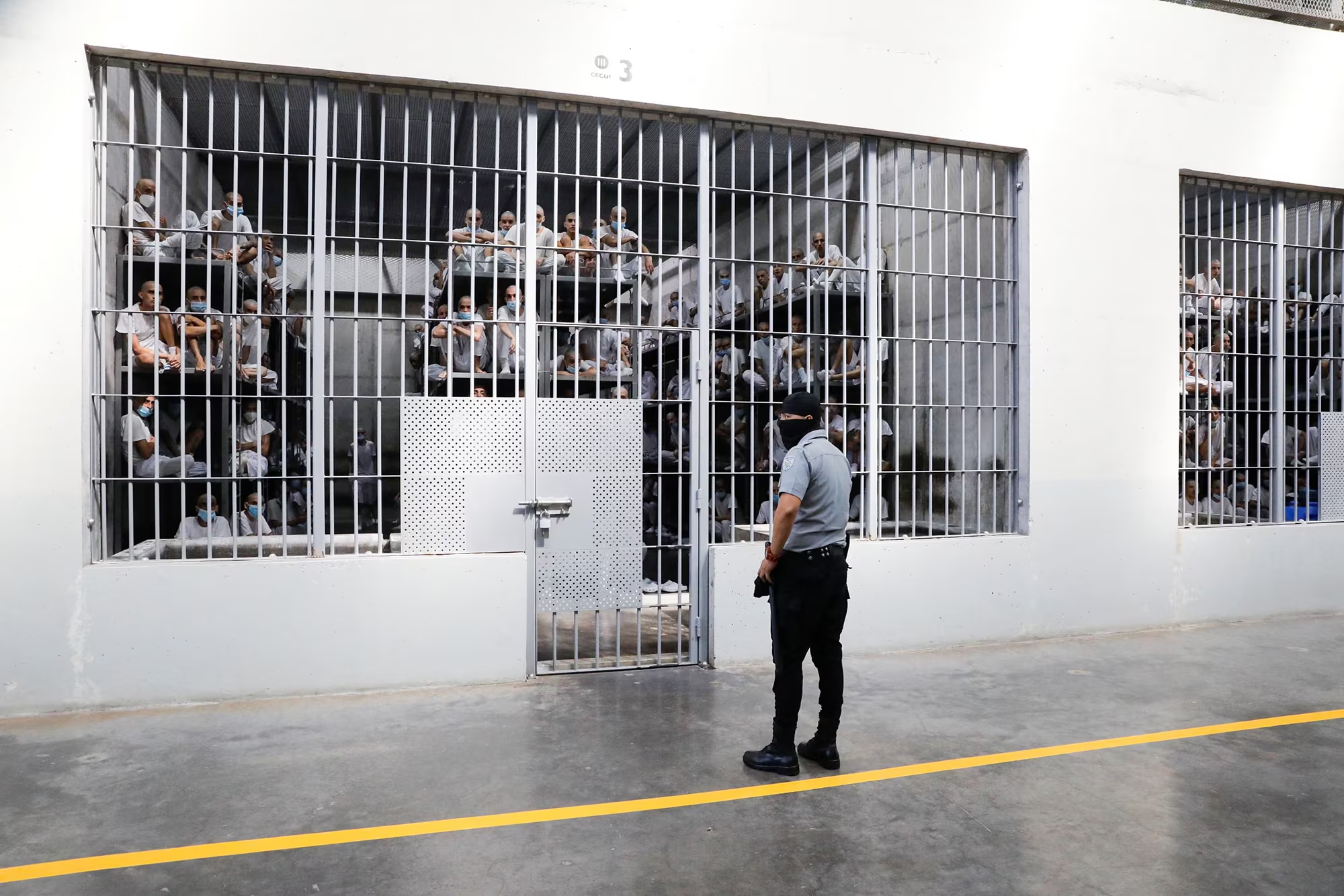
A prison guard watches detainees inside a cell at Cecot prison.
A former detainee said he still reacts acutely to loud noises, including the jangle of keys—“because guards would strike the bars with keys to torture us and keep us from sleeping around the clock. The sound of keys triggers a panic response in me.”
The human rights groups that filed the petition asked that the petitioners’ identities not be disclosed. Some had previously fled persecution and threats in Venezuela and remain vulnerable even after returning home.
Another man said the abuse began immediately upon arrival in El Salvador. “When I got off the plane, I fell, and two special forces officers lifted me by striking my ribs,” he said. “They pulled me up by the handcuffs. The pain was unbearable.”
He said he was beaten dozens of times over four months in detention. “After each beating, I was in severe pain for about seven days—so much so that I could not move or walk properly,” he said. He added that detainees in neighboring cells were beaten for more than 100 of the 125 days they spent in isolation. “We could hear them screaming in pain.”
“Several times,” he added, “guards told us that human rights do not exist in Cecot.”
The contents of the petition corroborate accounts previously given by several released detainees in media interviews. The document states that prisoners were held in windowless cells without air conditioning and forced to sleep under bright lights that remained on around the clock. Detainees went on hunger strike—which, according to their accounts, continued until one of them was beaten and dragged from the cell “half-dead.” Others resorted to a “blood strike,” cutting their wrists; however, as the testimonies state, “neither guards nor doctors paid any attention.”
The men also say they were deprived of basic necessities—food, water, and sleep. At times, a single water container was shared among ten people in a cell, used for both drinking and hygiene—and, they say, it could contain worms and mosquitoes. One former detainee said he suffered from stomach problems and diarrhea for three of the four months. “I don’t know whether it was because of the water or the food. I constantly had diarrhea. The food caused such pain in my stomach that it persists to this day,” he said.
Detainees were held in windowless rooms, without air conditioning, on metal bunks, under constant bright lighting. “It was torture,” one wrote. “At first, we did not know whether it was day or night. I felt like a chicken raised in a cage under constant light.”
Many of the Venezuelans deported from the United States to El Salvador stress that they have no criminal records. According to them, US authorities accused them—without sufficient grounds—of links to the Tren de Aragua group, citing, among other things, neutral tattoos.
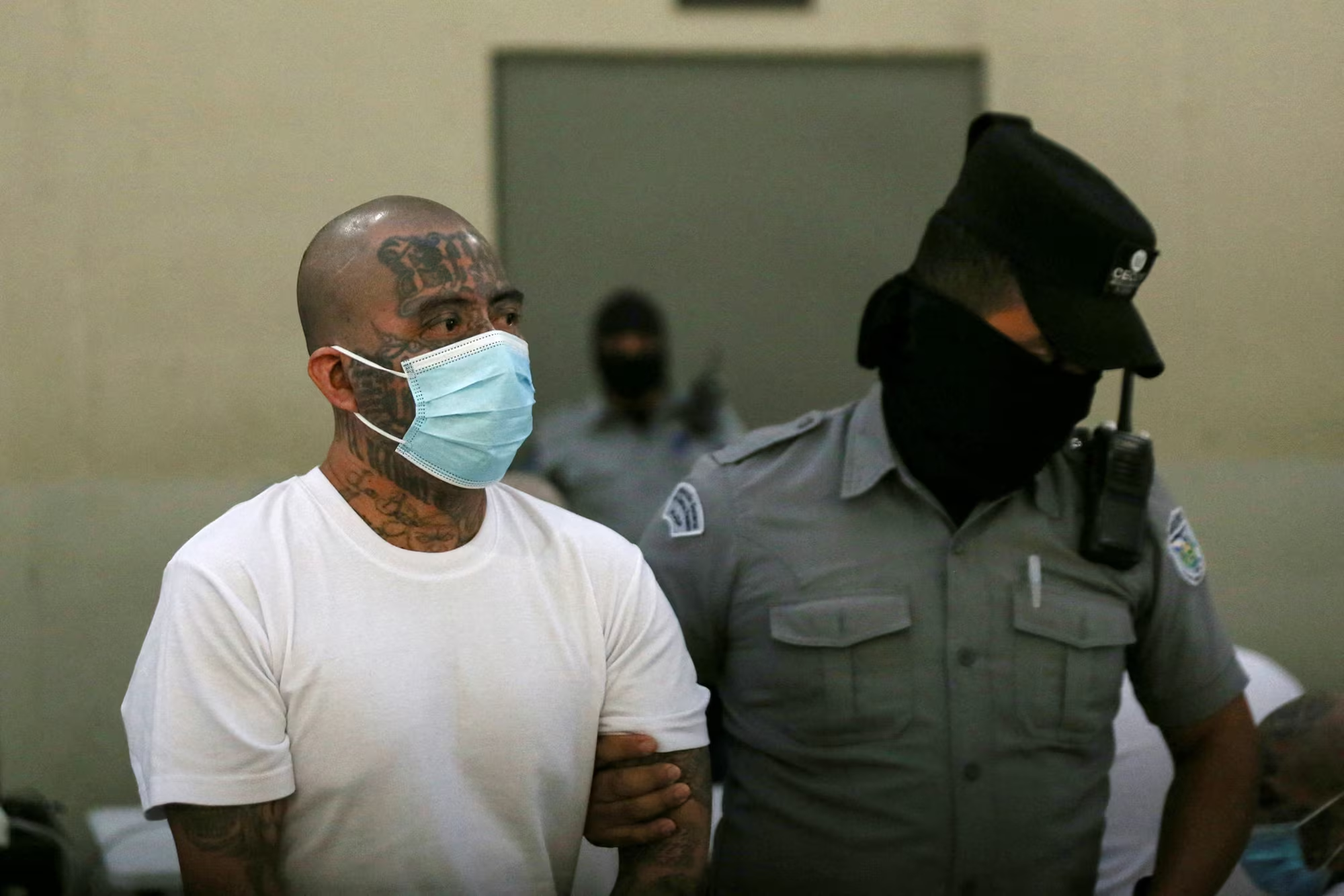
A Cecot prisoner is escorted by a guard to receive medical care.
After four months in Cecot, 252 Venezuelan nationals were released and returned home—where many once again faced the same threats and persecution they had previously fled.
Last winter, Andry Hernández Romero—a makeup artist and openly gay man who left Venezuela due to persecution over his sexual orientation and political views—said that after returning, he found it difficult to resume a normal life. According to him, finding work proved challenging, as some employers believed claims by US authorities that he was allegedly affiliated with a criminal group.
The whereabouts of 36 Salvadoran nationals sent by the United States to Cecot remain “unconfirmed,” the petition states, and their families have still been unable to contact them.
The document has been submitted to the Inter-American Commission on Human Rights—a regional body within the Organization of American States responsible for the protection and promotion of human rights. The petition calls for the agreement between the United States and El Salvador on transferring deportees to Cecot to be recognized as violating El Salvador’s obligations under the American Convention on Human Rights. It also demands that Salvadoran authorities compensate former detainees, issue a public apology, and ensure access to psychiatric and psychological rehabilitation.
The filing includes not only testimony from the detainees themselves, but also statements from medical professionals corroborating their accounts, former US officials who say the Trump administration knowingly sent deportees to a country with well-documented human rights abuses, and former UN special rapporteurs on the human rights of migrants.
Most countries in the Americas, including El Salvador under previous governments, have complied with decisions of the Inter-American human rights system. However, it remains unclear how El Salvador’s current authorities, led by President Nayib Bukele, will respond to international pressure. Since 2022, the country has operated under a “state of exception”—an emergency measure introduced as part of a campaign against organized crime. Under it, according to the petition, around 1.4% of the population has been detained without due judicial process.
“We continue to believe it is essential to pursue accountability for the regime, as well as to support Cecot’s victims, their families, and their fight for justice,” she said.
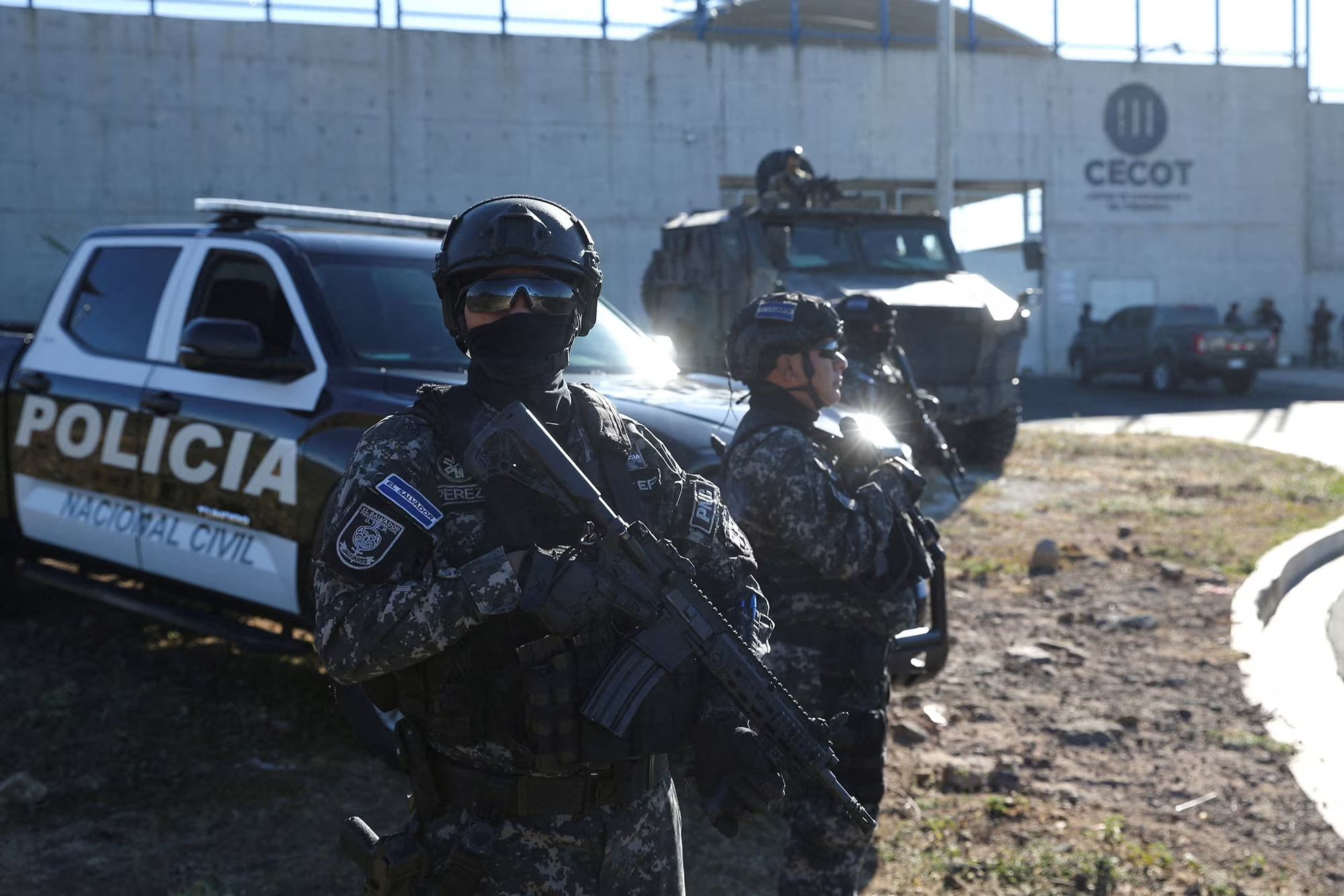
Police officers stand guard outside the prison.
Human rights groups in the United States have also filed lawsuits and complaints on behalf of deportees sent to Cecot. Last year, the ACLU and Democracy Forward went to court, arguing that the Trump administration had unlawfully invoked the 1798 Alien Enemies Act, which grants the president wartime authority to expel nationals of countries engaged in a “declared war” with the United States. By asserting that the Tren de Aragua group was “at war” with the US, Trump used the act to fast-track the deportation of Venezuelans—including many asylum seekers with no criminal records—to Cecot.
Earlier this month, the legal aid organization ImmDef filed complaints against the Department of Homeland Security on behalf of six deportees, including Hernández. On Tuesday, 28-year-old Neiyerver Adrián León Rengel filed a lawsuit in federal court seeking at least $1.3 million in compensation, alleging unlawful detention and intentional infliction of emotional distress.
“The men who disappeared into Cecot are beloved fathers, sons, husbands, and neighbors,” said Julie Bourdoiseau, an attorney at the Center for Gender & Refugee Studies. “US and Salvadoran authorities acted in concert, tearing them from their homes and communities without warning and without any semblance of due process… A year on, these families have yet to receive any compensation for the unimaginable harm inflicted by our governments. This is unacceptable.”
The petition to the Inter-American Commission on Human Rights forms part of a broader set of cases challenging the practice of deporting migrants from the United States to third countries—not only to El Salvador, but also to Costa Rica, Panama, and Eswatini.