Venezuela, with military and intelligence support from the United States, has launched a large-scale operation against criminal groups that control a significant part of the country’s gold-mining region. The Wall Street Journal reports.
The operation, in which the alleged leader of Tren de Aragua, Héctor Guerrero, was killed, became part of a broader campaign by Venezuela’s interim government. Its goal is to restore security, weaken organized crime and attract foreign investment to rich deposits of gold and critical minerals.
The strike against Guerrero, known by the nickname “Niño Guerrero,” was carried out on June 12. U.S. President Donald Trump said the U.S. Southern Command conducted a “swift and lethal kinetic strike” on the compound where the gang leader was located. According to him, the operation was “closely coordinated” with the Venezuelan government. Caracas confirmed that Guerrero was killed during clashes with members of criminal organizations. According to analysts, this was the first time the United States used a missile to eliminate the leader of a criminal group in Latin America.
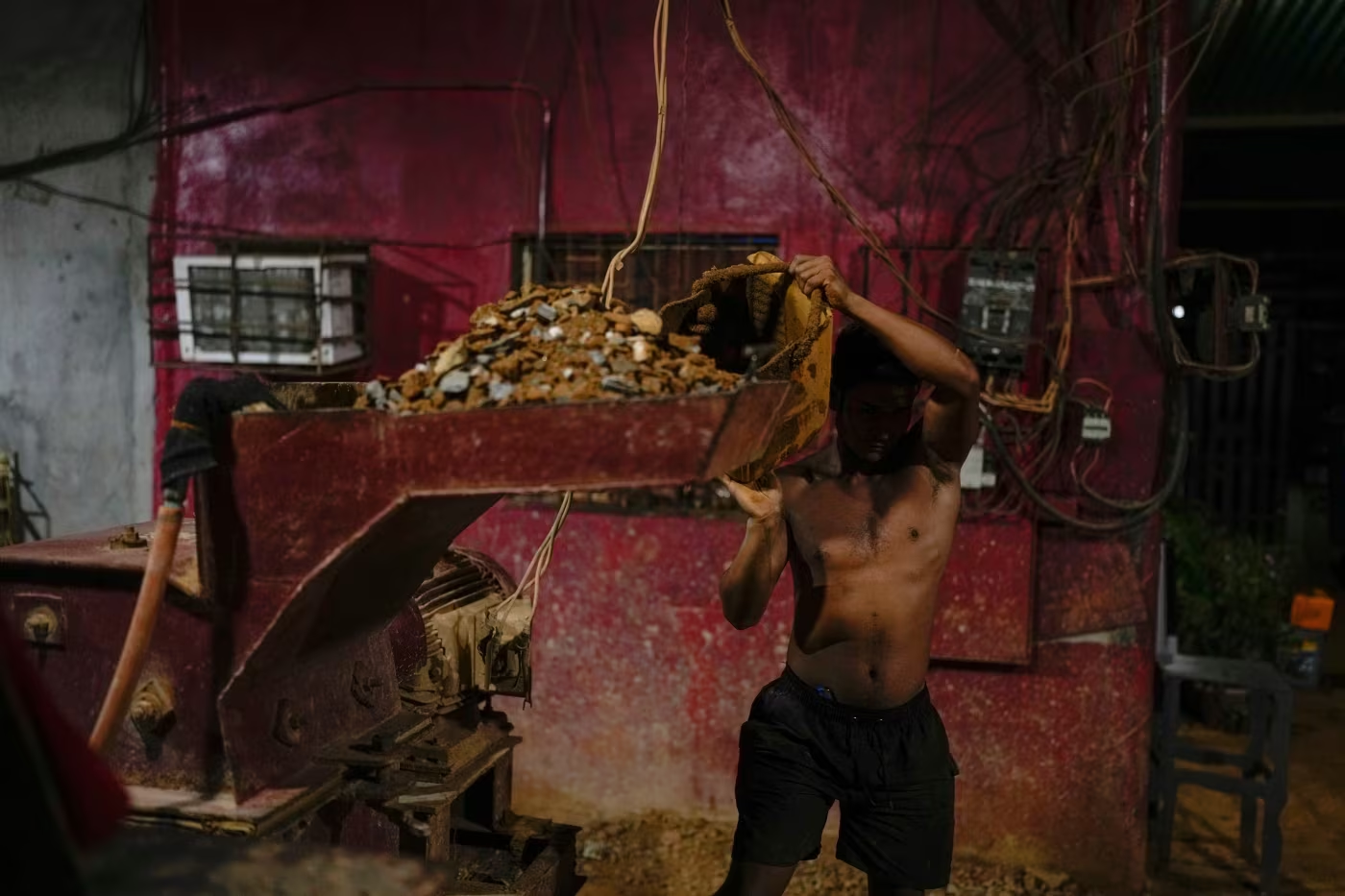
The strike hit Bolívar state in the country’s southeast, where various criminal groups—including Colombian rebels—have controlled illegal gold mining for more than a decade. The so-called Orinoco Mining Arc contains some of the largest reserves of gold and critical minerals in the Western Hemisphere. Local deposits near Kilometer 88 and Las Claritas had long been controlled by a syndicate linked to Tren de Aragua, with historical support from parts of the army and the former authorities.
The operation began several days before Trump’s announcement. Since the start of the week, Venezuelan military helicopters had been firing over gold-mining areas, forcing prospectors to leave open-pit mines. The human-rights organization Provea warned of the risk of extrajudicial executions and arbitrary detentions of civilians in the operation zone. Hundreds of informal miners were forced to flee the mines.
The security forces’ actions coincided with a shift in economic policy. After the Trump administration detained then Venezuelan President Nicolás Maduro in a predawn raid in January, the interim government passed laws easing foreign investment in the oil and mining sectors. In April, a law on gold and precious metals was adopted, and the U.S. Treasury issued licenses lifting sanctions on Venezuelan gold. In March 2026, Washington separately authorized transactions for the sale and export of minerals of Venezuelan origin, including gold.
According to Bram Ebus, a consultant at the International Crisis Group, the campaign against gold-mining groups fits into a broader strategy for U.S. access to Venezuela’s natural resources. Tren de Aragua, meanwhile, occupies only a minor place in the global drug trade, so the elimination of its leader, experts say, is unlikely to significantly change drug flows into the United States.
The United States Is Preparing a Model for Governing Venezuela After Maduro’s Capture
The U.S. Lifted Sanctions on Venezuela’s Acting President Delcy Rodriguez
The US Authorized Operations With Venezuelan Oil Under a New License
U.S. Declares a “War on Narco-Terrorists” and Prepares Covert Operations Against Venezuela